You usually decide to learn how to change lock of door after something has already gone wrong. Maybe the key sticks, the latch feels loose, a tenant moved out, or you simply do not trust an old lock anymore. Whatever brought you here, the real goal is not just swapping hardware. It is making sure the door closes properly, locks smoothly, and gives you reliable security afterward.
For some doors, changing a lock is a simple weekend job. For others, especially main entry doors, metal gates, glass doors, older frames, or properties with alignment issues, it can quickly turn into a frustrating repair that wastes time and still leaves you with a poor fit. The safest choice depends on the lock type, the condition of the door, and how much security you actually need.
How to change lock of door without making it worse
The first thing to check is what part you are changing. Many people say they need a new lock when they really mean one of three things: the door knob, the deadbolt, or just the lock cylinder. Those are not always replaced the same way.
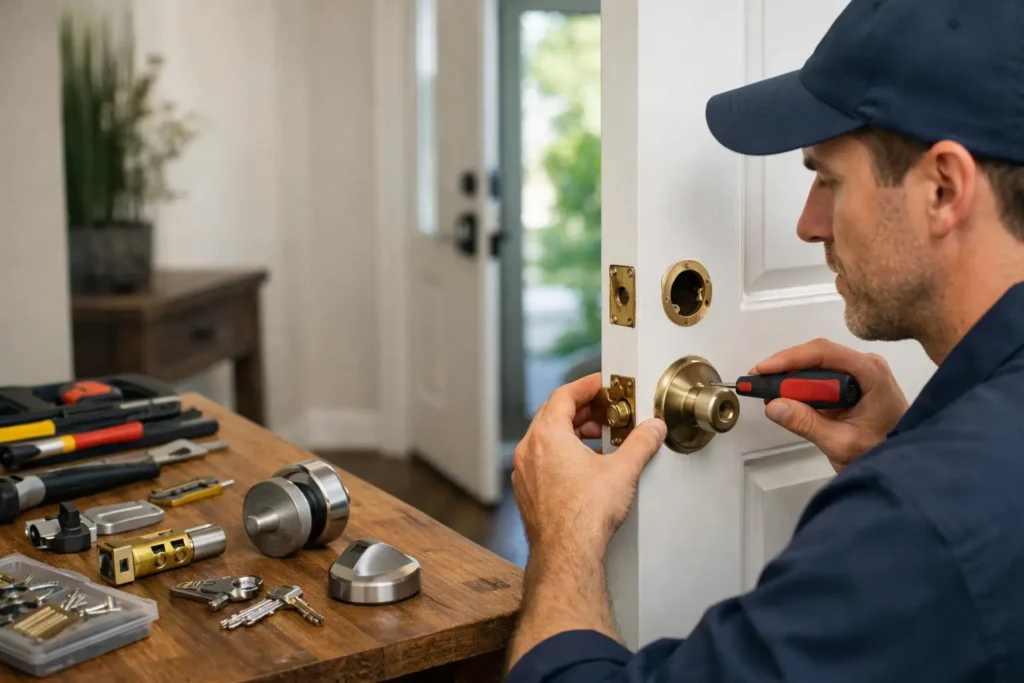
If you are changing a standard residential knob or deadbolt on a wood door, the process is often straightforward. You remove the interior screws, pull both sides of the hardware apart, take out the latch from the door edge, then install the new latch and lockset in the same openings. After that, you tighten everything evenly and test the key, thumbturn, and latch movement before closing the door fully.
That sounds simple because sometimes it is. But the problems usually start when the new lock does not match the existing hole size, the backset is different, the strike plate no longer lines up, or the door has shifted over time. A lock can be installed and still not work well. If you have to force the key, slam the door, or lift the handle to make it catch, the job is not really done.
Start with the right replacement lock
Before removing anything, take a close look at the existing setup. Measure the distance from the edge of the door to the center of the hole. That is the backset. Also check the thickness of the door and whether you are replacing a knob, lever, deadbolt, mortise lock, rim lock, or cylinder.
This matters because replacement locks are not one-size-fits-all. A bedroom door lock is different from a front entry deadbolt. An office glass door lock is different from a wooden interior door. A metal gate lock may need stronger fixing points and better weather resistance. If you buy the wrong model just because it looks similar, installation may become harder than expected.
Security level matters too. If this is a main entrance, it is worth upgrading instead of doing a like-for-like swap with a basic lock. If it is a room door, convenience may matter more than high-security features. If several doors need to work with one key, that requires planning before purchase, not after installation.
Basic steps for a standard knob or deadbolt
If your door uses a common cylindrical lock, here is the general flow. Keep the door open while you work. Remove the screws on the interior side first. Once the inside and outside portions come apart, unscrew the latch from the edge of the door and slide it out. If there is a separate strike plate on the frame, remove that as well if you are replacing it.
Fit the new latch into the edge bore with the angled side facing the direction the door closes. Then align the exterior side of the lock with the latch mechanism. Attach the interior side and tighten the screws gradually so the hardware stays centered. Install the strike plate on the frame, close the door slowly, and test the latch alignment.
Do not overtighten. That is a common mistake and can cause stiffness or binding. The lock should feel smooth without needing extra force. Test it several times with the door open first, then with the door closed.
When DIY works and when it does not
DIY can work well if the door is in good condition, the lock is a matching replacement, and you are dealing with a standard interior or exterior residential setup. It is also more realistic when the existing screw holes are not damaged and the latch lines up cleanly with the strike.
Where people run into trouble is with older doors, warped frames, mismatched lock sizes, hidden screws, stripped fittings, or specialty lock types. The risk is not just inconvenience. A badly installed lock may give you a false sense of security while making break-in resistance worse.
If your main door lock protects your home, office, or rental unit, that is usually where professional help makes more sense. The same goes for digital locks, mortise locks, gate locks, mailbox locks, sliding door locks, and glass door hardware. These jobs often need more than a screwdriver and patience.
How to change lock of door after lost keys or move-out
If you lost your keys, had a tenant leave, or went through a breakup or staffing change, changing the lock is often the right decision. Some people ask whether rekeying is enough. The answer depends on the condition of the lock and your security goals.
Rekeying changes the internal pin setup so old keys no longer work. That is usually more affordable if the hardware is still in good shape. Full lock replacement makes more sense when the lock is worn out, damaged, outdated, or not giving you the level of protection you want.
For landlords, homeowners, and office managers, this is where speed matters. Delaying the job means leaving access uncertain for longer than necessary. If there is any doubt about who may still have keys, replacing or rekeying the lock should be done promptly.
Common mistakes people make
The biggest mistake is choosing a lock based only on appearance. A lock can look right and still have the wrong dimensions or function. Another common issue is replacing the hardware but ignoring the door alignment. If the frame is off, a brand-new lock will still feel faulty.
People also reuse old strike plates when the new set includes better reinforced hardware. That weakens the overall result. On entry doors, the frame and strike area matter just as much as the lock body itself.
Then there is the rush job. Installing a lock when you are stressed, locked out, or trying to secure a property before leaving for work is when small errors happen. Screws get cross-threaded, parts go in backward, and suddenly the door will not latch at all.
Why a locksmith is often the faster option
A professional locksmith is not just there for emergencies. They are often the faster and more cost-effective choice when you factor in the time spent buying the wrong lock, removing stuck hardware, or fixing a poor installation. That is especially true if you need the job done the same day.
An experienced mobile locksmith can identify the lock type quickly, recommend the right replacement, and install it properly on-site. If the issue is not the lock itself but the frame, latch position, cylinder, or strike alignment, that can be corrected during the same visit. For many customers, that saves a second repair later.
For urgent jobs, response time matters as much as workmanship. If your lock is jammed, broken, or leaving the property unsecured, waiting around to figure it out is rarely worth it. Companies like Pro-Smith and Lock handle these situations every day, which means the problem gets diagnosed faster and fixed with fewer surprises.
Choosing the best lock for your door
If you are already replacing the lock, think beyond getting the door working again. Ask whether you want better key control, stronger resistance, easier access for family or staff, or a setup that lets multiple doors use the same key.
For homes, a quality deadbolt paired with a properly aligned strike plate is often a solid upgrade. For bedrooms and interior spaces, privacy and smooth operation are usually the priority. For offices, access control and key management may matter more than basic lock replacement. And for rental properties, durability matters because locks tend to get more wear.
The best lock is not always the most expensive. It is the one that fits the door correctly, suits the level of traffic, and is installed properly.
If you are deciding how to change lock of door on your own, be honest about the door type, the lock condition, and the stakes if something goes wrong. A simple interior lock may be a manageable DIY job. A main entrance, damaged lock, or urgent security issue usually deserves a professional fix. When the door protects your home, business, or peace of mind, getting it done right the first time is what really matters.