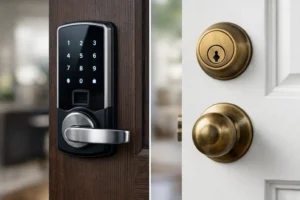
If you are replacing a front door lock after a jam, moving into a new place, or finally upgrading an older setup, the digital lock vs deadbolt question comes up fast. Most people are not looking for theory. They want to know what is safer, what is easier to live with, and what will hold up well on a real home or office door.
The short answer is that both can be a good choice, but they solve slightly different problems. A deadbolt is simple, proven, and often more budget-friendly. A digital lock adds convenience, flexible access, and keyless entry, which can be a big advantage for busy households, rental units, and offices. The better option depends on your door, your daily routine, and how much convenience you want.
Digital lock vs deadbolt: the real difference
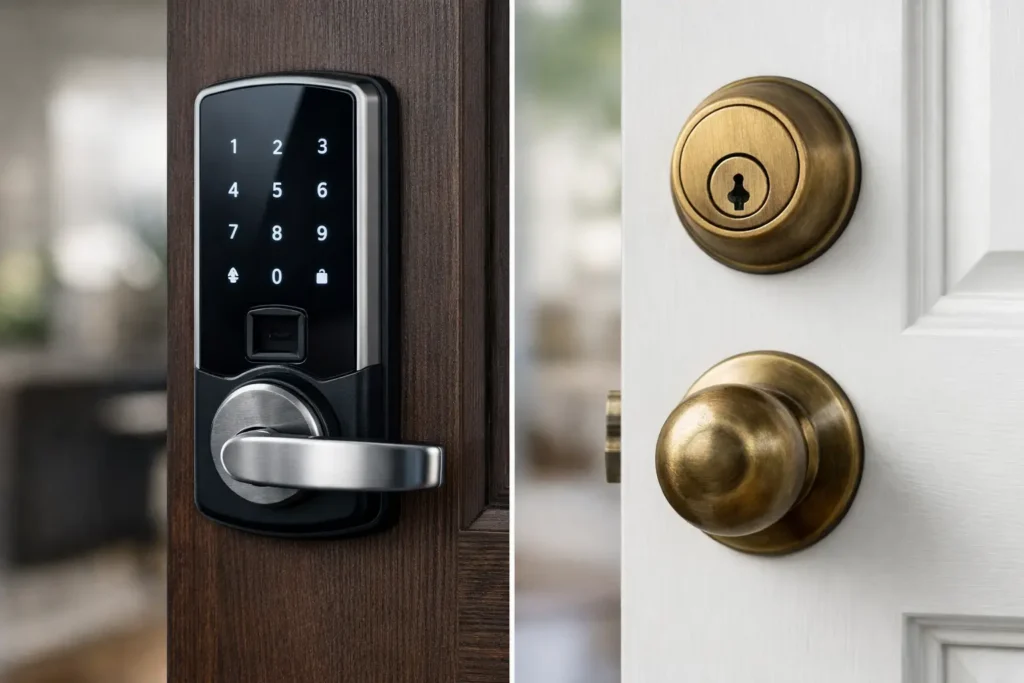
A traditional deadbolt is a mechanical lock. You lock and unlock it with a key from the outside and a thumbturn from the inside. It has fewer parts, a familiar design, and a strong reputation for basic door security.
A digital lock uses a keypad, fingerprint reader, card, app, or a mix of these methods instead of relying only on a physical key. Some models still include a key override, while others are fully keyless. Many are designed to fit standard wooden main doors, metal gates, bedroom doors, and certain office doors.
What matters here is not just how the lock opens. It is how the lock fits into your routine. If you are tired of carrying keys, sharing spare keys, or getting locked out because a key was left inside, a digital lock can remove a lot of everyday friction. If you want a straightforward lock with minimal electronics and low maintenance, a deadbolt still makes a lot of sense.
Security matters, but so does the door itself
People often assume digital means safer or deadbolt means stronger. In practice, security depends on the full setup. A high-quality lock installed properly on a solid door will usually perform better than a premium lock installed badly on a weak frame.
A deadbolt can offer strong physical resistance when matched with the right strike plate, screws, and door condition. That is why it remains a standard choice for many homes and offices. Its strength is in its simplicity. There are no batteries, no screen, and fewer failure points.
A digital lock can also be very secure, especially when it includes anti-tamper features, lockout modes after repeated wrong codes, and good build quality. But not every digital model is equal. Lower-grade products can have weak housings, poor alignment, or unreliable components. That is where proper lock selection and professional installation matter.
For many entry doors, the best security answer is not an either-or decision. Some properties use a digital lock on the main wooden door and keep a mechanical gate lock as a second layer. Others choose a digital deadbolt style lock that combines electronic access with deadbolt-style locking action.
Convenience is where digital locks pull ahead
This is usually the biggest reason people switch. A digital lock makes daily access easier. You can leave the house without carrying keys. Family members can use their own PIN codes or fingerprints. Office staff can enter without passing keys around. If someone no longer needs access, you can often delete a code instead of replacing the whole lock.
That convenience is hard to ignore if you have children, elderly parents, tenants, cleaners, or part-time staff coming and going. It also reduces common key problems like broken keys, lost copies, or lockouts caused by keys being left on the wrong side of the door.
A deadbolt is less flexible, but some people prefer that. There is no learning curve. There are no batteries to monitor. Anyone knows how to use it right away. For older users or people who do not want another device in their lives, that simplicity can be a real advantage.
Cost is not just the price of the lock
When comparing digital lock vs deadbolt, many people look only at the purchase price. A standard deadbolt is usually cheaper to buy and install. If your priority is replacing a damaged lock quickly without stretching the budget, it is often the more practical route.
Digital locks typically cost more upfront. The hardware is more complex, and installation may take more time depending on the door type, alignment, and whether extra drilling or adjustments are needed. Some doors are straightforward. Others need careful fitting to avoid misalignment and future issues.
But the long-term value can be different from the upfront price. If a digital lock helps you avoid frequent key cutting, repeated lockouts, or rekeying after access changes, it may save time and hassle over the years. For rental units and shared-use spaces, that flexibility is often worth the higher initial cost.
Reliability and maintenance
A deadbolt wins on pure simplicity. It does not rely on battery power, and there are fewer components that can fail. That does not mean it is maintenance-free. Mechanical locks can still wear out, become stiff, or jam from misalignment, rust, or poor usage habits. But in general, maintenance is straightforward.
A digital lock needs more attention. Batteries need replacing. Sensors and keypads need to stay clean. If the door sags or shifts, alignment issues can affect how smoothly the lock operates. Most good digital locks give low-battery warnings well in advance, but users still need to act on them.
This is one area where proper installation makes a major difference. A badly aligned digital lock may seem like a product problem when it is actually an installation problem. That is one reason many homeowners and office managers prefer to have a locksmith handle the fitment instead of treating it as a simple DIY project.
Which option works better for different properties?
For a main home entrance, the right answer depends on lifestyle. If your household wants easy entry and less dependence on physical keys, a digital lock is often a strong upgrade. If you want a durable, no-fuss solution at a lower price, a deadbolt remains a solid choice.
For HDB-style living or apartments with both a gate and a main door, the setup matters. Some people keep a mechanical lock on one layer and use a digital lock on the other. This gives convenience without relying on electronics for the entire entry system.
For bedrooms, home offices, and internal doors, digital locks can be useful if controlled access is the priority. For commercial spaces, especially smaller offices, digital locks can make staff access easier and reduce key management issues. For exterior glass or specialized doors, lock compatibility becomes more important than personal preference.
When a deadbolt is the better choice
A deadbolt is often the better fit when you want a dependable lock with low upkeep, when the budget is tight, or when the door is older and not ideal for a more complex electronic setup. It is also a sensible option if the people using the door prefer a familiar key-and-turn system.
If your current problem is a damaged lock, sticky cylinder, or break-in concern and you need a fast replacement, a quality deadbolt can be the quickest practical solution.
When a digital lock is worth it
A digital lock is usually worth the extra investment when convenience is a daily pain point. If keys keep getting lost, copied, forgotten, or shared between too many people, digital access can make life easier right away. It also works well for busy families, rental properties, and offices where access changes over time.
If you are already planning a lock upgrade rather than just replacing a failed part, this is often the moment to consider whether keyless access would genuinely improve your routine.
The best choice is the one that fits your door and your habits
No lock is perfect for every property. The best result comes from matching the lock to the door material, door condition, usage pattern, and budget. That is why a quick assessment matters before choosing based on looks or online reviews alone.
An experienced locksmith can tell you whether your current door can support a digital model properly, whether a deadbolt is the smarter choice, or whether a combined setup gives you better value. Companies like Pro-Smith and Lock handle these decisions every day because the right recommendation is rarely just about the lock on its own.
If you are stuck between the two, think less about trends and more about the problem you want solved. If you want simple and proven, go with a good deadbolt. If you want faster entry and less key trouble, a digital lock may be the upgrade that finally makes your door easier to live with.