A gate lock usually gets attention only after it starts sticking, rusting, or fails when you need it most. If you are figuring out how to choose gate lock hardware for a home, apartment gate, side entrance, or small business, the right choice comes down to three things – security, weather resistance, and daily convenience.
Many people buy based on appearance first, then realize later that the lock does not suit the gate material, the gap between the gate and post, or how the gate is used every day. A front pedestrian gate that opens ten times a day needs something different from a rear service gate, a pool gate, or a commercial side entrance. A good lock should match the gate, not just fit on it.
How to choose gate lock based on real use
Start with the reason you need the lock. That sounds obvious, but it is where most bad choices begin. Some people only want basic access control so the gate stays shut and casual entry is reduced. Others want stronger protection against forced entry. In some cases, convenience matters just as much as security, especially for shared homes, rental units, or workplaces where several people need access.
Think about who uses the gate, how often it opens, and whether access needs to be controlled tightly. A lock for a private garden gate may only need to resist weather and simple tampering. A lock for a front gate leading directly to the main door needs more resistance and more dependable operation. If children, older adults, tenants, or staff use the gate, ease of use matters. A lock that is secure but frustrating every day often ends up being left unlocked.
You should also consider whether the gate is your first security barrier or just one layer in a larger setup. If someone can climb around the side easily, spending heavily on one high-security gate lock may not solve the real problem. Good security is always about the whole entry point.
Match the lock to the gate type
The gate itself decides a lot. Metal gates, wooden gates, sliding gates, and narrow frame gates do not all take the same lock well. This is one of the most important parts of how to choose gate lock hardware properly.
A metal gate often works well with mortise locks, welded lock boxes, or heavy-duty gate latches paired with a keyed cylinder. These can be durable and secure, but installation matters. If the lock body sits exposed or poorly aligned, even a decent lock can fail early.
Wooden gates give you more flexibility, but they can swell, shift, or crack over time. That movement affects alignment. For wood, it is worth choosing a lock that tolerates slight changes without jamming. If the gate is outdoors year-round, moisture resistance is not optional.
Sliding gates create another consideration. The lock needs to work with the gate travel and closing point. Some standard swing gate locks simply are not a good fit. If you choose the wrong style, the lock may feel awkward from day one.
Narrow aluminum or decorative gates can also limit your options. In those cases, people sometimes buy a lock that is too bulky or too weak for the frame. It is better to check dimensions first than force a lock into a setup it was never made for.
Choose the right level of security
Not every gate needs the highest-security lock, but every gate needs enough protection for the risk involved. A light latch with a small keyed section might be fine for a low-risk internal gate. It is not a strong choice for the main perimeter entrance to a landed home or a side access point behind a business.
Look at how exposed the gate is. Can someone work on the lock unseen? Is there enough space to attack the latch with simple tools? Can the gate be lifted off or bypassed another way? Sometimes the weak point is not the cylinder. It is the gate frame, the strike plate, or the hinges.
If you want stronger protection, look for a lock with a solid body, a protected cylinder, and a firm locking point that cannot be easily pried apart. But there is a trade-off. Heavier locks may need more precise installation and better gate alignment. A very secure lock on a weak or misaligned gate can become a service problem.
Do not ignore weather resistance
Outdoor locks deal with rain, heat, humidity, and dirt. That means weather resistance should be near the top of your checklist, not an afterthought.
Rust is one of the biggest reasons gate locks fail early. Stainless steel, brass components, and weather-rated finishes generally hold up better than cheaper plated hardware. If the gate faces direct rain or sun, the lock will age faster. In coastal or humid areas, corrosion becomes even more likely.
This is where low-cost options can become expensive. A cheaper lock may save money upfront, but if the key starts dragging, the latch stops returning properly, or the body corrodes within a year, you are paying for replacement sooner than expected. A lock that lasts and works smoothly in outdoor conditions usually offers better value.
Keyed, keypad, or smart access?
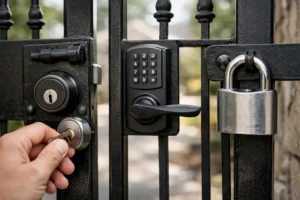
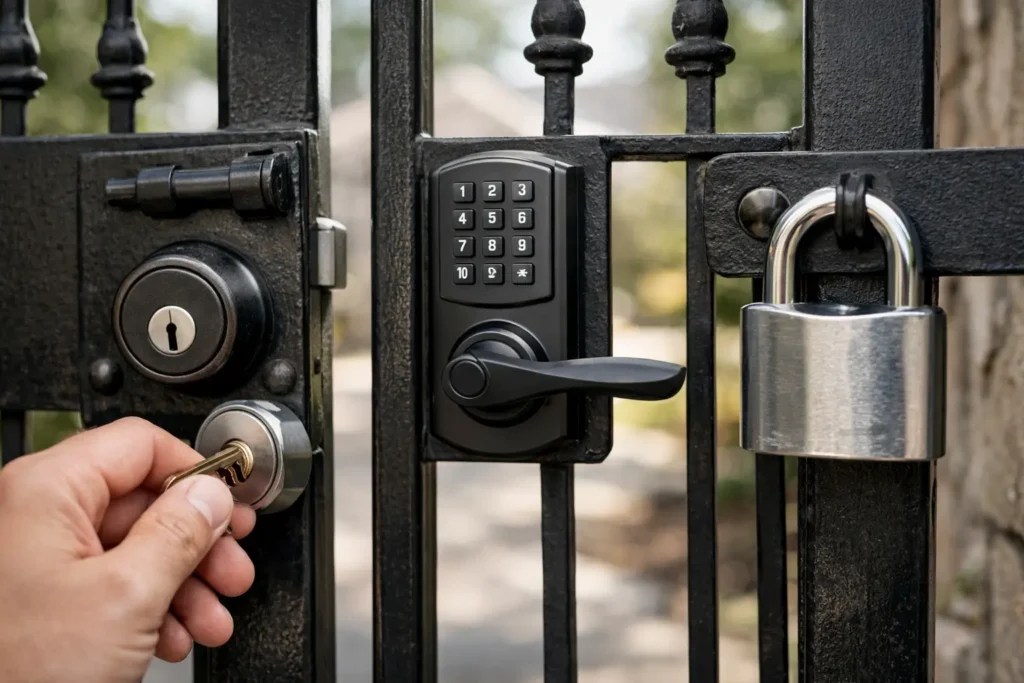
Access style matters more than many people expect. Traditional keyed locks are still a solid choice because they are simple, familiar, and usually affordable. For many homes and small gates, they do the job well.
But they are not always the best fit. If multiple people need regular access, keys get lost often, or users come and go frequently, a keypad lock may be more practical. That removes the problem of key copying and makes it easier to change access when a tenant leaves or staff changes.
Smart gate locks can also be useful, especially if you want app control, audit trails, or temporary access. Still, they are not automatically better. They depend on power, weather protection, and proper setup. For an exposed outdoor gate, the wrong smart lock can create more inconvenience than benefit.
If you want reliability above all, mechanical or standard keyed options still make sense. If convenience and shared access are the bigger issue, digital options may be worth it. It depends on how the gate is used, not what looks more modern.
Pay attention to installation details
Even a good lock can underperform if it is badly installed. This is often where people run into trouble after buying online or choosing hardware based only on photos.
Gate gap, latch alignment, post strength, swing direction, and handle clearance all affect performance. A lock that looks compatible on paper may bind when the gate shifts slightly or may not catch properly if the closing point is weak. That leads to slamming, forcing the key, or leaving the gate unsecured because the lock becomes annoying to use.
Professional fitting also matters when the gate needs drilling, welding, or reinforcement. A stronger lock sometimes needs a stronger mounting point. If not, the hardware is only as secure as the thin metal or timber holding it in place.
Common mistakes when choosing a gate lock
The biggest mistake is choosing only by price. A gate lock is used outside, often daily, and often as part of your first line of security. The cheapest option is rarely the best long-term value.
Another common mistake is buying for appearance. Decorative hardware can look great, but if it is awkward to lock from both sides, hard to align, or not rated for exterior use, it becomes a problem quickly.
People also underestimate convenience. If a lock is too stiff, too small, or too complicated for the people using it, they work around it. That usually means leaving it unlocked or using it inconsistently.
One more issue is trying to solve a gate problem with a lock alone. If the gate sags, drags, or has a weak frame, replacing the lock may not fully fix the security issue. The hardware and the gate need to work together.
When it makes sense to ask a locksmith
If you are replacing an old lock with the same type, the job may be straightforward. But if the gate has alignment issues, limited space, weather damage, or you are changing from one lock style to another, expert advice can save time and prevent repeat costs.
An experienced locksmith can tell you quickly whether the issue is the lock itself, the gate structure, or the way the lock is mounted. That matters because many lock problems are really gate problems in disguise. For property owners who want a practical answer without trial and error, getting the lock matched properly the first time is often the better move.
Pro-Smith and Lock handles this kind of work with a simple goal – recommend a gate lock that suits the entry point, install it correctly, and make sure it works reliably in daily use.
The best gate lock is not the one with the most features. It is the one that fits your gate, stands up to weather, matches your security needs, and works smoothly every single day.