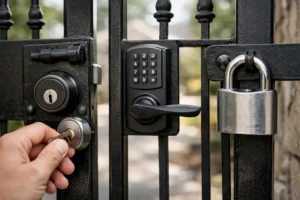
You usually start thinking about how to rekey house locks right after something changes – you moved in, a tenant moved out, a key went missing, or too many copies are floating around. In those moments, replacing every lock can feel like the only option. It is not. Rekeying is often the faster and more cost-effective way to control who can enter your home.
Rekeying changes the internal pins of a lock so the old key no longer works. The lock body stays in place, but a new key is matched to the updated pin setup. For many homeowners, that means better security without changing the full hardware on the door.
What rekeying actually does
A lot of people confuse rekeying with lock replacement. They solve different problems. If your lock is working well and you simply want old keys disabled, rekeying is usually enough. If the lock is damaged, worn out, loose, or outdated, replacement may be the smarter move.
That distinction matters because rekeying is meant to deal with access control, not physical repair. If you have just bought a home, ended a lease, had renovation workers come through, or lost track of key copies, rekeying puts you back in control quickly.
When rekeying makes sense
The best time to rekey is when the lock still works smoothly but the key history is no longer trustworthy. New homeowners do this for peace of mind. Landlords do it between tenants. Families do it after a breakup, a domestic helper change, or a lost key incident.
It also makes sense if you want one key to operate several doors. In some cases, a locksmith can set multiple compatible locks to the same key, which is often called keying alike. That can make daily access much simpler without sacrificing security.
How to rekey house locks yourself
If you are comfortable with small parts and basic hand tools, some standard pin tumbler locks can be rekeyed at home. The catch is that it depends on the lock type, the condition of the lock, and whether you have the right rekey kit.
Start by checking the lock type
Most DIY rekey jobs involve standard cylinder deadbolts and entry knobs. If your lock is a high-security model, smart lock, mortise lock, or a specialty commercial setup, DIY gets more complicated fast. Some locks are not designed for easy field rekeying, and some need brand-specific parts.
Before you buy anything, identify the brand and model. A rekey kit usually works only with certain lock families. If the pins, tools, or key blanks do not match, the job can stall halfway.
Gather the basic tools
A typical rekey setup includes the new key, replacement pins, a follower tool, tweezers, a plug remover, and a small screwdriver. You will also want a clean work surface with good lighting. Tiny springs and pins are easy to lose, and once they scatter, the lock can become more trouble than expected.
If you do not have the current working key, that is another complication. Many common locks require the existing key to remove the plug cleanly. Without it, extra steps are involved, and the chance of damaging the cylinder goes up.
Remove the lock from the door
Take the lock off carefully and keep each screw and part organized. Once the cylinder is accessible, insert the current key and turn it to the position required for plug removal. This lets you slide out the cylinder plug while keeping the top pins and springs controlled.
This is the stage where many DIY jobs go wrong. If the plug is removed without proper support, springs and driver pins can pop out. Reassembling them is possible, but it takes patience and some experience.
Match the new key with new pins
With the new key inserted into the plug, you replace the old bottom pins so they line up flush with the plug surface. That flush alignment is what allows the cylinder to rotate properly inside the housing. If even one pin is the wrong size, the key may stick, fail to turn, or work inconsistently.
Once the new pins are installed, the plug is reinserted into the cylinder. After that, test the lock several times before putting it back on the door. Do not assume one smooth turn means the job is finished. A lock should operate consistently and without force.
The trade-offs of DIY rekeying
DIY can save money on a simple lock, but only when everything lines up – compatible hardware, the correct kit, the original key, and a lock in decent condition. If any of those pieces are missing, the time savings disappear quickly.
There is also the security side of it. A lock that sort of works is not good enough for a front door. If the key sticks, the latch drags, or the cylinder feels rough after rekeying, that is a sign the job needs attention. It is better to catch that early than deal with a lockout later.
When to call a locksmith instead
If you are dealing with multiple doors, worn hardware, missing keys, or mixed lock brands, professional rekeying is usually the better route. A locksmith can assess whether rekeying is possible, whether replacement would be more cost-effective, and whether your locks can be set to one key.
This matters even more for homes with main gates, bedroom doors, mailbox locks, sliding doors, or older entry hardware. Not every lock on a property should be treated the same way. Some are worth rekeying. Others are better replaced because the internal wear is already too far along.
A professional also helps you avoid the hidden issues homeowners often miss, such as misalignment, loose cylinders, worn strike plates, and door fit problems that put extra stress on the lock. Rekeying alone will not fix those.
How long does rekeying take?
For a straightforward residential lock, rekeying can be done fairly quickly. A single lock may take only a short service visit when handled by an experienced locksmith. Multiple doors naturally take longer, especially if some locks need adjustment or cannot be rekeyed as-is.
If speed matters, calling a mobile locksmith is usually the easiest option. For homeowners dealing with a recent move, a lost key, or a security concern, fast on-site service often makes more sense than taking apart lock cylinders on a table and hoping the kit matches.
Should you rekey or replace?
If your lock is solid, modern enough, and functioning smoothly, rekeying is often the right answer. If the lock feels loose, corroded, stiff, or outdated, replacement may give better value. You are not just paying for a key change. You are deciding how much confidence you want in the hardware protecting the door.
There is also a practical middle ground. Some homeowners rekey the locks that are still in good shape and replace the ones that are worn or lower grade. That approach keeps costs under control while improving security where it matters most.
How to rekey house locks with better security in mind
If you are already making changes, use the opportunity to think beyond the key itself. Ask whether your front door and gate use the same key unnecessarily. Consider whether bedroom or office access should be separated. Look at whether older locks still meet your needs.
A rekey service can be part of a broader cleanup of home access. You may want fewer keys, better control over copies, or stronger hardware at the main entry point. Those decisions depend on the property, the people using it, and whether convenience or tighter separation matters more.
For households that want a straightforward fix without guesswork, having an experienced locksmith handle the job is usually the calmer option. Companies like Pro-Smith and Lock deal with these situations every day, especially when customers need fast help after a move, lockout, or key loss.
Rekeying is not complicated in theory, but the real value is making sure the lock works smoothly, the old key is fully disabled, and your home feels secure again. When that is the goal, the best choice is the one that leaves you with no doubt when you lock the door.