A key that sticks at 11 p.m. feels very different from a lock problem you noticed last week. When you need to decide whether to repair or replace door lock issues, the right answer depends on what failed, how secure the property is right now, and whether the lock can still be trusted after the fix.
For most people, this is not really about hardware. It is about getting back inside, keeping the door secure, and avoiding a second problem a few days later. That is why a quick patch is not always the best value, and a full replacement is not always necessary either.
When to repair or replace door lock problems
A lock repair makes sense when the core lock body is still in decent condition and the problem is limited to wear, alignment, or a minor faulty part. A replacement makes more sense when security has been compromised, the lock is badly damaged, or the mechanism is nearing the end of its service life.
That sounds simple, but real cases vary. A front door deadbolt that occasionally jams may just need adjustment, cleaning, or part replacement. A lock that was forced during a break-in attempt should usually be replaced, even if it still turns. A bedroom door lock with a loose handle is one thing. A main entrance lock that no longer latches properly is another.
The biggest mistake people make is judging the lock by whether it opens once. A lock can still function and still be unreliable. If you have to jiggle the key, pull the door upward, or turn the knob twice before it catches, that is a sign the issue is developing, not disappearing.
Signs a door lock can usually be repaired
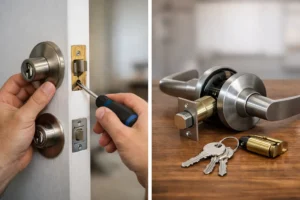
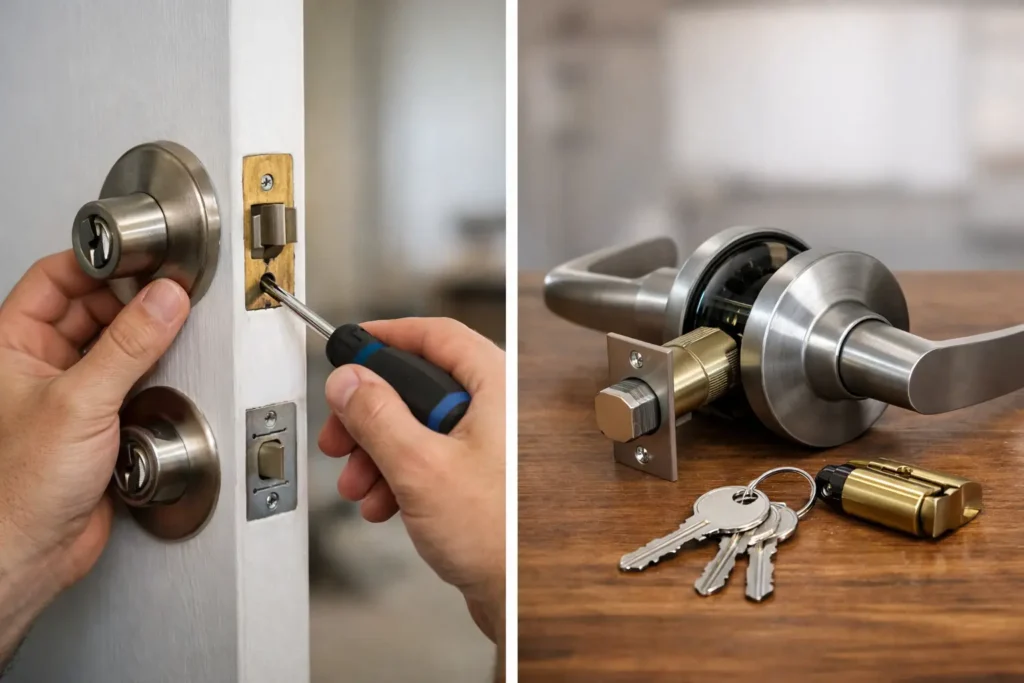
Repair is often the practical choice when the lock has a clear, isolated fault. If the key is hard to turn but not bent, the cylinder may be dirty or slightly worn. If the latch is not catching cleanly, the strike plate or door alignment may be off. If the handle feels loose, the internal spring or mounting hardware may be the issue rather than the full lockset.
This is common on residential doors, bedroom doors, office interior doors, and mailbox locks. In many of these cases, a locksmith can restore proper function without changing the whole lock. That keeps the original hardware in place and can cost less than a full replacement.
Repair also makes sense when the lock is relatively new and the failure happened because of usage issues rather than deep internal wear. Doors settle. Hinges shift. Humidity affects fit. People force keys into locks that are already misaligned. A professional inspection can separate a simple adjustment from a lock that is quietly failing.
Signs you should replace the lock instead
Replacement is usually the safer move when there is a security reason to stop trusting the lock. If your keys were lost or stolen, replacing the lock is often smarter than hoping they never end up in the wrong hands. If you moved into a new home, took over a rental, or changed staff access at an office, replacement gives you control over who can enter.
Physical damage is another clear reason. If the lock was drilled, forced, cracked, rusted internally, or damaged by repeated jamming, repair may only buy a short amount of time. The same goes for locks with worn cylinders that keep catching, even after service. Once wear reaches the point where reliability is questionable, replacement becomes the more cost-effective choice.
Older locks can also be worth replacing for security reasons alone. If the hardware is outdated, low-grade, or poorly suited to the door, repair may restore function but not improve protection. In those cases, replacing the lock lets you solve the immediate problem and upgrade security at the same time.
Cost is important, but so is repeat failure
People often ask the same first question: which is cheaper? In the short term, repair often is. But the better question is whether the repaired lock will stay dependable.
If a minor part failed and the rest of the lock is solid, repair can be excellent value. If the lock is old and already giving repeated trouble, paying for repair today and replacement next month usually costs more in the end. That is especially true for main doors, office entry points, and any door that cannot afford another failure.
There is also the cost of inconvenience. A front door that sticks during the day is annoying. A front door that fails when you are locked out, late for work, or trying to secure the property at night is a different problem. For many customers, the decision comes down to reliability under pressure, not just the service invoice.
Repair or replace door lock after a break-in or lost key?
If there has been a break-in attempt, forced entry, or you no longer know who has the keys, replacement is usually the right call. A lock that has been attacked may still appear usable, but small internal damage can weaken performance and make the door easier to compromise later.
The same logic applies after a tenant change, staff turnover, or a lost key situation involving your home, office, or mailbox. Even if the lock itself is not broken, access control has been lost. Replacing the lock restores certainty.
In some cases, rekeying may also be an option if the lock type allows it and the hardware remains in good condition. That can be useful when the main issue is key control rather than a damaged mechanism. A locksmith can advise whether rekeying, repair, or full replacement gives the best balance of cost and security.
Different doors, different answers
Not every lock problem should be treated the same way. Main entrance doors carry a higher security burden than interior bedroom doors. Glass office doors often use specialized hardware where proper fitting matters as much as the lock itself. Mailbox locks are simpler, but if the key is gone or the cam is damaged, replacement is usually faster than trying to repair a low-cost part.
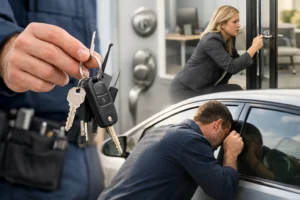
For car locks, the situation is even more specific. A lockout does not automatically mean the lock is faulty. Sometimes the issue is the key, the remote, or the vehicle system. For home and office doors, though, mechanical wear and alignment issues are far more common, and those are easier to assess on-site.
That is why a one-size-fits-all answer rarely works. The best decision depends on the door type, the lock type, the age of the hardware, and whether the problem is inconvenience, damage, or real security risk.
Why professional assessment matters
A lot of lock problems look simple from the outside. A loose knob may be a stripped internal mechanism. A sticky key may point to a worn cylinder. A door that will not latch may have hinge shift, frame movement, strike misalignment, or lock body damage.
Trying to force the issue often makes it worse. DIY sprays, excess pressure, or the wrong replacement parts can turn a repairable lock into a full replacement. For urgent situations, that can also mean more time outside the house or a door that cannot be secured properly.
A professional locksmith can usually identify the fault quickly, test whether the lock is worth saving, and recommend a practical fix based on security and long-term use. That matters most when the door protects your home, your workplace, or anything you cannot leave unsecured.
Companies like Pro-Smith and Lock handle these calls on-site, which is often the fastest way to get a clear answer. Instead of guessing from photos or trying temporary fixes, you get a direct assessment of whether repair will hold or replacement is the safer investment.
How to make the right choice fast
If the lock is relatively new, the issue is minor, and security has not been compromised, repair is often the sensible option. If the lock is old, damaged, forced, unreliable, or tied to lost keys and unknown access, replacement is usually the better decision.
When you are unsure, think about trust. Not whether the lock works once, but whether you trust it to work tonight, tomorrow, and when you are in a hurry. That is usually the clearest line between a repair that makes sense and a replacement that should not be delayed.
The best lock solution is the one that leaves you secure, not just temporarily unstuck.