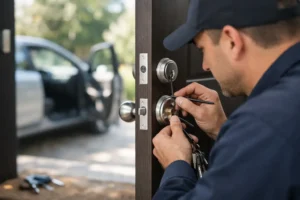
A main gate lock usually starts failing in small, annoying ways. The key sticks once. The latch needs an extra push. The gate closes, but it does not feel fully secure. That is often how a simple main gate lock repair turns into an urgent call after someone gets locked out or cannot lock up properly at night.
For homes, apartments, and small commercial properties, the gate is the first barrier people rely on. When its lock becomes unreliable, the issue is not just inconvenience. It affects daily access, safety, and peace of mind. In Singapore, where metal gates are common for HDB flats, condos, and landed homes, wear and alignment problems show up more often than many people expect.
When main gate lock repair is the right move
Not every faulty lock needs full replacement. In many cases, repair is the faster and more cost-effective option, especially when the lock body is still in usable condition and the issue is tied to alignment, internal wear, or a damaged component.
A repair is often suitable when the key still turns but feels rough, when the latch does not catch properly, or when the gate only locks after lifting or pulling it into position. These are signs that the lock may be fighting against the gate frame, strike plate, or sagging hinges rather than completely failing on its own.
If the lock has been forced, badly rusted through, or is using an outdated mechanism with poor security, replacement may make more sense. The practical answer depends on the actual condition of the hardware, the age of the lock, and whether the current setup still provides the level of security you want.
Common signs your gate lock needs attention
Most customers wait until the problem becomes urgent, but the warning signs usually appear earlier. If you notice them, you can often avoid a lockout and keep the repair simpler.
A loose handle or cylinder is one of the first clues. So is a key that needs jiggling before it works. Some locks begin to catch only from one side, while others become stiff during certain times of day because the gate shifts slightly with regular use.
You may also hear scraping when closing the gate, or feel resistance when throwing the bolt. If the lock works only when the gate is pushed hard, that points to alignment trouble. If the key turns halfway and stops, the issue may be inside the lock body itself.
What causes gate locks to fail
Main gate locks deal with more physical stress than many indoor locks. They are used often, exposed to moisture and dust, and installed on gates that can shift over time. Even a quality lock will eventually show wear.
Misalignment is one of the most common causes. A metal gate can sag slightly after years of daily opening and closing. When that happens, the latch or deadbolt no longer lines up cleanly with the strike area, so the lock starts dragging or jamming.
Worn internal parts are another frequent issue. Springs weaken, small components wear down, and key movement becomes less precise. In some cases, the key is not the problem at all. It is the lock mechanism losing consistency after long-term use.
Weather and corrosion also matter. Even covered entryways are not fully protected from humidity. Rust, dirt buildup, and lack of lubrication can make a lock feel harder to operate long before it fully stops working.
Then there is accidental damage. People force a stiff key, slam the gate repeatedly, or continue using a lock that is already binding. What starts as a minor issue becomes a broken key, a jammed cylinder, or a lock that will not open from either side.
What a professional locksmith checks first
A proper repair starts with diagnosis, not guesswork. If someone treats every faulty gate lock the same way, you often end up paying for the wrong fix.
A locksmith will usually check whether the problem comes from the lock, the key, the gate alignment, or a combination of these. The cylinder, latch, strike plate, screws, handle set, and hinge position all need to be assessed together. On metal gates, even a small shift can create a lock problem that looks worse than it is.
This matters because some issues can be solved by realigning components, tightening fittings, cleaning internal parts, or replacing a specific worn section instead of changing the entire lock. That keeps the repair practical and avoids unnecessary cost.
Repair or replace – how to decide
This is where many property owners want a clear yes-or-no answer, but it depends on the lock’s condition and your priorities.
If the existing lock is structurally sound and the fault is limited to sticking, minor jamming, or poor alignment, repair is usually the better first option. It is quicker, less disruptive, and often enough to restore smooth operation.
If the lock has repeated failures, visible corrosion, signs of tampering, or weak security compared to current standards, replacement is often the smarter long-term choice. The same applies when spare parts are no longer practical to source or when the mechanism has become unreliable after multiple temporary fixes.
For homeowners thinking about security upgrades, replacement can also be a good time to move to a better lock setup. But if your main goal is to get the gate working safely again without overspending, repair may be all you need.
Why DIY gate lock fixes often backfire
It is tempting to try oil spray, a screwdriver, and a few YouTube tips. Sometimes that seems to work for a day or two. The problem is that gate locks usually fail for more than one reason.
If the gate is misaligned, adding lubricant will not solve the strain on the bolt. If the internal parts are damaged, forcing the key can make the repair more expensive. If the screws are loose because the mounting points have shifted, tightening them without correcting the position can worsen the binding.
There is also the security risk. A badly adjusted lock might appear functional but fail to secure properly. That is the kind of issue people only discover when the gate does not latch or the key stops working at the worst time.
Fast service matters during a lock issue
When a main gate lock fails, most people are not comparing lock brands or reading technical specs. They want someone who can show up, identify the problem quickly, and fix it without making the situation more stressful.
That is why mobile locksmith support matters. A service that comes on-site can assess the gate, the door area, and the full lock setup in real conditions. For urgent cases, response time is not a small detail. It is part of the solution.
An experienced locksmith also brings the practical advantage of handling different lock types, gate materials, and access issues in one visit. That is especially useful when the problem turns out to involve both the lock and the gate alignment.
Main gate lock repair for homes and offices
Residential gate lock problems are the most common, especially for HDB and condo units with frequently used front gates. Typical issues include jammed latches, hard-turning keys, loose handles, and lockouts caused by wear or broken keys.
For offices and small commercial properties, the priority is often access control and reliability. A faulty gate lock can delay staff entry, affect deliveries, or create after-hours security concerns. In these cases, a repair has to be both quick and dependable, not just temporary.
This is where an experienced service provider makes a difference. Pro-Smith and Lock handles on-site lock work across a wide range of residential and commercial situations, with the kind of fast response customers usually need when access or security is affected.
How to prevent another gate lock failure
Good lock maintenance is not complicated, but it does require paying attention before the problem becomes urgent. If your gate starts scraping, shifting, or needing extra force, do not ignore it. Small alignment issues tend to get worse with time.
Use the correct key, avoid forcing the lock, and have stiffness checked early. If the gate has become harder to close, the issue may be mechanical rather than purely lock-related. Fixing that early can extend the life of the hardware.
It also helps to think beyond the immediate repair. If your lock has already needed repeated fixes, ask whether the current setup still suits the level of use it gets. A durable repair is about restoring function, but also about reducing the chance of another urgent call next month.
A main gate lock should not be something you have to fight with every day. If it is sticking, jamming, or leaving you unsure whether the gate is properly secured, getting it checked early is usually the simplest way to protect both your time and your peace of mind.