You are halfway out the door, turn the key, and it drags, catches, or refuses to come back out smoothly. If you are asking, why does key keep sticking, the problem usually starts small and then gets worse fast. A sticky key is often the first warning that something is off with the key, the lock cylinder, the door alignment, or simple wear inside the mechanism.
The good news is that a sticking key does not always mean you need a full lock replacement right away. The less good news is that forcing it can turn a minor issue into a snapped key, a jammed cylinder, or a full lockout. For homeowners, tenants, office managers, and drivers, the safest move is to catch the cause early and deal with it before the lock fails at the worst time.
Why does key keep sticking? The most common reasons
In most cases, the issue comes down to friction where there should be smooth movement. That friction can come from dirt inside the lock, wear on the key blade, internal damage in the cylinder, or a door that no longer lines up properly with the frame.
A worn key is one of the most overlooked causes. Over time, the ridges on a frequently used key can round off slightly. The key may still go in, but it no longer lifts the pins as cleanly as it should. That creates drag, inconsistent turning, and the feeling that the key has to be wiggled into exactly the right position.
Dirt and debris are another common cause, especially on exterior doors, gates, mailboxes, and car locks. Dust, moisture, pocket lint, and old residue can build up inside the keyway. In humid conditions, that buildup can become sticky enough to interfere with the pins moving freely.
Then there is plain wear inside the lock. Pins, springs, and the cylinder itself do not last forever. A lock can keep working long after its internal parts have started to wear unevenly. That is when you notice the key sticking some days but not others.
The lock may not be the only problem
Sometimes the key is fine and the cylinder is still usable, but the door is pulling the lock out of position. This happens more often than people expect.
Door alignment can make a good lock feel faulty
If a door has dropped slightly on its hinges, swelled, shifted, or started rubbing against the frame, the latch and bolt may sit under pressure. That pressure transfers back to the cylinder, which makes the key harder to turn or remove. You may notice the key works better when you push or pull the door while turning it. That is a strong sign the alignment needs attention.
This is common on front doors, bedroom doors, metal gates, and some office doors that see heavy daily use. In these cases, replacing the lock alone may not fully solve the problem.
Weather and moisture can affect performance
Moisture is tough on locks. It encourages corrosion, attracts grime, and can make small internal parts less responsive. Even if the lock is not badly rusted, early corrosion inside the cylinder can create enough resistance to make the key stick.
That is one reason outdoor locks often fail sooner than indoor ones. If the lock is exposed to rain, humidity, or temperature swings, sticking can become a repeating problem rather than a one-time annoyance.
What you should try first
If the key is sticking but not fully jammed, keep your first response simple. The goal is to avoid making the damage worse.
Start by checking the key itself. If it looks bent, cracked, or visibly worn, stop using it if you have a better copy. A damaged key can get trapped or break off inside the cylinder. If only one copy sticks and another works smoothly, the key is the problem, not the lock.
Next, pay attention to how the door is sitting. If the key turns more easily when you lift the handle, push the door inward, or pull it slightly, alignment is likely part of the issue. That means the lock is under stress every time you use it.
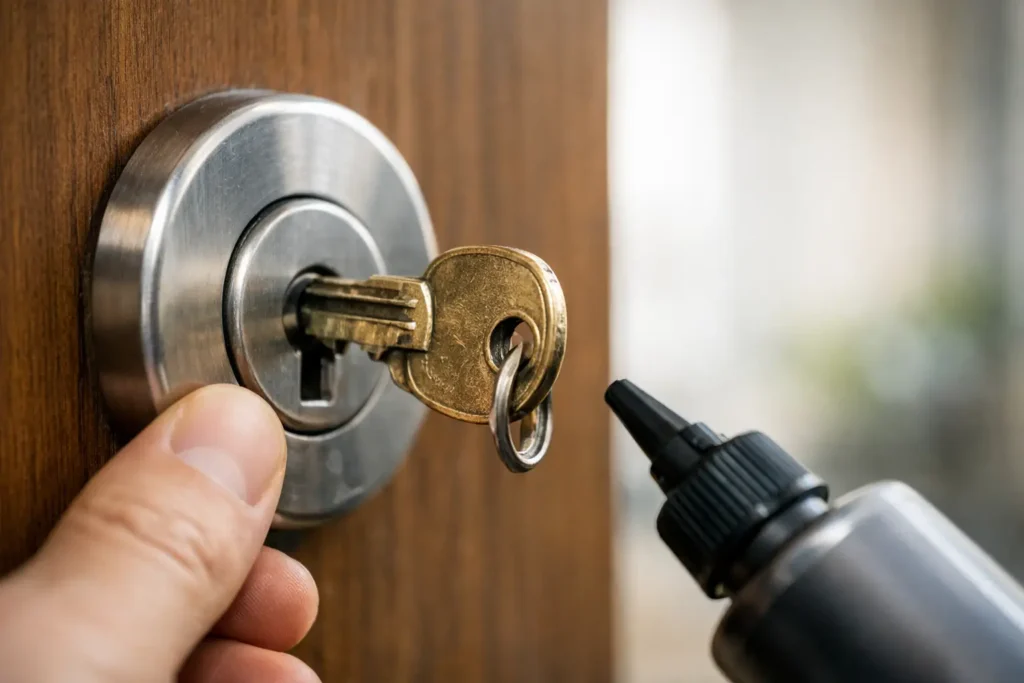
You can also inspect the keyway for visible debris. If there is obvious dirt, a proper lock-safe dry lubricant may help. Use only products meant for locks. Oil-based sprays can seem helpful at first, but they often attract more dirt and create a gummy buildup over time.
What not to do with a sticking key
This is where many small lock issues become emergency calls.
Do not force the key harder if it is resisting. Do not keep twisting after you feel grinding or binding. Do not use pliers to yank the key out unless it is the only way to prevent it from snapping, and even then, use caution. Excess force can damage the pins, twist the key, or break it inside the lock.
It is also a bad idea to keep testing the lock over and over if it is clearly getting worse. A lock that sticks once a week can become a lock that will not open at all with very little warning.
When the key keeps sticking in one lock only
If the same key works fine in other locks but keeps sticking in one specific cylinder, the lock itself is the likely issue. That could mean wear, internal damage, debris, or a misaligned installation.
For example, main door locks and gate locks often face higher strain because of heavier doors and frequent use. Office glass door locks can also become sensitive if the door shifts slightly or the cylinder starts wearing out. Mailbox locks and bedroom door locks may seem simple, but once the internal parts deteriorate, they often go from sticky to unusable very quickly.
In these cases, professional servicing is usually the smarter option than waiting for a lockout.
When the key keeps sticking in every lock
If one key is sticking in several different locks, the key is probably worn, bent, or poorly cut. This can happen with older duplicate keys or copies made from already worn originals. The cuts may be just slightly off, but enough to cause repeated sticking.
A fresh, accurate key can solve the issue if the locks themselves are still in good condition. But if the key has already caused internal wear by repeated rough use, the lock may still need service afterward.
When to call a locksmith
There is a point where trying one more time stops being practical and starts being risky. If the key sticks regularly, only turns with pressure, feels rough going in or coming out, or has already gotten trapped once, it is time to have it checked.
A locksmith can determine whether the problem is the key, the cylinder, the alignment, or a combination of issues. That matters because the right fix is not always replacement. Sometimes the lock can be serviced, adjusted, or rekeyed. Sometimes replacement is the better value, especially if the lock is old, unreliable, or no longer providing good security.
For homes and offices, fast attention helps you avoid the bigger inconvenience of a full lockout. For vehicles, it is even more important not to push your luck. Car keys, especially modern ones, can be expensive to replace if they break or the ignition develops damage from repeated sticking.
Repair or replace? It depends on the condition
Not every sticky lock needs to be thrown out. If the issue is early-stage dirt buildup or minor alignment stress, repair may be enough. If the cylinder is worn, corroded, loose, or inconsistent even after servicing, replacement is usually the more dependable choice.
This is also a good time to think about security, not just convenience. If your lock is old enough to be sticking from wear, it may also be due for an upgrade. A fresh, properly fitted lock can give you smoother operation and better protection at the same time.
Experienced mobile locksmiths handle this on-site, which is useful when the problem is affecting your front door, office entry, gate, or mailbox and you need it sorted out quickly. Companies like Pro-Smith and Lock see these issues every day, and the main goal is always the same: get the lock working safely without wasting your time.
A sticking key is an early warning, not a small annoyance
Most locks do not fail without giving some notice. A key that starts sticking is one of the clearest signs that something needs attention. You might get days, weeks, or months before it fully jams, but once the warning starts, the safer move is to act before you are locked out, running late, or dealing with a broken key in the cylinder.
If your key has started dragging, catching, or refusing to turn cleanly, treat it like what it is: a repair issue that is easier and cheaper to solve before it becomes an emergency.