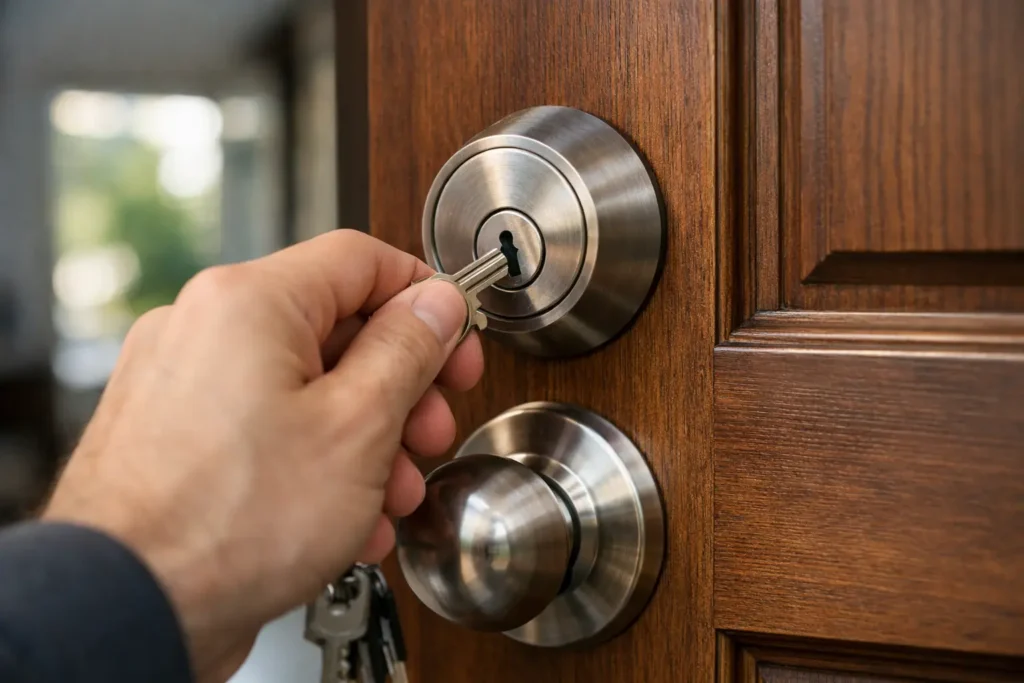
A deadbolt is often the first lock homeowners consider when a main door feels old, loose, or too easy to force. But a good deadbolt lock review guide should do more than point to the strongest-looking product. The right choice depends on your door material, existing lock setup, daily access needs, and whether the lock can be fitted properly without weakening the door.
For a home, HDB unit, office, or rental property, the best lock is the one that gives dependable protection and works smoothly every day. A lock that is difficult to turn, poorly aligned, or incompatible with the door can create more problems than it solves. Here is what to review before choosing or replacing a deadbolt.
What a Deadbolt Should Do Well
Unlike a basic spring latch, a deadbolt uses a solid bolt that remains extended until it is turned by a key, thumbturn, or compatible access system. When installed correctly, it adds resistance against forced entry at the main door.
The key word is correctly. A strong deadbolt fitted to a weak strike plate, thin door frame, or damaged door edge will not perform as intended. Security comes from the complete setup: the lock body, cylinder, bolt, strike plate, screws, door frame, hinges, and installation quality.
For most homes, a deadbolt should offer three practical benefits. It should be difficult to force, easy for authorized occupants to use, and suitable for the door without excessive drilling or modification. If one of these factors is missing, it may not be the right upgrade.
Deadbolt Lock Review Guide: Start With Door Compatibility
Before comparing finishes, keyways, or price, check whether a conventional deadbolt is suitable for the door. Many main doors use timber, metal, composite, or fire-rated construction. Some also have a mortise lock, multipoint lock, rim lock, or digital lock already installed.
A standard cylindrical deadbolt may be a good fit for a solid swing door with enough clearance around the existing handle. However, it is not automatically the best choice for every property. A door with a multipoint locking system may need repair or replacement of the existing mechanism rather than an additional deadbolt. A narrow-profile metal door may not have enough surface area for a safe installation. Glass office doors require purpose-built glass door locks, not a deadbolt designed for timber doors.
Door thickness matters too. A lock designed for one thickness range may sit loosely or bind when installed on another. The backset, or distance from the door edge to the center of the lock hole, also needs to match the door. Small measurement errors can leave the bolt misaligned with the frame.
If your current lock is sticking, the issue may be door movement rather than lock failure. Humidity, loose hinges, a swollen timber door, or a shifted strike plate can stop a deadbolt from extending smoothly. Replacing the lock without correcting alignment may only hide the problem temporarily.
Review the Door Frame and Strike Plate
The strike plate is the metal plate fixed to the frame where the deadbolt enters. It is easy to overlook because the deadbolt itself gets most of the attention. Yet the strike area takes much of the force during an attempted break-in.
Look for a substantial strike plate that is securely fastened into solid framing, not only thin trim. Longer screws that reach the structural frame can improve holding strength where the door construction allows it. The bolt should enter fully without scraping, catching, or requiring you to lift the door to lock it.
If the frame is cracked, soft, or damaged around the strike, repair may be needed before any new lock is fitted. A professional locksmith can assess this on site and recommend a practical solution instead of installing a new lock onto a weak mounting point.
Key Control Is Part of Security
A deadbolt can be mechanically strong while still leaving a property exposed through poor key control. This is especially relevant for rental homes, shared apartments, offices, and properties that have had previous occupants, contractors, or staff members.
Ask who has copies of the existing key. If the answer is unclear, rekeying or replacing the cylinder may be wiser than continuing to use the same keys. Rekeying changes the internal pin setup so old keys no longer work, while a full replacement provides an opportunity to upgrade the lock body and cylinder at the same time.
For families or businesses with several doors, key alike systems can reduce the number of keys carried each day. One key can operate selected locks while separate restricted areas remain secured. Larger offices may benefit from a master key system, where authorized personnel have access to specific doors according to their role.
Convenience should not mean giving every keyholder unrestricted access. The right setup depends on the property, the number of users, and how often access changes.
Single-Cylinder vs. Double-Cylinder Deadbolts
A single-cylinder deadbolt uses a key outside and a thumbturn inside. It is convenient for residents because the door can be opened quickly from indoors without searching for a key.
A double-cylinder deadbolt requires a key on both sides. Some property owners consider it where glass panels or nearby windows could allow someone to reach the inside thumbturn. However, this option can slow emergency exit if the key is not immediately available. Local fire safety requirements and the door’s role as an exit should always be considered before choosing this style.
For many residential main doors, a properly installed single-cylinder deadbolt combined with appropriate door and frame security is the more practical choice. If there is a specific security concern around glass or access through a side panel, ask a locksmith to inspect the layout rather than choosing a double-cylinder lock based on appearance alone.
Mechanical Deadbolts and Digital Locks
Mechanical deadbolts remain popular because they are familiar, durable, and simple to operate. They do not depend on batteries, apps, or electronic components. For owners who want a straightforward main-door upgrade, a quality keyed deadbolt can be an effective answer.
Digital locks add convenience through PIN codes, cards, fingerprints, or temporary access options. They can be useful for busy households, rental properties, and offices where keys are frequently misplaced or access needs to change. The trade-off is that they need proper installation, routine battery checks, and a clear backup entry method.
A digital lock is not automatically more secure than a mechanical deadbolt, and a mechanical lock is not automatically outdated. The better option depends on how the door is used. If several people need changing access, digital features may help. If you want simple, reliable key operation with minimal maintenance, a mechanical deadbolt may be the better fit.
Warning Signs That Replacement Cannot Wait
A deadbolt should turn smoothly and extend fully into the strike plate. If it does not, avoid forcing the key or thumbturn. Forcing it can snap a key, damage the cylinder, or leave you locked out.
Arrange prompt lock service if you notice any of these issues:
- The key turns but the bolt does not move properly.
- The bolt scrapes the frame or will not extend fully.
- The cylinder is loose, spinning, or difficult to remove the key from.
- The strike plate, frame, or door edge is cracked or bent.
- Keys have been lost, stolen, or retained by a former occupant.
These problems may call for adjustment, rekeying, repair, or full replacement. The right answer depends on the condition of the lock and door, not just the age of the hardware.
Why Professional Installation Makes a Difference
Deadbolt installation involves more than drilling a hole and tightening screws. The bolt must line up with the strike, the cylinder must sit correctly, and the lock must operate without placing stress on the door. Incorrect fitting can leave gaps, cause premature wear, and make an otherwise good lock less secure.
This matters even more for metal doors, fire-rated doors, doors with existing mortise locks, and doors that have been repaired before. Unnecessary drilling can be costly and may affect the door’s appearance or function. A locksmith should first assess what is already installed, explain the available options, and recommend work that suits the door rather than pushing a one-size-fits-all replacement.
Pro-Smith and Lock provides on-site lock assessment and replacement support for residential and commercial doors in Singapore. With more than 14 years of practical locksmith experience, the focus is on fitting a dependable solution that works properly from the first turn of the key.
A deadbolt is a small piece of hardware with a large job. Choose one that fits the door, protect the frame as well as the lock, and act early when keys or lock operation can no longer be trusted.