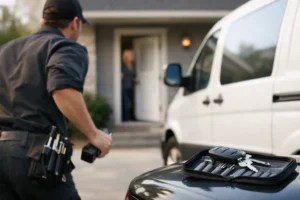
A broken key extraction example often starts with a rushed morning: the key feels stiff, someone applies a little more pressure, and the key snaps with half of it still inside the lock. The door may still be closed, the key may be bent, and a simple entry problem can quickly become a damaged-lock problem. The best next move is usually to stop, avoid pushing the fragment farther in, and assess whether professional extraction is the safer option.
For homeowners, tenants, office managers, and drivers, a broken key is frustrating because it removes the one thing you need to regain access. A careful locksmith can often remove the piece, check the lock for internal damage, and advise whether the existing lock remains reliable. Trying several improvised methods can turn a straightforward extraction into a lock replacement.
A Broken Key Extraction Example in a Main Door Lock
Consider a common situation at an apartment main door. The resident notices that the key has been catching for several days. One evening, they turn it while pulling the door toward them. The key breaks at the shoulder, leaving the blade inside the cylinder and the key head in their hand.
The first important detail is whether the cylinder is in its normal, upright position. If the key broke while the lock was partly turned, the pins and internal components may not line up for easy removal. The second detail is how far the broken piece sits inside. A fragment that is visible at the keyway entrance may be easier to grip than one pushed deep behind the lock face.
In this example, the resident uses a flashlight, sees that the broken piece is nearly flush with the keyway, and decides not to use glue, wire, or another key. A locksmith arrives with dedicated extraction tools, stabilizes the cylinder, and removes the fragment without drilling the lock. Afterward, the locksmith tests the original spare key. Because the lock had been sticking before the break, the cylinder is cleaned and inspected. The resident is advised to replace the worn key and consider a lock upgrade if the cylinder continues to bind.
That is the ideal outcome: access is restored, the lock is not unnecessarily damaged, and the underlying cause is addressed rather than ignored.
Why Keys Break Inside Locks
Keys rarely snap without a reason. The key itself may be old, thin, bent, or worn around the cuts. Repeated use gradually weakens the metal, especially if the key is used to pull a heavy door open or closed.
The lock can also be the cause. Dust, corrosion, worn pins, poor alignment, and a sagging door can make turning difficult. On a main door or metal gate, pressure from the door frame may be transferred to the key. On an office glass door, a misaligned lock or handle can put similar strain on a small key.
Weather, moisture, and lack of maintenance may contribute, but forcing a key is often the immediate trigger. A key should turn with controlled pressure. If it resists, do not twist harder. Try returning it to the neutral position, relieve pressure on the door by gently pushing or pulling, and use a spare key if available. If it still does not move, stop before it breaks.
What You Should Do Immediately
Keep the broken key head and any loose pieces. A locksmith can use the complete key to identify the correct blank or assess the break. Then avoid inserting another key into the lock. A spare key can push the broken fragment deeper, making extraction harder.
Do not spray random oil, adhesive, or household lubricant into the cylinder. Some products leave residue that traps dirt and affects the pins. Glue is particularly risky. If adhesive reaches the lock pins, the keyway can become blocked, and the lock may need replacement even if the fragment is removed.
If you are locked out of your home, workplace, or vehicle, check whether another authorized entry is available. Do not force a door, pry a window, or damage a glass panel. The repair bill can quickly exceed the cost of a proper lock opening service.
A clear photo of the lock and broken key can also be useful when you call for help. Describe the door type, whether you are locked inside or outside, and whether the key fragment is visible. This helps the locksmith arrive prepared for the right lock and access situation.
When a Careful DIY Attempt May Be Reasonable
There are limited cases where a careful attempt may be reasonable. If the broken piece is clearly protruding from the keyway and can be gripped without pushing or twisting it, fine needle-nose pliers may remove it. Grip only the exposed metal and pull straight out with very light pressure.
This approach is not appropriate when the fragment is flush, deep inside, or stuck after the lock was turned. It is also a poor choice for high-security cylinders, electronic access doors, vehicle ignitions, mailbox locks, or commercial glass doors. These locks can be more easily damaged, and replacement may involve more than changing a basic cylinder.
Do not attempt to dismantle a lock while standing outside a secured property. Even if you remove visible screws, many locksets have parts that can fall out, shift, or become difficult to reassemble. If the door is locked, you may still be unable to gain entry after creating a larger repair issue.
How Professional Broken Key Extraction Works
Professional broken key extraction is not simply a matter of pulling out metal. The locksmith first checks the keyway position, lock type, and condition of the remaining fragment. Specialized extractors are designed to catch the grooves or edge of the broken key and pull it out without forcing the internal pins.
If the lock is under pressure from a misaligned door, that pressure is relieved before extraction. If the key has broken in an ignition or vehicle door lock, the work must be done carefully to avoid damage to the vehicle’s lock or electronic components. For a home or office door, the locksmith may test the cylinder with a working key after removal to confirm it turns smoothly.
Sometimes extraction alone is enough. Other times, the broken key reveals a deeper issue: a worn cylinder, damaged keyway, failing latch, or door alignment problem. A dependable locksmith should explain the difference between a repair that is still safe and a lock that should be replaced. The right answer depends on the condition of the hardware, not just whether the broken piece comes out.
Avoiding a Repeat Problem
Once the key is removed, do not continue using the same damaged key. Have a new key made from a good original, not from a bent or heavily worn copy. Copies made from worn copies can reproduce the same poor fit and accelerate lock wear.
Pay attention to early warning signs. A key that requires wiggling, a lock that only works when the door is lifted, or a handle that feels loose deserves attention before it becomes an emergency. Door alignment adjustments, cylinder servicing, and replacement hardware can be practical preventive repairs.
For rental homes and offices, make sure authorized users have properly cut keys and know whom to contact if one breaks. Master key and key-alike systems should be handled with extra care because an incorrect duplicate or damaged cylinder can affect access management across several doors.
Get Help Before the Lock Suffers More Damage
A broken key can happen at the worst possible time, but it does not always mean a full lock replacement. The key is to avoid turning a small problem into a damaged door, cylinder, or ignition. If the fragment is stuck, the lock was already difficult to operate, or you need urgent entry, a mobile locksmith can assess the situation on site and choose the least destructive solution.
Pro-Smith and Lock handles broken key and lock access problems with a practical approach: remove the fragment where possible, test the hardware, and recommend repair or replacement only when it is needed. Keeping calm and calling for the right help can get you back inside with your security intact.