A toddler can reach a door handle sooner than most parents expect. One week, the bedroom door is safely out of reach. The next, your child is turning the lever, heading toward the staircase, or trying the front door while you are preparing dinner. The top childproof door lock options help prevent those frightening moments without making everyday access difficult for adults.
The right choice depends on the door, the child’s age and ability, and where the door leads. A lock that works well on an interior bedroom door may be the wrong fit for a main entry door or metal gate. Most importantly, childproofing should never prevent adults and older children from leaving quickly during an emergency.
Why the right door lock matters
Door handles are simple by design, which is exactly why they become a concern once a child learns cause and effect. A lever handle can be pushed down with one hand. A round knob may take more coordination, but determined children often figure it out. Doors leading to balconies, stairwells, kitchens, storage rooms, and outside areas deserve extra attention.
A childproof lock adds a second action that young children cannot easily understand or perform. It is not a replacement for supervision, but it creates valuable time for an adult to respond. For families with young children, that small delay can prevent a door from becoming an immediate safety risk.
Before buying any device, check whether the door is a fire exit route. Locks on the inside of an occupied home should allow adults to release them quickly without searching for a key. If you rent, manage a property, or live in a building with specific safety rules, confirm what modifications are permitted before drilling into a door or frame.
Top childproof door lock options to consider
Lever-handle locks for bedrooms and bathrooms
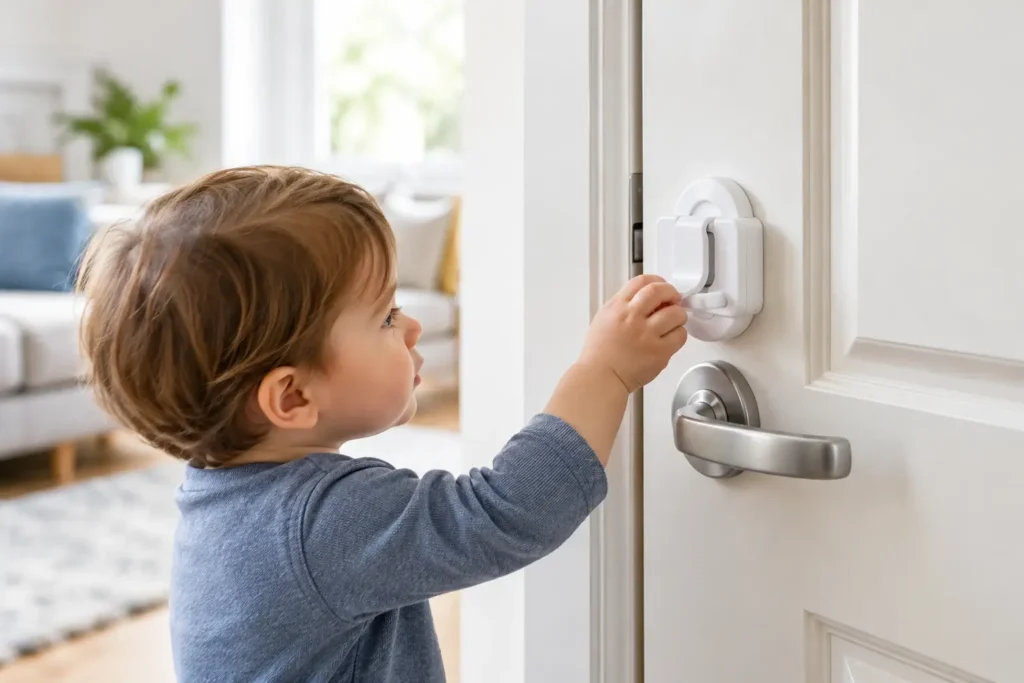
Lever-handle locks are among the easiest options to fit. They usually attach over or around the existing handle and stop it from being pushed down unless an adult releases a button, tab, or catch. They are a practical choice for bedroom doors, laundry rooms, pantries, and bathrooms where you want to limit a child’s access but still use the original lock hardware.
The main advantage is convenience. Many models install without tools and can be removed later with minimal damage. However, adhesive-based versions rely on a clean, dry surface. Heat, humidity, rough door finishes, and frequent pulling can weaken the adhesive over time. Test the lock regularly instead of assuming it is still secure after installation.
Door knob covers for round knobs
A door knob cover surrounds a round knob with two interlocking plastic pieces. Adults squeeze or press designated areas to grip and turn the knob, while small hands usually cannot apply the same coordinated pressure. This option is affordable and works well for standard interior doors.
The trade-off is that knob covers can feel awkward for grandparents, caregivers, or anyone with reduced hand strength. They also do not fit every oversized, decorative, or unusually shaped knob. Measure your hardware first, and make sure every adult in the household can operate the cover quickly before relying on it.
Top-of-door locks for high-risk rooms
A top-of-door lock sits above a child’s reach, typically near the upper corner of the door. It can be a sliding latch, a hook-and-eye style device designed for child safety, or a purpose-built high-mounted lock. This type is especially useful for doors to utility rooms, workshops, cleaning supply storage, or rooms containing medication and tools.
Because these locks are high up, they can remain effective longer as a child grows. They are also less likely to be defeated by a child who has learned how to use a handle cover. On the other hand, they may require drilling, precise alignment, and enough clearance between the door and frame. Consider whether the door can still be opened quickly by an adult in an emergency.
Sliding door locks for patios and balconies
Sliding glass doors need a different approach because the usual handle lock may not be enough to stop a child from opening the panel. Track locks, foot locks, and secondary bar locks can hold the sliding panel in a closed position. Some products also allow a partially open setting for ventilation while preventing the door from opening wide enough for a child to pass through.
For a patio or balcony door, choose a device made for the weight and movement of the panel. A poorly fitted lock can damage the track, interfere with smooth operation, or create a false sense of security. If the existing sliding door lock is loose, corroded, or no longer latches properly, replacing or repairing the hardware should come before adding a childproof accessory.
Door alarms for an added warning layer
A door alarm does not physically hold a door shut, but it can alert you when the door opens. These are useful on front doors, back doors, balcony doors, and gates where you want immediate notice if a child attempts to leave an area. Many alarms use magnetic sensors and sound when the door separates from the frame.
An alarm works best as a second layer, not the only one. It can warn you about movement, but it does not stop a child from reaching a driveway, pool area, or stairwell. Pair it with a reliable lock or latch, especially when the door leads outdoors.
Deadbolts and keyless locks for exterior doors
For main entry doors, a properly installed deadbolt provides more dependable physical security than a plastic childproof device. A double-cylinder deadbolt, which uses a key on both sides, may seem appealing because a child cannot turn an interior thumb turn. However, it can create a serious escape concern and may not be permitted by local building or fire safety requirements.
A better option for many households is a single-cylinder deadbolt positioned high enough to be out of reach, combined with door alarms and consistent key control. Some keyless locks allow adults to use a code while keeping the interior locking mechanism protected. Choose carefully, since electronic locks need battery checks and may not suit every door material or existing setup.
How to choose the best childproof lock for your door
Start with the risk, not the product. A bedroom door may only need a handle cover to keep a child from wandering into a private room. A front door, balcony door, or gate needs a solution that is harder to bypass and still safe for emergency exit. Think about what could happen if the child gets through that particular door.
Next, look at the hardware and door construction. Wooden doors, metal gates, glass doors, sliding panels, and hollow-core interior doors all have different fixing points and limitations. Adhesive locks are convenient, but screw-mounted options are usually more secure when installed correctly. Avoid forcing a lock onto a handle or frame it was not designed to fit.
Also plan for growth. A lock that stops a two-year-old may not stop a curious four-year-old who watches adults use it every day. High-mounted locks and layered protection often last longer, but only if the adults in the home can use them easily. A safety device that is too complicated can be left unlatched when someone is in a hurry.
Installation mistakes that reduce safety
The most common mistake is placing a lock without checking door movement. A lock should not bind, scrape, or stop the door from closing fully. Misalignment can weaken the device and strain the door hardware. On sliding doors, improper fitting can affect the rollers and track.
Another mistake is installing a child lock and ignoring the original lock. A worn latch, loose strike plate, damaged deadbolt, or misaligned frame can make any added device less reliable. Check the door when it is closed, pulled, pushed, and used normally. If the hardware rattles or the key turns roughly, address the underlying issue.
Finally, teach every responsible adult how the lock works. Caregivers should know how to release it without hesitation, especially on doors used as part of an exit route. Keep emergency keys accessible to adults but never leave them where a child can reach them.
When professional locksmith help makes sense
Some childproofing products are simple to install yourself. Professional help is worthwhile when the door is an exterior entrance, the frame is damaged, the lock needs to be moved higher, or you need a secure solution for glass doors, gates, or unusual hardware. A locksmith can assess whether the door and frame can support the chosen lock and correct alignment problems that make locks unreliable.
For households that need a practical upgrade without guesswork, Pro-Smith and Lock can advise on compatible door hardware and provide on-site lock work for residential doors, gates, and access points. A proper installation helps you avoid loose fittings, damaged finishes, and locks that fail when you need them most.
Walk through your home at your child’s eye level and test the doors they can reach. The best childproof lock is the one that matches the actual risk, works reliably every day, and still lets your family get out safely when it matters.