A door handle that will not turn can turn a normal morning into a stressful problem fast. You may be locked out of a bedroom, unable to secure your main door, or stuck on the wrong side of an office door. Before you try to force it, take a moment to identify the cause. Knowing how to repair a stuck door handle safely can prevent a small hardware issue from becoming a damaged lock, broken key, or full lockout.
Most stuck handles are caused by loose screws, a misaligned latch, worn internal parts, or a lock mechanism that needs professional attention. Some simple issues can be checked at home. Others need a locksmith, especially when the door is your main entrance, a fire-rated door, a glass office door, or a door that cannot be secured properly.
First, Check Whether the Door Is Under Pressure
A handle can feel jammed when the latch is pressed tightly against the strike plate. This commonly happens when a door has shifted slightly over time, the hinges are loose, or humidity has caused the door to swell.
Try pushing the door gently inward while turning the handle. Then try pulling it gently toward you while turning the handle. Do not yank the handle or lean your full weight against it. If the handle works only when you push or pull the door in a certain direction, the latch and strike plate may be out of alignment rather than the handle being faulty.
Look at the gap around the door. A gap that is uneven, a door that scrapes the frame, or a latch that does not line up with the strike opening points to an alignment issue. Tightening loose hinge screws may help if the problem is minor. If the door has dropped significantly, the strike plate may need adjustment or the hinges may require repair.
How to Repair a Stuck Door Handle: Start With the Simple Checks
If the door is open, you can inspect the handle without the pressure of a closed door. Turn the handle slowly and watch the latch bolt on the edge of the door. It should retract fully and spring back out when you release the handle.
If the latch moves slowly, stays partly inside the door, or does not move at all, the problem may be inside the handle set or latch assembly. Start with these basic checks:
- Tighten the visible screws on the handle, backplate, or rose plate. Loose hardware can prevent the spindle from engaging correctly.
- Check for paint, dirt, tape, or debris around the latch and strike plate. Even a small obstruction can affect movement.
- Apply a small amount of lock lubricant to the latch and moving parts. Use a product made for locks, not cooking oil or heavy grease, which can attract dirt.
- Test the handle several times with the door open before closing it again.
Avoid spraying large amounts of lubricant into a keyhole or lock body. Too much product can collect dust and make the mechanism worse over time. If a key is also difficult to turn, the lock cylinder may have a separate issue from the handle itself.
Check the Spindle and Handle Connection
The spindle is the square metal bar connecting both sides of many lever handles. When you press the handle, the spindle turns the latch mechanism. If the handle feels loose, spins without retracting the latch, or drops downward, the spindle or internal return spring may be worn or disconnected.
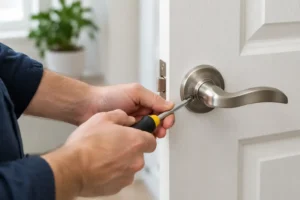
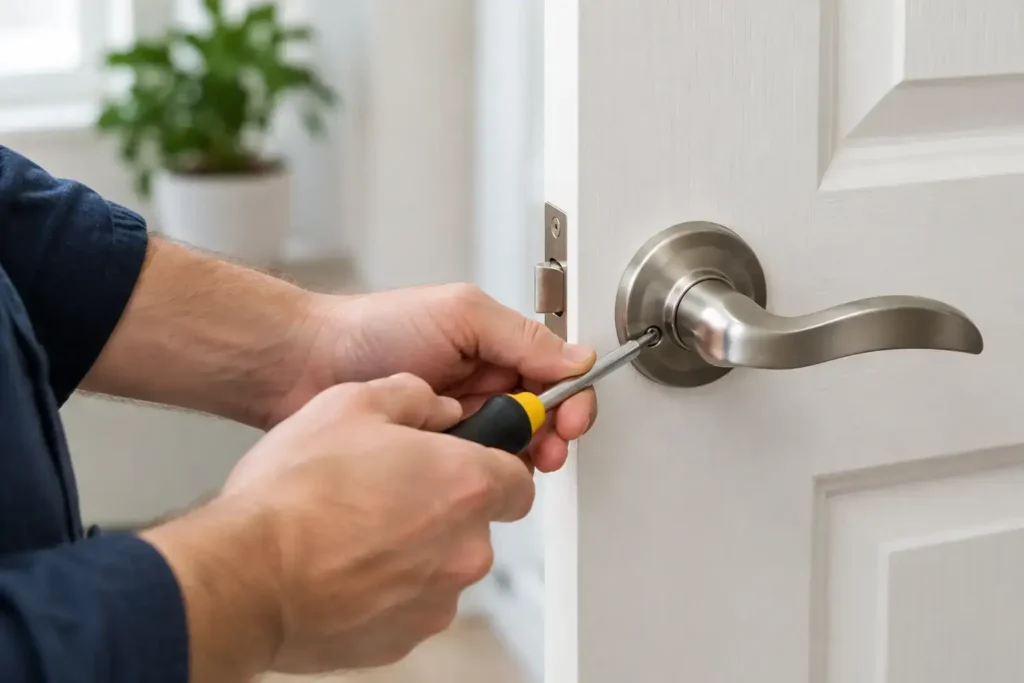
With the door open, remove the handle screws carefully if they are accessible. Keep the screws together so they do not get lost. Check whether the spindle is bent, too short, damaged, or slipping out of place. Reassemble the handle firmly and test it again.
This is often a practical repair for a basic bedroom or internal door handle. However, a main door lock, mortise lock, digital lock, or high-security handle set has more complex internal parts. Taking it apart without the right tools can make it harder to open or compromise the door’s security afterward.
Do Not Force a Handle That Is Jammed
A stuck handle is frustrating, but force is usually what turns a repair into a replacement job. Do not use pliers to twist the handle, hit the lock with a hammer, or insert makeshift tools into the keyway. These actions can damage the spindle, latch, cylinder, door surface, and frame.
Forcing a main door handle can also leave you with a door that will not lock securely. That creates a bigger concern than the original jam, particularly for homes, rental units, and offices holding equipment or confidential documents.
If you are locked inside a room, check whether there is another safe exit or ask someone outside to contact a locksmith. If there is an immediate safety risk, such as a child locked in a room, a medical emergency, or a fire hazard, contact emergency services first.
Common Reasons Door Handles Get Stuck
Understanding the cause helps you choose the right fix. A handle that sticks only occasionally may need cleaning, lubrication, or alignment. A handle that suddenly stops working completely is more likely to have a failed internal component.
Wear is common in frequently used doors. The spring cassette inside a lever handle can weaken, causing the handle to sag or fail to return to its normal position. The latch itself can also wear out, especially on doors that are slammed often.
Moisture and weather can affect wooden doors and metal hardware. In apartments and homes with air conditioning, changes in temperature and humidity can still cause slight movement over time. For exterior doors, corrosion may affect screws, latches, and handle components.
Poor installation is another common cause. A latch fitted at the wrong angle, a spindle cut to the wrong length, or screws tightened unevenly can work for a while before the handle begins sticking. In these cases, replacing only one part may not solve the problem. The full handle and latch assembly may need to be fitted correctly.
When a Locksmith Is the Better Choice
Call a professional locksmith when the stuck handle affects your main entrance, you cannot lock the door, the key is jammed, or the door is currently locked and will not open. These situations require more than a quick adjustment because the goal is not just opening the door. The lock must work reliably and securely afterward.
A locksmith can diagnose whether the issue is with the handle, latch, mortise lock, cylinder, strike plate, hinges, or door alignment. This matters because replacing a handle without correcting the underlying fault may leave you with the same problem days later.
For tenants and property managers, professional repair can also avoid unnecessary damage to the door and reduce disputes over who is responsible for replacement. For offices, a fast repair helps restore access while keeping the premises secure. Glass doors, fire-rated doors, and access-controlled doors should be handled with particular care because the wrong repair can affect safety or compliance.
Pro-Smith and Lock provides on-site locksmith support for stuck door handles, lock opening, lock replacement, and practical security upgrades. An experienced locksmith can often repair the working parts where appropriate, but will recommend replacement when the mechanism is worn, damaged, or no longer dependable.
Consider Repair Versus Replacement
Repair is usually worthwhile when the handle is loose, the latch needs adjustment, the screws have worked free, or a compatible internal part can be replaced. It is often the more affordable option when the lock body is still in good condition.
Replacement makes more sense when the handle is badly corroded, the latch has failed repeatedly, the lock is outdated, or the door no longer secures properly. If you have recently moved into a new home or taken over an office unit, replacing or rekeying the main door lock may also provide greater peace of mind than repairing old hardware with an unknown key history.
The best choice depends on the door type, lock condition, and how important that door is to your daily security. A bathroom privacy handle and a main entrance lock should not be assessed by the same standard.
Prevent Another Stuck Door Handle
A few small checks can extend the life of your door hardware. Tighten handle and hinge screws when you notice movement, keep the latch and strike plate free from buildup, and use a lock-safe lubricant occasionally rather than waiting for a complete jam. Teach children and staff not to hang bags on lever handles or force doors that catch against the frame.
If a handle begins drooping, catching, or requiring extra pressure to operate, arrange a repair before it fails completely. Early attention is usually quicker, less disruptive, and less expensive than dealing with a locked door at an inconvenient time.
A door handle should turn easily, retract the latch cleanly, and leave your door secure every time you close it. If yours does not, treat that small warning as the right time to get it fixed.