A rim lock is often the lock you rely on every time you leave home, yet it is easy to overlook until the key sticks, the latch stops catching, or the door will not close properly. For many apartments, HDB flats, older homes, and secondary doors, rim locks remain a practical security choice because they are fitted to the inside face of the door rather than recessed deep into it.
When a rim lock works well, it should close firmly, turn smoothly, and give you confidence that the door is secured. When it does not, forcing the key or repeatedly slamming the door can turn a manageable repair into a lockout or a damaged door.
What Are Rim Locks and Where Are They Used?
A rim lock is a surface-mounted lock body. The main mechanism sits on the inside of the door, while a cylinder on the outside allows the key to operate it. Many people know this type of lock as a night latch, especially when it automatically latches as the door closes.
They are commonly found on timber main doors, metal gates, apartment entrances, bedroom doors, and older properties. Their design can make installation less invasive than some mortise locks, since the door does not always need a large pocket cut into its edge. That said, the right lock depends on the door material, frame condition, existing holes, and how the door is used every day.
A rim lock should not be judged only by its appearance. The cylinder, latch, strike plate, screws, door alignment, and frame strength all affect how well it performs. A new lock fitted to a weak or misaligned frame may still be frustrating to use and may not provide the protection you expect.
Signs Your Rim Lock Needs Attention
The clearest warning sign is a key that becomes difficult to insert or turn. This may be caused by a worn key, dirt inside the cylinder, loose components, or a cylinder nearing the end of its service life. Do not keep applying force. A snapped key can leave part of the key inside the lock and make entry more difficult.
Another common issue is a latch that does not catch cleanly. If you need to lift, push, or pull the door before it locks, the problem may be door sagging or a strike plate that no longer lines up with the latch. Seasonal movement, worn hinges, loose screws, and repeated door slamming can all create this problem.
You should also arrange an inspection if the inside knob feels loose, the lock body moves on the door, the outside cylinder spins freely, or you notice visible damage after an attempted break-in. A lock may still appear to work after impact, but internal parts or mounting points can be compromised.
Lost keys are another reason to act quickly. If the missing key could be connected to your address, replacing or rekeying the applicable cylinder is generally safer than hoping it does not fall into the wrong hands. This is especially worthwhile after moving into a new home, taking over a rental unit, or changing occupants in an office.
Repair, Rekey, or Replace: Which Is the Better Choice?
The right solution depends on the condition of the lock and the reason for the service call. A minor alignment issue, loose mounting screw, or worn strike plate may be repaired without replacing the entire lock. In these cases, correcting the door and frame alignment can restore smooth operation and reduce stress on the mechanism.
Rekeying may be an option when the lock body and cylinder are in good condition but key control is the concern. The internal pin arrangement is changed so the old key no longer works. This can be a cost-effective choice after a key is lost or when you want a different key for the same lock without changing the entire hardware set.
Replacement is often the sensible option when the lock is badly worn, damaged, obsolete, repeatedly jamming, or no longer suitable for your security needs. It may also be necessary if replacement parts are unavailable or the existing cylinder does not offer enough resistance against common forms of forced entry.
A professional locksmith should assess the full setup before recommending a replacement. The goal is not simply to fit the most expensive lock. It is to fit a compatible lock that closes properly, suits the door, and gives you reliable daily use. For a main entrance, the lock should also work well with any existing deadbolt, handle set, gate lock, or digital lock.
Choosing the Right Rim Lock for Your Door
Start with the door itself. A solid timber door, hollow-core door, metal gate, and aluminum-framed entrance each require different fitting methods and hardware. The lock must sit securely, and the receiving side of the frame must be strong enough to support the strike plate under pressure.
Consider how the door is used. A self-latching rim lock can be convenient for a busy household, but it also creates a lockout risk if you step outside without your keys. Some models include a deadlocking function or an inside snib that prevents the latch from being slipped back when engaged. These features can improve security, but every household should understand how to use them safely during an emergency.
The outside cylinder deserves equal attention. A quality cylinder that fits flush and is properly secured is less vulnerable than one that protrudes too far from the door. The keyway should also suit your practical needs. If several doors need to be operated with one key, a key alike arrangement may be possible. For offices or multi-room properties, a master key system can offer controlled access without issuing a separate key for every door.
Avoid choosing a lock only because it matches the old one visually. Hole spacing, backset, door thickness, handing, and frame clearance must be checked. An incorrect fit can leave gaps, cause rubbing, or weaken the installation.
Why Professional Installation Makes a Difference
A rim lock can look straightforward, but small fitting errors create big daily problems. A cylinder that is not tightened correctly can loosen over time. A strike plate positioned a few millimeters off can make the door difficult to close. Screws that are too short or fitted into weak material may not hold when the door is pushed or pulled.
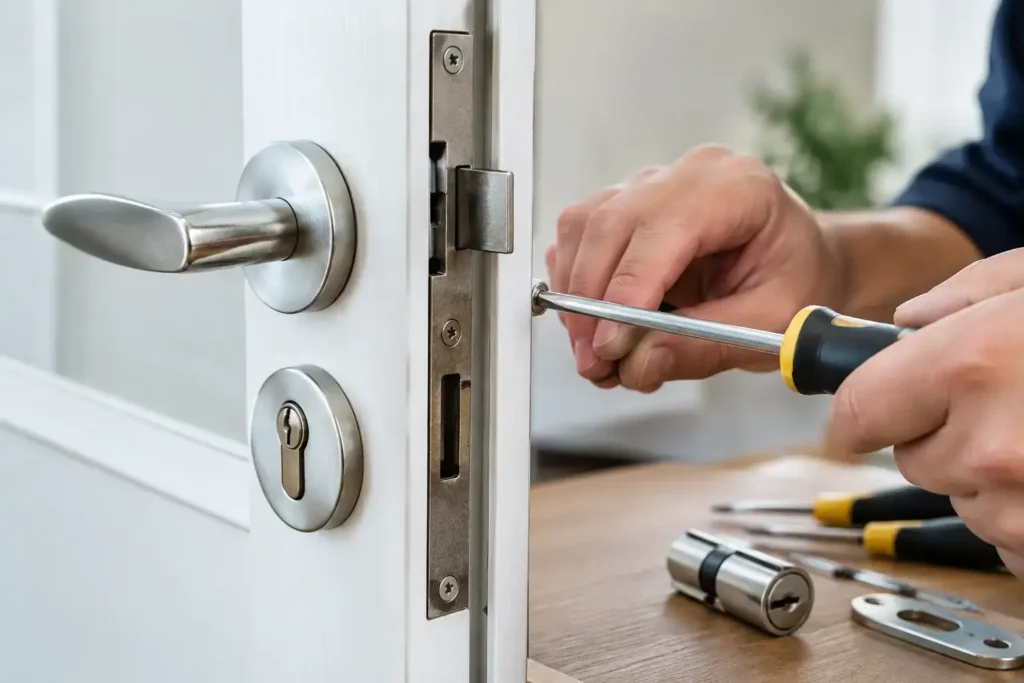
A locksmith can measure the door, inspect the frame, confirm compatibility, and install the hardware without unnecessary damage. They can also test the lock from both sides, check that the key turns smoothly, and make sure the latch engages consistently. This is especially useful for older doors where the existing holes, frame, and hinges may already have wear.
For urgent situations, such as being locked out, a damaged rim cylinder, or a door that will not secure after a break-in, fast assistance matters. The immediate priority is safe entry or securing the property. After that, the lock should be checked carefully so the same issue does not return the next day.
Pro-Smith and Lock provides on-site lock assistance for residential and commercial doors, including rim lock repairs, replacement, key concerns, and door opening where appropriate. An experienced locksmith can explain the available options clearly, so you can make a practical decision without paying for features you do not need.
Simple Habits That Help Rim Locks Last Longer
Most lock problems develop gradually. Use the correct key and avoid twisting it while pulling hard on the door. If the door binds, solve the alignment issue rather than forcing the key. Keep the latch and strike area clean, and have loose handles, hinges, or screws tightened before they affect the lock.
Avoid spraying random oils into the cylinder. Some products attract dust and can make the mechanism worse over time. If the lock feels dry or sticky, ask a locksmith what lubricant is suitable for that specific lock type.
It is also wise to review your keys occasionally. Know how many copies are in circulation, retrieve keys from former tenants or staff where possible, and replace the lock or rekey the cylinder if key control is uncertain. Security is not only about stronger hardware. It is also about knowing who can enter.
A rim lock should make leaving and returning home feel routine, not uncertain. If yours is sticking, loose, damaged, or simply outdated, dealing with it early can prevent a stressful lockout and help keep your door secure when it matters most.