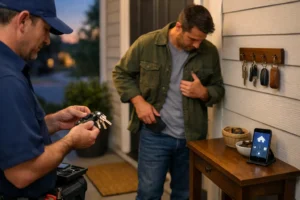
You close the door, hear the latch click, and then realize your keys are not in your pocket, bag, or hand. That is when lost keys home entry options stop being a search term and become a real problem. The good news is that getting back inside is usually straightforward if you choose the right option for your door, lock type, and urgency.
Lost keys home entry options: start with the safest choice
When you are locked out, the first decision matters. Some options get you back inside quickly but create bigger problems after, like a damaged lock, bent door frame, or weakened security. Others may take a little longer but protect both your property and your budget.
Start by checking whether there is a low-risk way in. A spare key with a trusted family member, roommate, neighbor, or building management contact is often the fastest fix. If you live in an apartment or condo, there may also be a managed access process for residents. That depends on the building, and not every property allows staff to open private units, but it is worth verifying before you try anything forceful.
If no spare is available, the next safest route is usually a professional locksmith. That is especially true for deadbolts, digital locks, high-security cylinders, gate locks, and doors that are already misaligned or hard to close. In those cases, trying to force entry often turns one problem into two.
What you can try before calling for help
A calm check saves time. Many lockouts happen because the key is missing, but sometimes the issue is a jammed latch, a misread situation, or another entry point that is still accessible.
Walk around the property once and look for a safe, legitimate point of entry. A back door, side gate, or connected garage door may be unlocked. If someone else lives in the home, call them before taking further steps. It sounds obvious, but in stressful moments people skip the easiest answer.
If your door uses a smart lock, test every approved entry method linked to it. That may mean a keypad code, mobile app, fingerprint reader, or backup physical key. Battery-powered smart locks can fail if the battery is dead, so if the lock has an external emergency power contact, use it exactly as the manufacturer intended. Do not guess with electronic locks. Wrong attempts can trigger lockouts, alarms, or damage.
For a basic spring latch on an interior door, there may be limited non-destructive opening options. For a secured front door with a deadbolt, there usually are not. The more secure the lock, the less likely a quick DIY method will work without causing damage.
When DIY entry is a bad idea
Online videos make home entry look simple. Real doors are less cooperative. What works on a loose practice lock rarely works on a properly installed residential lock, and trying random tools can scratch hardware, crack trim, or ruin the cylinder.
Using cards, wires, screwdrivers, or improvised picks is risky for two reasons. First, it often fails on deadbolts and anti-shim latches. Second, if it does partly work, it can still leave the lock unreliable afterward. A front door lock is not a place to accept “good enough.” If the lock protects your family, belongings, and privacy, it needs to work properly after the door is opened.
Forced entry is even worse unless there is a true emergency inside, such as a child, vulnerable person, fire risk, or medical issue. Kicking a door, prying a frame, or breaking glass may get you in, but it can create a much more expensive repair and leave the home unsecured until everything is replaced.
The most practical professional option
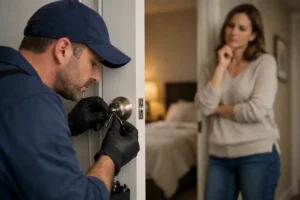
For most homeowners and tenants, the best answer is simple: call a mobile locksmith who handles on-site lock opening. A professional locksmith can assess the lock, identify whether non-destructive entry is possible, and open the door with the least damage possible. That matters because the goal is not just to get inside. The goal is to restore access and keep the home secure.
A good locksmith will also tell you what comes next. If the keys are truly lost and not just misplaced inside the home, opening the door may only solve half the problem. You still need to decide whether to rekey or replace the lock.
That decision depends on the risk level. If your keys were dropped somewhere unknown, stolen with an ID, lost near your building, or attached to anything that reveals your address, securing the lock right away is the safer move. If the key is likely inside the home and the lock itself is in good condition, opening the door may be enough.
Rekey or replace after a lost key?
This is where many people hesitate, usually because they want the fastest and cheapest fix. That is understandable, but security should drive the decision.
Rekeying changes the internal pin setup of the existing lock so the old key no longer works. It is often the better option when the hardware is still in good shape and you want to keep costs reasonable. It is efficient, practical, and common after a lost key situation.
Replacement makes more sense when the lock is worn out, damaged, low quality, outdated, or no longer suits your needs. If your key was lost and the lock has also been sticking, turning poorly, or showing rust, this may be the right time to upgrade instead of paying for two separate jobs later.
For people who manage multiple entry points, a key-alike setup can also make life easier. That way, one key can operate several approved locks, reducing the chance of carrying a heavy key ring and losing the wrong key at the wrong time.
Lost keys home entry options for different door types
Not all lockouts are equal. Your options depend heavily on the kind of door you are dealing with.
A standard house front door with a deadbolt usually calls for professional opening, especially if the latch and deadbolt are both engaged. Apartment and condo doors may have stricter access rules, so the safest path is verification and a locksmith who can work on-site without unnecessary damage.
Bedroom doors are often easier to open than main entry doors, but that depends on the privacy lock type. Gate locks can be trickier because alignment, weather exposure, and metal expansion often affect how the lock behaves. Glass office doors require extra care because the hardware and door material leave less room for trial and error. Mailbox and cabinet locks are usually smaller jobs, but they still need proper tools if you want the lock to remain usable.
If the issue involves a vehicle instead of a house key, the process changes again. Automotive lockouts need the right method for the door design and key system. Trying home-entry tricks on a car is a fast way to damage weather stripping, trim, or the lock itself.
How to choose the right locksmith under pressure
When you are standing outside your door, speed matters. So does judgment. Look for a locksmith who offers mobile service, clear communication, and experience with the specific door or lock type involved. Ask whether they handle non-destructive entry when possible, and whether they can rekey or replace the lock on the same visit if needed.
A professional, service-focused locksmith should be able to explain the likely options in plain language before arrival and then confirm the best route once they inspect the lock. That kind of practical guidance is often what people need most in a lockout – not technical detail, just a calm plan.
For customers who want fast on-site help, companies like Pro-Smith and Lock are built around that response model rather than walk-in retail service. That can make a big difference when you need someone to come to your location, assess the problem, and fix it without sending you from one place to another.
How to reduce the chance of another lockout
Once you are back inside, take five minutes to prevent a repeat. Set up one spare key with someone reliable. If that is not ideal, use a secure key storage option that suits your property and risk level. Check whether your current lock is worn or inconsistent. A lock that sticks today tends to fail at the worst moment.
This is also a good time to think about convenience. If several household members need access, a better key plan or upgraded lock can save future stress. Some people prefer rekeying after a move or tenant change. Others switch to a keypad lock for controlled access. Neither choice is automatically best. It depends on the building, user habits, and how much simplicity you want versus how much you want to rely on batteries and electronics.
A lost key is frustrating, but it is also a useful warning sign. The right response is not just getting the door open fast. It is making sure the next time you leave home, access is simpler, safer, and one less thing to worry about.