A locked bedroom door usually happens at the worst possible moment – when a child is inside, when the key is missing, or when the lock suddenly stops turning. If you are searching for how to open locked bedroom door, the first thing to know is this: the right method depends on the type of lock, the condition of the door, and whether there is an urgent safety issue.
Some bedroom lockouts are simple. Others can get expensive fast if you force the handle, pry the frame, or try random tools. A calm, practical approach gives you the best chance of getting the door open without turning a small problem into a damaged lock, cracked frame, or full door replacement.
How to open locked bedroom door without making it worse
Before you touch the handle, check what kind of privacy lock you are dealing with. Most bedroom doors have a simple interior lock, not a high-security deadbolt. In many homes, especially older properties or basic interior setups, the door may use a push-button or turn-button privacy lock with an emergency release hole on the outside knob.
If you see a small pinhole on the outside handle, the door was likely designed to be opened from the outside in a non-destructive way. A straightened paper clip, thin pin tool, or the proper privacy key can sometimes release it. Insert the tool gently and press inward. On some models, you will feel a spring-loaded button release. On others, you may need to turn slightly while applying light pressure.
If there is a small slot instead of a pinhole, a flat tool such as a small screwdriver or coin may work. Insert it into the slot and turn slowly. Do not force it. If the mechanism is jammed, extra pressure usually bends the tool before it helps the lock.
The key point is simple: interior bedroom locks are often made for emergency access, but only if the mechanism is still working properly. If the lock feels stuck, loose, or broken inside, stop before you damage the handle set.
Check whether the problem is the lock or the latch
A lot of people assume the lock is the issue when the real problem is the latch. That matters because the fix is different.
If the knob turns but the door will not open, the latch may be jammed, misaligned, or partially broken. In that case, pressing the privacy release may do nothing. You can try turning the handle while pulling or pushing the door gently. Sometimes pressure on the latch side of the door helps if the latch is catching on the strike plate.
If the handle feels floppy or spins without resistance, there may be an internal mechanical failure. This is common on older bedroom knobs. A worn spindle, broken spring, or loose internal part can leave the door shut even though the lock itself is no longer engaged. When that happens, DIY attempts often waste time because the problem is inside the hardware, not at the emergency release point.
If the key turns halfway and stops, or if the thumb turn on the other side feels stuck, the cylinder or internal cam may be failing. That is usually the point where professional opening becomes the safer choice.
When a simple card trick works – and when it does not
People often ask whether they can slide a plastic card between the door and frame. Sometimes yes, often no.
This method only has a chance of working if the door opens inward toward you, the latch is spring-loaded, and there is enough gap between the door and frame. It will not help much if the door has a deadlocking latch, tight alignment, or a frame that closes flush.
Even when it works, the card trick is more about latch bypass than actual lock opening. You slide the flexible card above the latch, angle it toward the sloped edge, and wiggle while pushing the door. The goal is to push the latch back into the door. It takes patience and the right angle.
The trade-off is that many people end up damaging the card, scratching the door edge, or bending the weather strip without opening anything. If the door is painted tight or the latch is under pressure, this approach may not be worth forcing.
How to open locked bedroom door with a removed handle
If the bedroom knob has visible screws on the outside, you may be able to remove the trim and handle assembly. This can expose the spindle or latch mechanism and let you retract it manually.
This only works on certain lock designs. Some interior knobs hide the screws under a cover plate. Others cannot be safely removed while the door is shut. If you start prying decorative trim with a knife or screwdriver, it is easy to leave permanent marks on the hardware and door surface.
If you do remove the handle, keep the screws and parts organized. Many lockouts become bigger repair jobs because parts fall inside the door or get reinstalled incorrectly. If the lock was already failing, taking it apart may still not open the door if the latch body has seized.
Situations where you should not keep trying
There is a big difference between a routine bedroom lockout and a situation that needs immediate help. If a child, elderly family member, or vulnerable person is inside and not responding, treat it as urgent. The same goes for smoke, running water, medical concerns, or anything that could become a safety issue within minutes.
You should also stop DIY attempts if the lock is clearly damaged, the key has snapped, the handle has come loose, or the door material is delicate. Hollow-core interior doors, laminated finishes, and modern lever sets can be easy to damage and annoying to repair.
In many cases, people spend 30 to 45 minutes trying household tricks, then still need a locksmith. By that point, the door edge is marked up, the trim is bent, and the final repair costs more than it should.
Why a locksmith is often the fastest option
A professional locksmith does more than just get the door open. The real value is opening it with the least damage, diagnosing why it happened, and fixing the problem so it does not happen again next week.
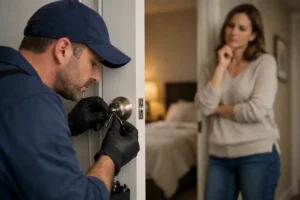
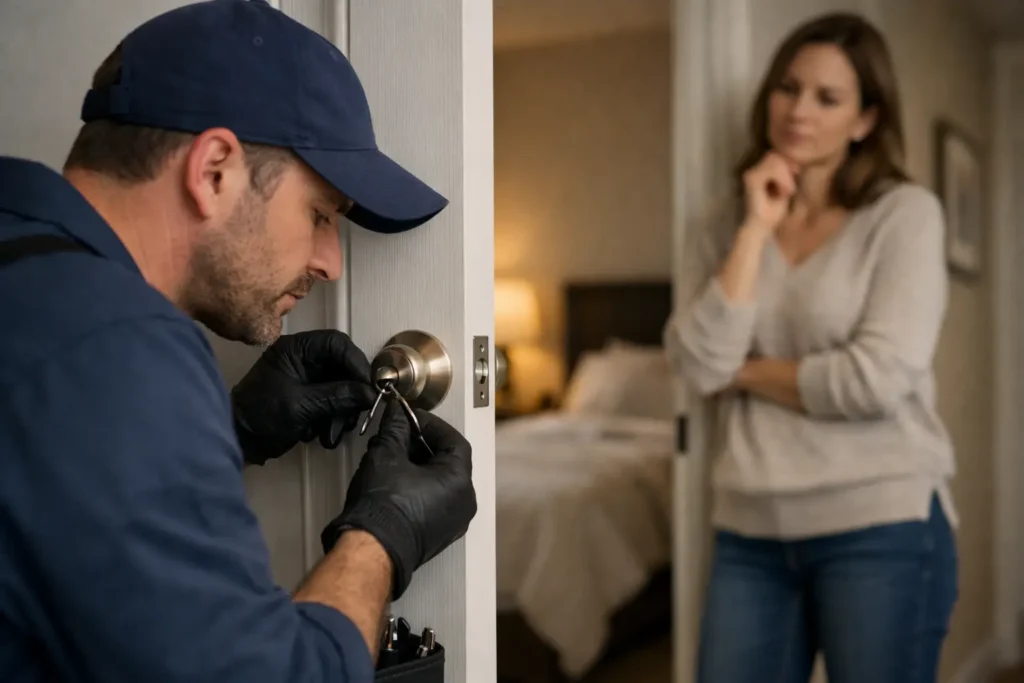
For a standard bedroom lockout, an experienced locksmith can usually identify the lock type quickly and choose the least destructive method. That may mean using a privacy opening tool, retracting the latch directly, removing the hardware correctly, or replacing a failed knob set on-site if the lock has broken internally.
This matters because some lockouts are not caused by someone forgetting the key. They happen because the knob is worn out, the latch is misaligned, the strike plate has shifted, or the internal parts have failed after years of use. Getting the door open is only step one. Making the door reliable again is what saves you from another lockout.
For homeowners, tenants, and property managers, speed matters too. A mobile locksmith service is often the most practical choice because there is no need to remove the door, force entry, or wait until the problem gets worse. Companies such as Pro-Smith and Lock are built around that kind of on-site response, especially for residential lock issues where quick access and clean workmanship matter.
Prevent the next bedroom lockout
Once the door is open, take a minute to check whether the lock should stay in service. If the handle feels loose, stiff, or inconsistent, replacement is usually smarter than hoping it improves. Bedroom privacy locks are not expensive, but repeated lockouts, emergency visits, and avoidable door damage are.
If children use the room, consider whether a privacy lock with external emergency release is still the best option. In some homes, a simpler passage knob works better. In rental units or shared spaces, it may make sense to install a lock that balances privacy with easier emergency access.
It also helps to keep one basic release tool in a drawer if your bedroom doors use pinhole privacy locks. That is a simple step, but it only helps if the hardware is still in good condition.
The best approach depends on the door in front of you
There is no single answer to how to open locked bedroom door because not every bedroom lock fails the same way. A simple push-button lock with a working emergency release is very different from a jammed latch, broken knob, or warped door frame. The safest move is to match the method to the actual problem instead of escalating force.
If it opens with a simple release tool, great. If the hardware is failing, the smarter choice is usually to stop early and have it opened properly before the door, frame, or lock set suffers more damage. A bedroom door should give you privacy, not turn into a repair project at the worst possible time.