A front-office door that sticks, a glass-door lock with a loose handle, or a former employee who may still have a key can create a real security gap. The best office door security upgrades are not always the most expensive ones. They are the upgrades that suit your door type, daily traffic, staff size, and the level of control your business needs.
For most offices, the right approach starts with the physical door and lock before moving to electronic access. A professional locksmith can assess weak points on-site, recommend practical options, and install hardware that works reliably for your team instead of adding unnecessary complexity.
Best Office Door Security Upgrades to Consider
Replace worn or basic locks with commercial-grade hardware
An office lock is used far more often than a typical residential lock. Staff arrive, leave for lunch, receive deliveries, meet clients, and lock up at the end of the day. Over time, a basic lock may become loose, difficult to turn, or easier to force than it should be.
Replacing an old lock with a commercial-grade deadbolt, mortise lock, or lever handle lock is often the most sensible first upgrade. The best choice depends on the door material. Timber doors, aluminum-framed glass doors, metal doors, and fire-rated doors each need compatible hardware and proper fitting.
A stronger lock is only useful when it is installed correctly. The strike plate, screws, door frame, and alignment all affect how well the lock performs. If a door can be pushed open because the latch does not sit fully in the strike, simply changing the lock will not solve the problem.
Upgrade glass office doors with the right lock system
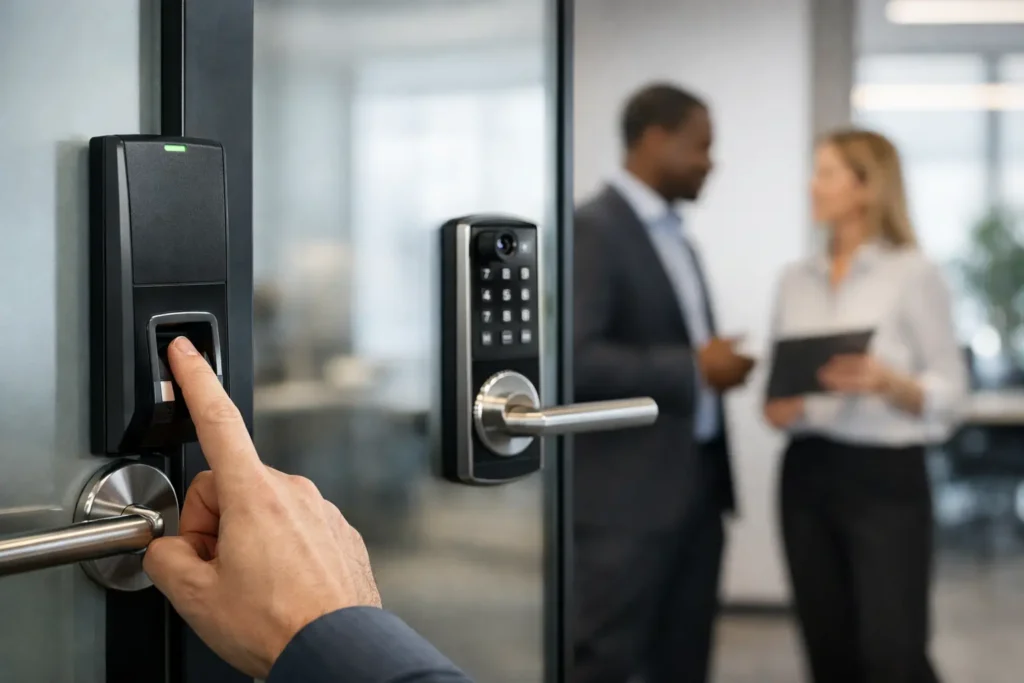
Glass office doors are common in meeting rooms, retail offices, clinics, and professional suites. They look clean and modern, but they need locks designed specifically for glass. Fitting the wrong hardware can damage the panel or leave the door poorly secured.
Glass door lock upgrades may include patch fittings with keyed cylinders, floor locks, double-glass door locks, or access-control compatible locks. The ideal option depends on whether the door is framed or frameless, single or double leaf, and whether staff need access from one side or both.
For an office that receives clients during business hours, a lock that allows easy daytime entry but secure after-hours locking is usually more practical than a system that requires constant key handling. A locksmith can also check whether the glass door closes and latches correctly, since misalignment is a common reason for lock damage.
Move from shared keys to a restricted key system
Many small offices rely on one or two shared keys. It is simple at first, but control becomes difficult when keys are copied, misplaced, or kept by people who no longer work with the company. If you cannot confidently say who has a working key, it is time to review the system.
A restricted key system gives the business more control over duplication. Rather than allowing anyone to make a copy at a standard key shop, replacement keys can be managed through an authorized process. This is especially useful for offices with confidential documents, equipment, cash drawers, or separate staff-only rooms.
Restricted keys are not necessary for every office. A very small team with low turnover may be well served by a quality commercial lock and a clear key policy. But once multiple departments, contractors, cleaners, or tenants need access, better key control can prevent costly uncertainty later.
Use a master key system for controlled access
A master key system is a practical upgrade for offices with several rooms, departments, or units. Each employee can receive a key that opens only the areas they need, while a manager or facilities representative holds a master key for broader access.
For example, staff may access the main entrance and their own workspace, while only managers can open the server room, stock room, records cabinet area, or finance office. This reduces the need for a large key ring and keeps access organized without requiring electronics at every door.
The trade-off is planning. A master key system should be designed carefully from the beginning, because changing access levels later can require lock rekeying or cylinder replacement. It is worth mapping out who needs access to each room before the installation starts.
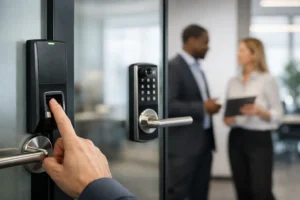
Add keypad or card access for busy offices
Keypad and card access systems reduce the daily problem of issuing, collecting, and replacing physical keys. A staff member can enter with a PIN code, card, fob, or approved credential, and access can be removed when they leave the company.
This can be a strong fit for offices with frequent staff turnover, shift workers, shared workspaces, or several entry points. It also helps when managers want to avoid changing locks every time a key goes missing.
However, electronic access is not automatically the best option for every door. It requires reliable power, suitable door hardware, and a plan for power outages or system faults. For a small office with one entrance and a stable team, a good mechanical lock may be more affordable and easier to maintain. The right choice should match the actual risk, not just follow a trend.
Reinforce the frame, strike plate, and door closer
A secure lock can still fail if the door frame is weak. The strike plate is the metal fitting in the frame where the latch or bolt enters. If it is loose, fitted with short screws, or attached to damaged timber, forced entry may be easier than expected.
Reinforcing the strike plate with longer, properly anchored screws can improve resistance at a relatively low cost. On metal frames and glass-door systems, the solution may involve different brackets or fittings, so a site inspection matters.
A door closer is another overlooked upgrade. It ensures the door shuts and latches after someone passes through. Without one, an office door may remain slightly open after a delivery, a meeting, or a rushed arrival. That is not a lock failure, but it can still leave the premises exposed.
Rekey after staff changes, lost keys, or a takeover
Not every security issue requires a new lock. If the lock hardware is in good condition but you are concerned about who holds old keys, rekeying can be a cost-effective answer. The locksmith changes the internal pin configuration so existing keys no longer work, while the lock body remains in place.
Rekeying is often a sensible step after an employee departure, a lost office key, a tenant handover, or a business acquisition. It restores control quickly without replacing every lock unless the hardware is worn or unsuitable.
For offices with more than one door, rekeying can also support a key-alike setup. One key can open selected doors, reducing clutter for authorized staff while keeping private areas separately secured.
How to Choose the Right Upgrade
Start by identifying the problem you are trying to solve. If the current lock is damaged or difficult to operate, focus on lock replacement and door alignment. If unauthorized key copies are the concern, a restricted key or rekeying solution may be enough. If access needs to change frequently, keypad or card access may save time over the long term.
Also consider the door itself. A heavy timber entrance, a frameless glass partition, and a fire-rated metal door should not receive the same recommendation. The wrong lock can affect closing, damage the door, or create problems during an emergency.
Finally, think about daily use. Security should not make staff struggle to enter the office, delay customers, or leave doors propped open because the system is inconvenient. The best setup protects the premises while keeping normal operations straightforward.
When you need an upgrade, Pro-Smith and Lock can assess office doors on-site and recommend practical lock, key, and access solutions for your layout. A timely inspection is often easier and more affordable than dealing with a break-in, a failed lock, or a key-control problem after it has already disrupted your business.