A smart lock can remove the daily search for keys at the HDB door, but it is only a good upgrade if it fits the door, suits the household, and still works reliably when life gets busy. This smart lock review for HDB homes focuses on the practical questions that matter before you pay for a new lock: door compatibility, access methods, installation quality, and what happens when something goes wrong.
For many households, the right smart lock is not the one with the longest feature list. It is the one that opens consistently for family members, keeps the door properly secured, and has clear backup options when the battery runs low or a keypad is not responding.
What a Smart Lock Changes at an HDB Door
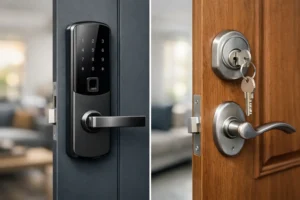
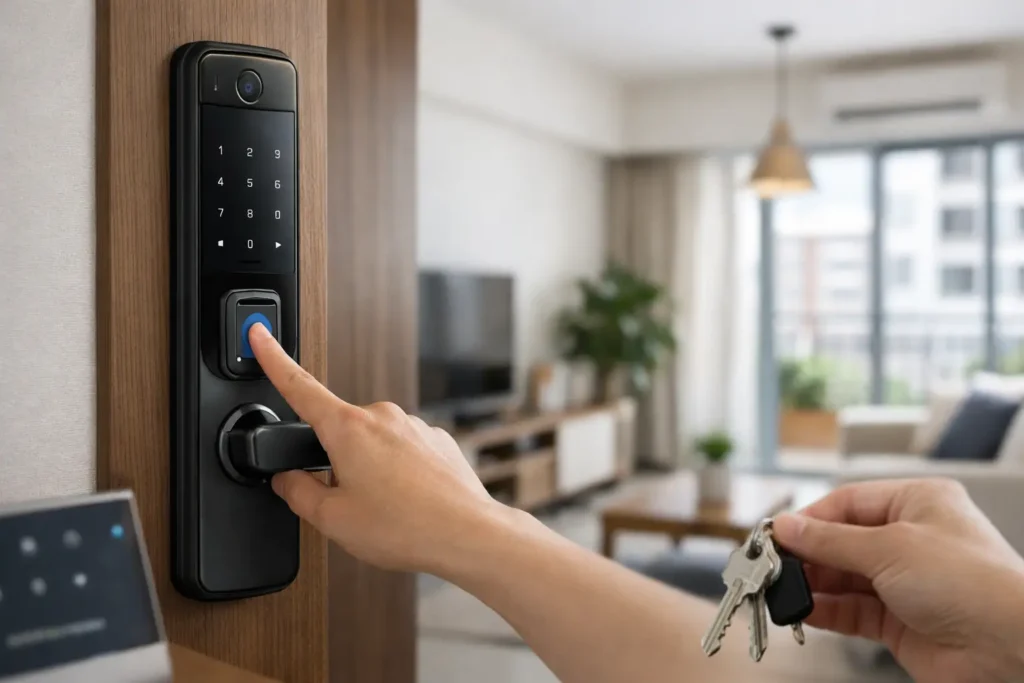
A traditional key lock is simple, familiar, and easy to maintain. A smart lock adds convenience through PIN codes, fingerprints, RFID cards, mobile apps, or a combination of these methods. This can be helpful for parents coming home with groceries, residents who do not want to carry keys while exercising, or families who need separate access for household members.
It can also make access easier to manage. Rather than handing out multiple copies of a key, some systems allow you to create individual PIN codes or temporary codes. That is useful when a tenant moves out, a caregiver needs short-term access, or a cleaner visits on scheduled days. You can remove a code without changing the entire lock cylinder.
The trade-off is that a smart lock needs more attention than a basic mechanical lock. Batteries must be changed, the door must be aligned correctly, and every user needs to understand the backup entry method. Convenience is valuable, but it should not replace basic planning.
Smart Lock Review for HDB: The Checks That Matter
Start with the door, gate, and existing lock
Not every smart lock suits every HDB setup. Many homes have a main wooden door, a metal gate, or both. The lock on the main door and the lock on the gate serve different purposes, and their measurements, thickness, and drilling requirements may differ.
Before selecting a lock, check the door thickness, the distance from the door edge to the existing handle or lock body, and the available clearance around the frame. A lock that looks compact in a showroom may interfere with a gate, door viewer, decorative panel, or narrow frame when installed at home.
Door alignment matters just as much. If your door needs to be pushed, lifted, or pulled hard before the bolt can engage, fitting a smart lock without correcting the alignment can create problems. The motor may strain, the latch may not catch properly, and the battery may drain faster. A professional should inspect the condition of the door, strike plate, hinges, and frame before installation.
Choose access methods your household will actually use
Fingerprint access is popular because it is quick. It can be especially convenient for adults who return home with full hands. However, fingerprint readers may be less dependable for very young children, elderly residents with worn fingerprints, or anyone whose fingers are often wet, dusty, or damaged from work.
PIN code access is easy to share with trusted household members, but codes should not be too obvious. Avoid birth dates, unit numbers, or simple sequences. If the lock has a feature that lets users enter random digits before or after the correct PIN, it can reduce the risk of someone identifying the code from finger marks on the keypad.
RFID cards or tags are straightforward for children and seniors, though they can be misplaced like a regular key. Mobile app access is useful for remote notifications and temporary access codes, but it should be treated as an extra convenience, not the only way to enter. A dependable HDB smart lock should provide at least one practical backup method that everyone in the household understands.
Look beyond the app and marketing features
Some locks offer remote access, entry logs, automatic locking, door-open alerts, and visitor codes. These features can be useful, but they are not equally important for every home.
Automatic locking is one feature worth considering if residents often leave in a hurry. Still, it must be configured carefully. If the lock engages while someone is stepping out to collect a delivery or throw away trash, it can cause an inconvenient lockout. Families with children should also make sure everyone knows how to exit quickly from inside without depending on an app or PIN.
Entry logs may help you check whether a child has arrived home, but they do not replace supervision. Remote app functions also depend on the lock model, network setup, and phone access. If you prefer the simplest possible setup, a fingerprint and PIN lock with a mechanical emergency key may be a better match than a feature-heavy connected model.
Battery backup is not optional
Most smart locks run on standard replaceable batteries. Battery life varies based on the model, daily usage, door alignment, and whether the lock uses wireless functions frequently. Do not wait for the lock to stop working before changing them.
A good habit is to replace batteries once the low-battery warning appears and keep a suitable spare set at home. Use the same type and quality of batteries recommended by the manufacturer. Mixing old and new batteries, or different battery brands, can lead to uneven performance.
Also confirm how emergency power works. Many locks have an external contact point for a temporary power source when internal batteries are flat. This can help you enter using your PIN, card, or fingerprint, but only if you know where the contact point is and have the correct power source available. Some models also retain a mechanical key override. Keep that key in a safe place outside the locked home, not in a drawer behind the door.
Installation Decides How Well the Lock Performs
A smart lock is not a simple accessory that can be fitted without careful measurement. Poor installation can leave a door loose, damage the door surface, create a bolt that does not align, or leave gaps that affect security and weather resistance.
A proper installation starts with checking the existing lock type and the door material. The locksmith should explain whether holes need to be drilled, whether old hardware will leave visible marks, and whether the new lock can work with the current handle and gate arrangement. Clear advice before work begins prevents unpleasant surprises after the lock is already removed.
After fitting the lock, test every method of entry and exit. Check the fingerprint reader, PIN code, card or tag, internal handle, automatic locking function, emergency power contact, and mechanical key if supplied. The door should close and lock without force. If the lock beeps, grinds, hesitates, or needs repeated attempts, address it immediately rather than assuming it will improve with use.
For HDB residents replacing an old main door lock or dealing with a damaged mechanism, a locksmith can also advise whether a smart lock is suitable now or whether the door and frame need attention first. Pro-Smith and Lock provides on-site lock replacement and practical access solutions for these situations, including urgent lock problems that cannot wait for a scheduled upgrade.
When a Smart Lock May Not Be the Best Choice
Smart locks are useful, but they are not mandatory for good home security. If your household prefers keys, has residents who are uncomfortable with electronic devices, or uses a door with limited fitting space, a quality mechanical lock may be the better long-term choice.
The same applies if the main issue is a weak gate, loose door frame, damaged strike plate, or worn hinges. A new smart lock cannot correct a door that does not close securely. Address the basic physical condition first, then decide whether electronic access adds real value.
Some homeowners choose a balanced setup: a dependable lock on the main wooden door and a separate secure lock on the metal gate. This keeps the entry arrangement practical while avoiding unnecessary complexity. The best setup depends on the door configuration, who lives in the home, and how access is used each day.
Questions to Ask Before Booking Installation
Ask whether the chosen lock is compatible with your HDB door and whether any additional work is needed for the frame, handle, or gate. Confirm the warranty terms for the lock and the workmanship, the expected battery type, and the backup entry options available if the batteries are depleted.
It is also sensible to ask what happens if the lock develops a fault after installation. A responsive locksmith matters because a door access problem can quickly become stressful, particularly late at night or when children, elderly family members, or pets are inside.
A smart lock should make coming home easier, not leave you worried about the next low-battery alert or keypad error. Choose a model that suits your door and your household, have it fitted correctly, and keep the backup plan simple enough for every family member to use.