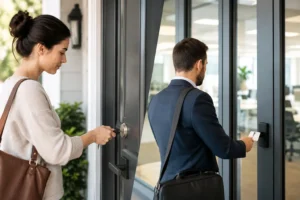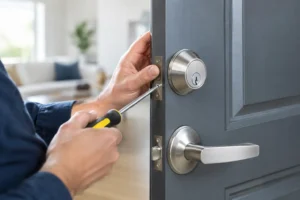
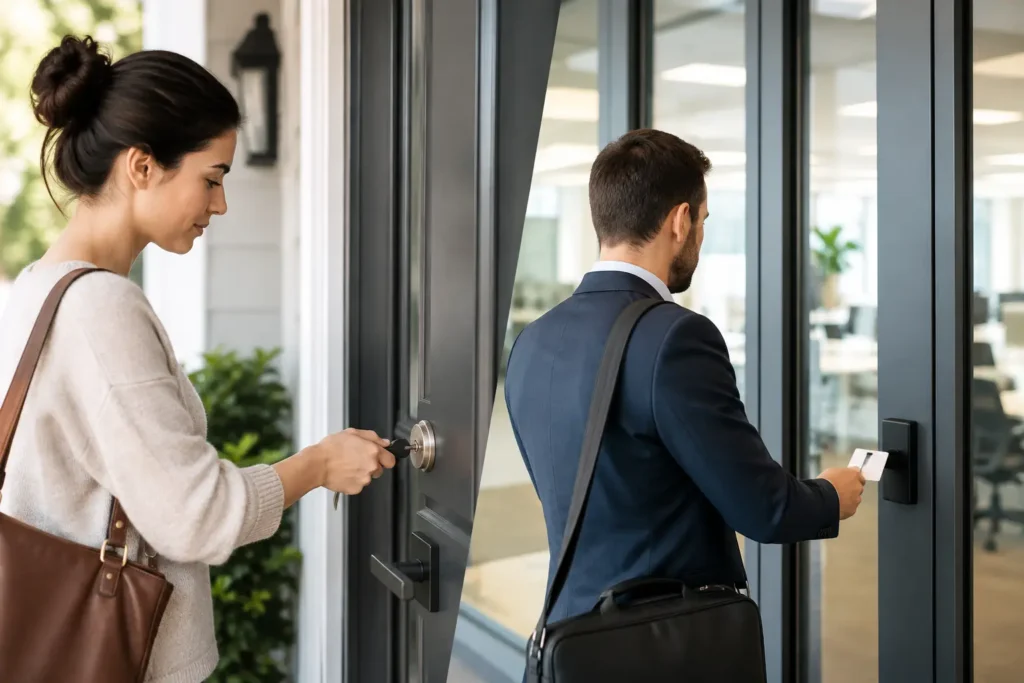
A lockout rarely happens because of one big mistake. More often, it is a rushed morning, a key left on the table, a door that latches behind you, or a worn key that finally stops turning. The best ways to prevent lockouts are simple habits and sensible backup plans that fit how you actually live, work, and travel.
For homeowners, tenants, office managers, and drivers, prevention saves more than time. It avoids the stress of waiting outside in the rain, missing an appointment, disrupting staff, or worrying about a child, pet, or important belongings inside. A few small changes can greatly reduce the chance of needing an emergency door opening service.
Best Ways to Prevent Lockouts Before They Happen
1. Give every key a proper home
The most reliable habit is also the least technical: keep keys in the same place every time. At home, use a bowl, hook, or tray near the entrance, but place it far enough inside that it cannot be reached through an open window or door gap. In an office, assign a secure drawer, key cabinet, or access-controlled storage point.
Avoid putting loose keys in random bags, jacket pockets, or on a desk. This works until it does not. When you are leaving, make a quick key check part of your routine: phone, wallet, keys. It takes seconds and is especially useful when managing children, deliveries, or a busy workday.
2. Keep a spare key, but store it safely
A spare key is helpful only when it is accessible during a lockout and protected from unauthorized use. Do not hide one under a doormat, flowerpot, door frame, or nearby electrical box. These are the first places a person with bad intentions will check.
Instead, leave a spare with a trusted family member, close neighbor, or nearby friend who is usually available. For an office, keep a controlled spare key with an authorized manager or building representative. Record who has access and retrieve the key when staff leave or tenants change.
A lockbox can be useful in some situations, particularly for property managers or homeowners who need occasional access for cleaners or caregivers. However, choose a solid unit, install it in a discreet location, and change its code whenever access arrangements change. A low-quality lockbox or an obvious placement can create a security problem rather than solve a lockout problem.
3. Do not rely on a damaged or worn key
Keys wear down gradually. You may notice that a key needs a little extra pressure, catches in the cylinder, or only works when turned at a certain angle. Those are warning signs, not minor inconveniences.
A bent, cracked, or heavily worn key can break in the lock or fail when you are already late. Have a fresh duplicate made from a key that still works properly, rather than copying a badly worn one. If several keys struggle in the same lock, the issue may be the cylinder, latch, or door alignment instead of the keys themselves.
Do not force a stiff key. Excess force can snap the key, damage internal lock components, and turn a preventable issue into a more involved repair. A locksmith can assess whether a simple adjustment, rekeying, or lock replacement is the better long-term answer.
4. Check doors that lock automatically
Many bedroom doors, gate locks, office doors, and certain main doors can lock automatically when closed. This is convenient for security, but it also creates a common lockout risk, particularly when you step out briefly without your keys.
Learn exactly how each lock on your property behaves. Test whether it latches, deadlocks, or requires a key from the outside after closing. If a lock is installed on a door used for taking out trash, collecting mail, or moving between a unit and common corridor, make sure everyone in the household understands the risk.
For HDB residents and tenants, it is also worth checking whether a digital lock, rim lock, or additional gate lock has its own locking behavior. A new lock should make entry more secure without making normal daily use confusing.
5. Maintain the lock and door, not just the key
A lockout can begin with a door that has shifted out of alignment. Singapore’s humidity, frequent use, loose hinges, swelling timber, and settling frames can all affect how a door closes and how smoothly a bolt enters its strike plate.
Watch for warning signs such as a latch that scrapes, a deadbolt that will not turn unless you pull the door, a handle that feels loose, or a glass office door that needs force to close. These problems can leave you unable to secure the door properly or unable to open it later.
Avoid spraying random household oils into a lock. Some products attract dust and grime, which may make the mechanism worse over time. If a lock feels stiff or unreliable, arrange a professional inspection before it fails at an inconvenient moment.
Set Up Better Access for Your Household or Office
6. Decide who is authorized to hold keys
Unclear key access causes both lockouts and security concerns. Families should agree on who holds a spare, who can collect children if needed, and what to do if a key is lost. This is particularly useful for elderly parents, caregivers, or teenagers who may occasionally leave home without a key.
At work, keep a current list of authorized keyholders. Do not allow keys to be passed casually from one staff member to another without tracking them. When an employee leaves, changes roles, or loses a key, review whether the affected lock should be rekeyed or replaced.
For offices with multiple rooms, cabinets, or glass doors, a key alike system may make everyday access easier by allowing one key to operate selected locks. A master key system can also help managers access approved areas while limiting staff access to sensitive rooms. The right option depends on the layout and the level of access control you need.
7. Consider a digital lock for the right door
Digital locks can reduce the chance of leaving home without a physical key. Many allow entry by PIN, card, fingerprint, or app, which can be useful for busy households, rental units, and offices with changing staff access.
They are not automatically the best choice for every door. A digital lock still needs proper installation, suitable door compatibility, battery monitoring, and a clear backup entry method. You should know how to use the mechanical override key or emergency power feature before a battery runs low.
If you choose a digital lock, make the code difficult to guess and avoid sharing it widely. Change codes after a tenant, helper, contractor, or staff member no longer needs access. Convenience should never mean losing control of who can enter.
8. Put a car-lockout plan in place
Car lockouts are often caused by keys left in the vehicle, a misplaced key fob, a flat key fob battery, or an automatic locking feature. Keep a spare vehicle key in a secure location away from the car, such as at home with someone you trust. Do not keep the spare inside the glove compartment, since it will not help once the car is locked.
If your vehicle uses a key fob, replace the battery when you notice reduced range or inconsistent response. Know whether your car has a physical emergency key hidden inside the fob and where it is used. This is valuable information to learn in a calm moment, not on the roadside.
Never try to force open a locked car with wire, tools, or improvised wedges. Modern vehicles have delicate weather seals, airbags, electronics, and locking mechanisms that can be damaged easily. Professional car lockout assistance is safer than turning a simple lockout into an expensive repair.
A Quick Routine That Actually Sticks
The strongest prevention plan is one you will follow when you are tired, distracted, or in a hurry. Before leaving a home, office, or vehicle, pause for a short check: do you have your key or fob, is your phone charged, and can you get back in if the door closes behind you?
For households and workplaces, review these practical points every few months:
- Test spare keys to confirm they still work smoothly.
- Check that trusted keyholders still have the right contact details.
- Replace worn keys, weak fob batteries, and unreliable locks early.
- Update access codes and collect keys after staffing or tenancy changes.
- Confirm that everyone knows which doors lock automatically.
This is also a good time to check mailbox locks, bedroom locks, gate locks, and office glass door locks. These smaller locks are easy to overlook until a key goes missing or the mechanism jams.
When Prevention Is Not Enough
Even careful people get locked out. Keys can be lost, locks can fail, and doors can close at exactly the wrong time. If that happens, stay calm and avoid forcing the lock or breaking a window. Damage often costs more to repair than a professional opening service, and unsafe entry attempts can compromise the door afterward.
A qualified mobile locksmith can identify the type of lock, open it with appropriate methods where possible, and advise if the problem needs a new key, lock repair, rekeying, or replacement. Pro-Smith and Lock supports residential, commercial, and automotive lockouts with practical on-site help for situations that cannot wait.
The best protection is a simple routine, a secure backup, and a lock that works properly. Put those in place now, and a forgotten key is far less likely to turn into a long day outside your own door.