A car key that snaps in the ignition can turn a normal trip into an immediate problem. This guide to car key extraction explains what to do first, what not to force, and when a professional locksmith is the safer choice. The goal is simple: remove the broken key without damaging the ignition, door lock, or vehicle security system.
Start by Stopping the Pressure
The moment a key breaks, resist the urge to keep turning it, pushing it deeper, or repeatedly jiggling the remaining piece. A broken key fragment can move farther into the keyway, making extraction more difficult and increasing the chance of damage to the lock cylinder.
Take a close look at where the key has broken. If a large section is still sticking out and the ignition is in the normal off position, there may be a simple path forward. If the broken piece is flush with the lock, lodged deep inside, or stuck while the steering wheel is locked, it is usually best to stop and arrange professional help.
Do not start the engine with improvised tools. The ignition is not just a mechanical lock on many vehicles. It may work with a transponder chip, immobilizer, push-button system, or electronic steering lock. Damage to these parts can turn a key extraction job into a more expensive repair.
Why Car Keys Break in Locks and Ignitions
Keys rarely break without a reason. In many cases, the metal has weakened over time from daily use, rough handling, bending in a pocket, or being used to pry something open. A worn key can develop small cracks that are difficult to see until it snaps.
The lock itself may also be contributing to the problem. Dirt, corrosion, worn internal components, or a stiff ignition cylinder can make turning the key harder than it should be. Drivers sometimes apply more force to compensate, and the weakest part of the key breaks.
A steering wheel under pressure is another common cause. When a vehicle is parked with the wheels turned against a curb or at an angle, the steering lock can put pressure on the ignition. If the key does not turn easily, forcing it can break the blade. In this situation, gently move the steering wheel left and right while applying light pressure to the key. If it still does not move smoothly, do not force it.
A Guide to Car Key Extraction: What You Can Safely Try
A careful DIY attempt may be reasonable only when the broken key is clearly visible, protrudes far enough to grip, and the lock is not jammed. Turn off the vehicle completely, set the parking brake, and make sure the key fragment is not under tension.
Use a small pair of needle-nose pliers or tweezers only if they can grip the exposed metal firmly. Pull straight out with steady, gentle pressure. Twisting, rocking, or squeezing too hard can push the fragment deeper or damage the edges of the keyway.
If the key broke in the ignition because the steering wheel is locked, relieve the steering pressure first. Lightly turn the wheel in the direction where it has a little movement, then try to remove the fragment without pulling aggressively. This works only when the key section is accessible and the ignition mechanism is not damaged.
A small amount of proper lock lubricant may help a stiff mechanism, but avoid spraying random household oils into the ignition or door lock. Thick oils can collect dust and create more resistance later. Never use glue on the end of another object to attach to the broken key. Glue can run into the lock cylinder and leave the key permanently bonded inside.
When to Stop and Call a Locksmith
Professional extraction is the sensible option when the key is flush with the lock, only a tiny edge is visible, or your attempt does not work quickly. The same applies if the key has broken in a remote fob, a smart key housing, a trunk lock, or an ignition that will not turn.
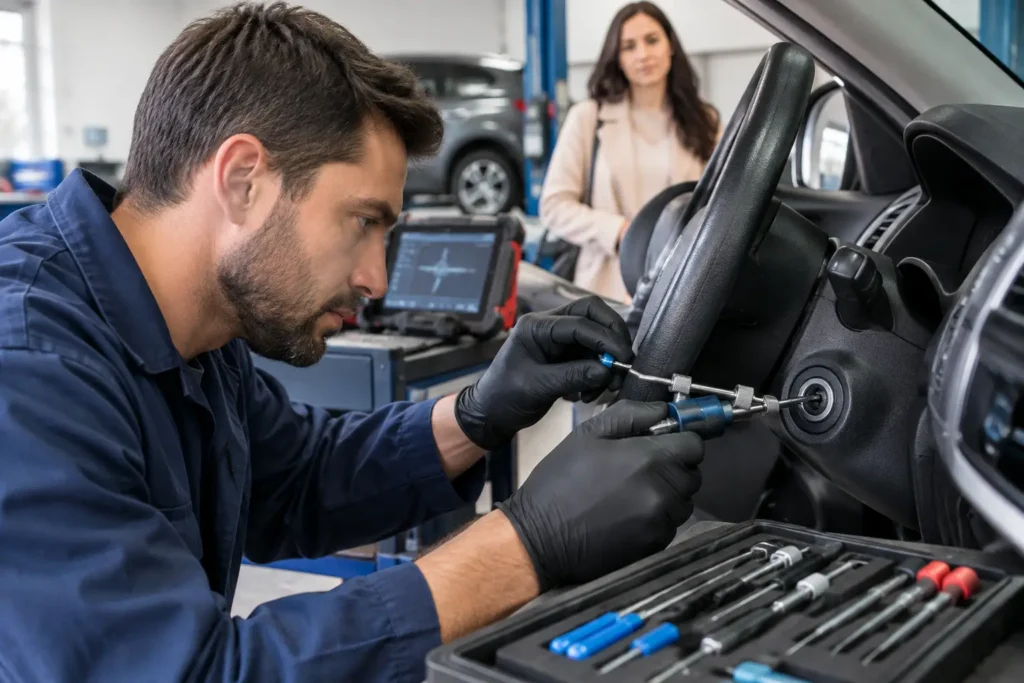
A locksmith uses purpose-made extraction tools designed to reach behind the broken key blade and pull it out with controlled pressure. This approach protects the lock more effectively than makeshift hooks, pins, screwdrivers, or blades. A technician can also inspect whether the ignition or door lock is causing the problem in the first place.
Call for help immediately if you notice any of these signs:
- The key fragment has been pushed deeper into the ignition or door lock.
- The lock cylinder feels loose, turns without resistance, or will not rotate.
- The steering wheel remains locked and the key cannot move.
- Your vehicle uses a chipped, transponder, or smart key that may need programming.
- You are stranded in an unsafe location, late at night, or unable to secure the vehicle.
Fast assistance matters in these situations. A mobile automotive locksmith can come to the vehicle, extract the key, assess the lock, and help arrange a replacement key where needed. That is often more practical than having the vehicle towed for a problem that can be handled on-site.
Avoid These Common Mistakes
The biggest mistake is treating the ignition like a household lock. Vehicle ignitions have tighter tolerances and may contain sensitive internal parts. A paper clip, safety pin, knife, or flat screwdriver can scratch the keyway, bend internal wafers, or damage the ignition cylinder.
Another common mistake is using excessive force with pliers. If the exposed key piece slips, it can be driven farther inside. If it comes out but bends, you may still be left with a damaged ignition that needs attention.
Do not use the spare key to try to push out the broken piece. The spare key will not reach behind the fragment correctly, and it can jam both pieces inside the lock. Also avoid trying to start the car with the broken key head if the blade has separated. Even if the vehicle recognizes the transponder chip, the ignition still needs the key blade to turn correctly.
What Happens After the Key Is Removed
Removing the broken piece solves the immediate problem, but it does not always solve the cause. Before using another key, check whether it slides in and turns smoothly. A replacement key that feels tight, sticks, or requires repeated force should not be ignored.
If the old key was visibly worn, a new key should be cut from a proper key code or a better original whenever possible. Copying a heavily worn key can reproduce its imperfections. For transponder and smart keys, the replacement may also need to be programmed to the vehicle.
If the ignition is worn or damaged, repairing or replacing the cylinder may be necessary. This depends on the make, model, age of the vehicle, and the extent of internal damage. A good locksmith will explain whether extraction alone is sufficient or whether further work is needed, rather than recommending unnecessary replacements.
Prevent the Next Broken Car Key
A little care can reduce the chances of another broken key. Keep heavy keychains to a minimum, especially on vehicles with traditional ignition cylinders. Extra weight swinging while you drive can contribute to wear over time.
Replace keys that are bent, cracked, badly worn, or difficult to turn. Do not use a car key as a box cutter, pry bar, or tool for opening packages. If the ignition begins sticking, have it checked before the key breaks inside it.
It also helps to keep a working spare key in a safe, accessible place. For drivers who rely on a remote or smart key, replace a weak battery before it fails completely. A spare cannot prevent a broken blade inside the ignition, but it can make the recovery process much easier once the fragment has been removed.
A broken car key is stressful, especially when it happens before work, during a school run, or in a parking area far from home. Stay calm, avoid force, and protect the lock from further damage. When the key cannot be removed cleanly, Pro-Smith and Lock can provide prompt on-site locksmith assistance so you can focus on getting safely back on the road.