The front door is where office security either works or fails. Knowing how to secure office entrance points means more than fitting a stronger lock. You need to control who comes in, know when a key or credential has been lost, and make sure staff can exit safely during an emergency. The right setup protects people, equipment, documents, and daily operations without turning every arrival into a delay.
Start With the Risks at Your Office Entrance
A small office with one glass door has different needs from a multi-tenant business with a reception area, delivery traffic, and employees arriving at different hours. Before replacing hardware, look at how the entrance is actually used.
Ask simple questions. Is the door regularly left unlocked for convenience? Do former employees still have keys or access cards? Can someone follow an employee through the door without being challenged? Does the entrance lead directly to workstations, stock, client files, or restricted rooms?
The answers reveal where your real weaknesses are. Many office break-ins do not happen because a criminal defeats a high-security lock. They happen because a door was propped open, a key was never collected, a damaged latch was ignored, or an old access code was shared too widely.
How to Secure Office Entrance Doors in Layers
The most reliable approach uses layers. A quality lock matters, but it should work alongside door hardware, access control, visitor procedures, and good staff habits.
Choose a lock that matches the door
The lock must suit the door material and frame. A glass office door, aluminum storefront door, wooden door, and metal fire-rated door each require different lock types and installation methods. Using the wrong lock can leave gaps, weaken the door, or cause the hardware to fail early.
For many offices, a commercial-grade deadbolt, mortise lock, or narrow-stile lock offers better protection than basic residential hardware. The goal is not to choose the most complicated product. It is to fit dependable hardware correctly so the bolt engages fully with a reinforced strike plate and a solid frame.
If the door feels loose, sticks when closing, rattles in its frame, or needs to be lifted before it locks, address that issue first. A strong lock cannot compensate for a misaligned door or a weak strike plate. A locksmith can assess whether the problem is the lock, hinges, closer, frame, or door alignment.
Control keys before they become a problem
Traditional keys are still practical for many small offices, but they need clear control. Keep a record of who has each key, avoid handing out untracked copies, and collect keys immediately when staff, cleaners, or contractors no longer need access.
A restricted key system can be a sensible upgrade when key duplication is a concern. It gives the business more control over who can authorize copies. For offices with several rooms, a master key system can also reduce the number of keys managers carry while keeping staff access limited to the areas they need.
There is a trade-off. Master key systems are convenient, but a lost master key has greater consequences than a lost single-door key. Plan the hierarchy carefully and limit master-level keys to trusted personnel.
Use electronic access where it solves a real need
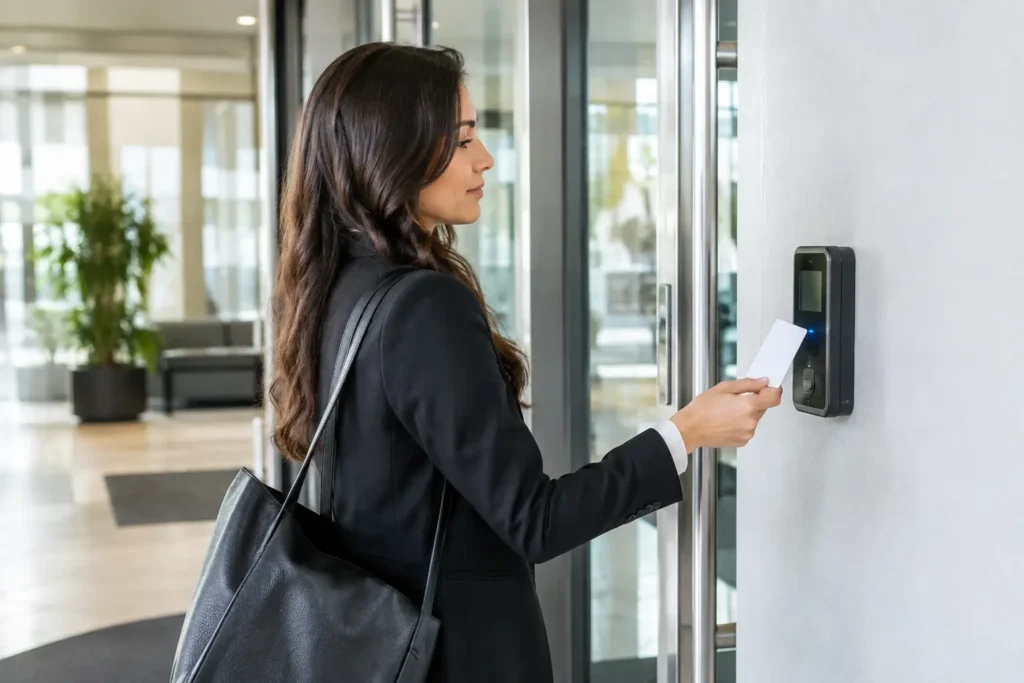
Card, fob, keypad, and mobile access systems work well for offices with changing staff, multiple entry times, or a need for access records. Instead of rekeying every time an employee leaves, you can deactivate that person’s credential.
Electronic access is especially useful at shared office entrances, back doors, server rooms, and storage areas. Some systems can show who entered and when, helping managers investigate incidents without relying only on memory or camera footage.
However, electronic access still needs maintenance. Batteries run down, readers can be damaged, codes get shared, and doors may fail to latch. Keep a controlled backup method for authorized entry and make sure staff know who to contact if the system stops working after hours.
Protect glass doors without blocking visibility
Glass office doors are common in reception areas and commercial units because they create an open, professional appearance. They also need hardware designed specifically for glass and their surrounding frame.
Depending on the door type, suitable options may include glass-door patch locks, deadlocks, floor locks, electromagnetic locks, or access-controlled locking systems. Security film, shutters, and a visible camera can add another layer where there is a higher risk of forced entry.
Do not rely on a simple handle lock alone if the door is the main barrier between the public area and your office. A professional inspection can identify whether the lock secures the door effectively and whether the glass, frame, and closing mechanism are working together.
Make Entry Procedures Part of Security
Even the best lock cannot prevent an employee from holding the door open for an unknown visitor. Staff need simple, realistic rules that fit the way the office operates.
Visitors should be greeted, directed to reception, or asked to wait in a designated area. Deliveries should not automatically give drivers access beyond the entrance. Contractors and cleaning crews should receive access only for the times and areas required.
Tailgating deserves particular attention. This is when an unauthorized person enters closely behind someone with valid access. Employees may feel awkward challenging people, especially in a busy building. Give them a clear script: “Can I help you sign in at reception?” It is polite, direct, and protects everyone inside.
For offices without a full-time receptionist, a video intercom or doorbell camera can help staff verify visitors before releasing the door. Position it so the person at the entrance is visible, and check that the camera view is not blocked by glare, signage, or a partially open door.
Do Not Ignore Door Closers, Frames, and Emergency Exit Rules
An entrance door should close and latch every time. If it swings shut but does not latch, it is effectively unsecured. A faulty door closer can also leave the door open after deliveries, create slamming, or make the entrance difficult for staff and visitors to use.
Check the frame and strike area for loose screws, splits, dents, or movement. Reinforcing these areas can make forced entry more difficult because the lock is only as secure as the material holding it in place.
At the same time, never improve security by blocking an emergency exit or fitting hardware that prevents safe evacuation. Fire and building requirements vary by location and door type. Any upgrade should preserve the required exit function, especially for doors used by staff or the public.
Respond Quickly to Lost Keys and Damaged Locks
A lost office key is not always an emergency, but it should not be ignored. The risk depends on what the key opens, whether it can be identified with your business, and who may have access to it. If a key is lost after an employee leaves, after a break-in, or alongside identifying information, rekeying or replacing the lock is often the safer choice.
The same applies to a damaged lock. A key that turns roughly, a latch that catches, or a lock that needs repeated attempts can fail at the worst time. Waiting until staff are locked out or the office cannot be secured after closing usually costs more in disruption.
A mobile commercial locksmith can inspect the entrance on-site, repair or replace suitable hardware, rekey locks, and advise whether a key alike or master key arrangement makes sense for the office. Pro-Smith and Lock focuses on practical lock solutions that restore security without unnecessary complications.
Create a Simple Security Review Schedule
Office entrance security is easier to manage when it is checked routinely rather than only after an incident. Review access whenever someone joins or leaves, when keys go missing, after renovations, or when your office hours change.
Every few months, test that the door closes, latches, and locks correctly. Confirm that access cards and codes belong only to current users. Look at camera views, exterior lighting, signage, and any areas where visitors can enter unnoticed. These checks take little time and often identify small problems before they become expensive ones.
A secure office entrance should feel straightforward for authorized staff and unwelcoming to anyone who should not be there. Start with the door and lock, then build sensible access rules around them. When something feels loose, outdated, or unreliable, fixing it early is usually the fastest way to keep your workplace protected.