A metal apartment gate is often the first barrier between your home and the common corridor. The right apartment gate lock options can make that barrier useful without making daily entry frustrating, leaving you stranded with a broken key, or creating a problem during an emergency. The best choice depends on the gate design, your existing main door lock, who needs access, and whether you own or rent the unit.
A lock should suit the way you actually use the entrance. A single resident may prefer a simple key-operated deadlock. A family with children, caregivers, or frequent deliveries may be better served by a digital lock or a key-alike setup. Before replacing anything, look at the condition of the gate frame, hinges, lock cutout, and strike area. A strong lock on a loose or misaligned gate will not provide the protection you expect.
Apartment Gate Lock Options That Fit Your Entry
Padlocks and hasp locks
A padlock is one of the most familiar and affordable choices for a metal gate. It works with a hasp, staple, or built-in locking loop, and it is easy to replace when the lock becomes worn or keys are lost. For a basic gate that is used occasionally, a quality weather-resistant padlock can be a sensible solution.
Its weakness is exposure. The lock body and shackle sit outside the gate, where they can be attacked or damaged by force. A long shackle also creates more room for cutting tools. Choose a closed-shackle or protected-shackle design where possible, and make sure the hasp itself is firmly secured. There is little value in fitting a heavy padlock to a thin, poorly mounted latch plate.
Padlocks are practical for simple gates, storage areas, and temporary arrangements. They are less convenient for a main entrance used many times a day, especially when several people need separate keys.
Rim locks and deadlocks
For many apartment gates, a rim lock or deadlock is a stronger long-term upgrade. These locks are mounted to the surface of the gate or fitted into a prepared lock case, with a bolt that secures into a receiving plate on the frame. A deadlock generally offers better resistance than a basic spring latch because the bolt remains fixed when locked.
This option works well for homeowners who want a traditional key system with dependable everyday operation. It can also be paired with an existing main door lock, giving you two separate points of security. If the gate and main door use different keys, keep the keys clearly labeled and avoid leaving spare keys in obvious places near the entrance.
The trade-off is installation. Proper alignment matters. If the gate sags, rubs against the frame, or has been bent, the bolt may not enter the strike plate smoothly. Forcing a key or repeatedly slamming the gate can damage the cylinder and eventually cause a lockout. A locksmith can adjust the gate alignment and fit the lock so it closes cleanly.
Mortise locks for built-in protection
A mortise lock sits within a cutout in the gate or door profile rather than on the surface. This gives the entrance a cleaner appearance and can reduce exposed parts. It is often a good choice for metal gates with enough depth to accept the lock body.
Mortise locks can include a latch, deadbolt, handles, or a combination of these functions. They are useful when you want a more integrated setup, but they are not a one-size-fits-all replacement. The lock case dimensions, backset, handle position, and gate material must match. Cutting a metal gate incorrectly can weaken it or leave visible gaps around the new lock.
If your current mortise lock is sticking, spinning, or no longer holding securely, replacement is usually more reliable than repeated temporary repairs. Bring attention to the whole assembly, not just the key cylinder. A faulty handle, worn latch, or damaged strike plate can cause the same frustrating symptoms.
Digital gate locks
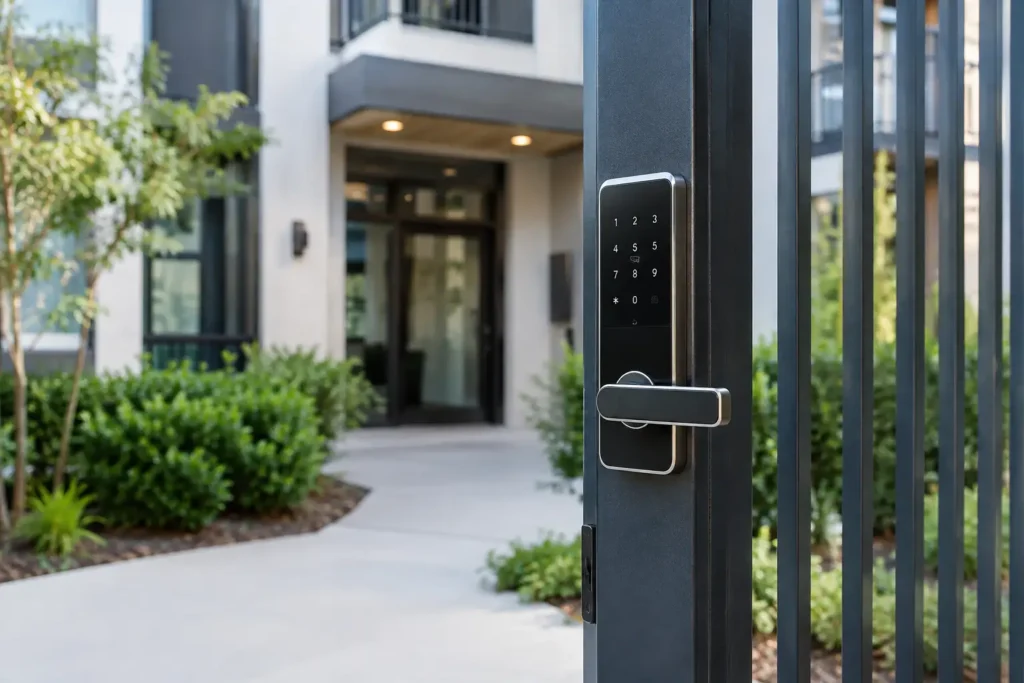
Digital locks provide keyless entry through PIN codes, cards, tags, fingerprints, or a combination of methods. They are convenient for households that do not want to manage multiple physical keys. If a tenant moves out, a family member loses a card, or a helper no longer needs access, credentials can usually be removed without changing the entire lock.
For an apartment gate, select a model designed for the gate material and environment. The lock should be suitable for metal installation, protected from direct rain where necessary, and fitted so that the gate closes without striking the lock body. Battery access is another practical point. You should be able to replace batteries easily and know the emergency power or override procedure before the batteries run low.
Digital locks are not automatically better than mechanical locks. They require correct installation, periodic battery checks, and sensible code management. Do not use an easy PIN such as a birth date or unit number. For some homes, a mechanical deadlock on the gate and a digital lock on the main door is the more practical combination.
Smart locks and app-based access
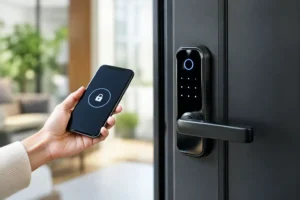
Smart locks add features such as temporary codes, access records, remote control, and phone notifications. These can be useful for landlords, short-term occupancy arrangements, or households managing access for cleaners and caregivers. They can also reduce the need to copy and collect keys.
However, convenience should not come ahead of reliability. Check whether the lock still works locally if your phone battery is flat, the app has an issue, or the internet connection is unavailable. A physical key override or another approved backup entry method is worth having. Also consider whether every household member is comfortable using the system. A lock that only one person understands can create unnecessary stress during an urgent situation.
Key-alike systems
If you have a gate lock, main door lock, mailbox lock, and other approved locks that can use compatible cylinders, a key-alike system may reduce the number of keys you carry. One key can operate multiple locks, while each lock still remains a separate physical barrier.
This is a straightforward choice for owners who are tired of a large key ring and want easier access without moving to digital hardware. It is also useful when replacing several locks after keys are lost or when occupancy changes. The important question is whether the locks are compatible and whether one key should truly open all of them. For some households, keeping the mailbox or storage lock separate is safer.
Choosing Between Apartment Gate Lock Options
Start with the gate itself. A sliding gate, swing gate, folding gate, and grille gate may need different lock types and mounting positions. Look for rust, loose welds, misaligned leaves, damaged hinges, and gaps around the latch area. Security comes from the full installation, not the brand name on the lock.
Next, think about access. If one or two people use the entrance, a good deadlock may be the simplest choice. If several residents need regular access, digital credentials or a key-alike system can reduce the risk of lost and copied keys. For rentals, obtain the owner’s approval before drilling, welding, or changing lock hardware. Keep a clear record of who has keys, cards, and codes.
Your routine matters as well. If you often return home with groceries, a keyless option may be convenient. If you prefer a lock that needs no batteries and is easy for any visitor to understand, a mechanical lock is often the safer fit. There is no single best lock for every apartment gate.
Installation Details That Affect Security
A lock must be fitted at the correct height and supported by solid metal. The bolt should enter the strike plate fully without pressure from the gate. If the gate must be lifted, pulled, or pushed hard to lock, address the alignment first. That small problem can wear out a new lock quickly.
Avoid leaving keys in the inside cylinder if the gate design allows someone from outside to reach or manipulate them. Keep spare keys with a trusted person or use a controlled storage solution, not a hidden spot near the unit. If keys have been lost with identifying information, replacing or rekeying the affected lock is usually the sensible step.
Also consider emergency exit. Your gate should allow occupants to leave safely and should not interfere with building requirements or fire safety rules. A locksmith can recommend hardware that improves security while keeping everyday entry and exit practical.
When a gate lock jams, a key breaks, or the lock no longer catches, do not force it until it fails completely. Pro-Smith and Lock can assess the gate, replace damaged lock hardware, and recommend an option that suits your entry, budget, and daily routine. A properly fitted lock gives you one less thing to worry about each time you close the gate behind you.