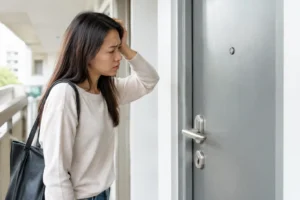
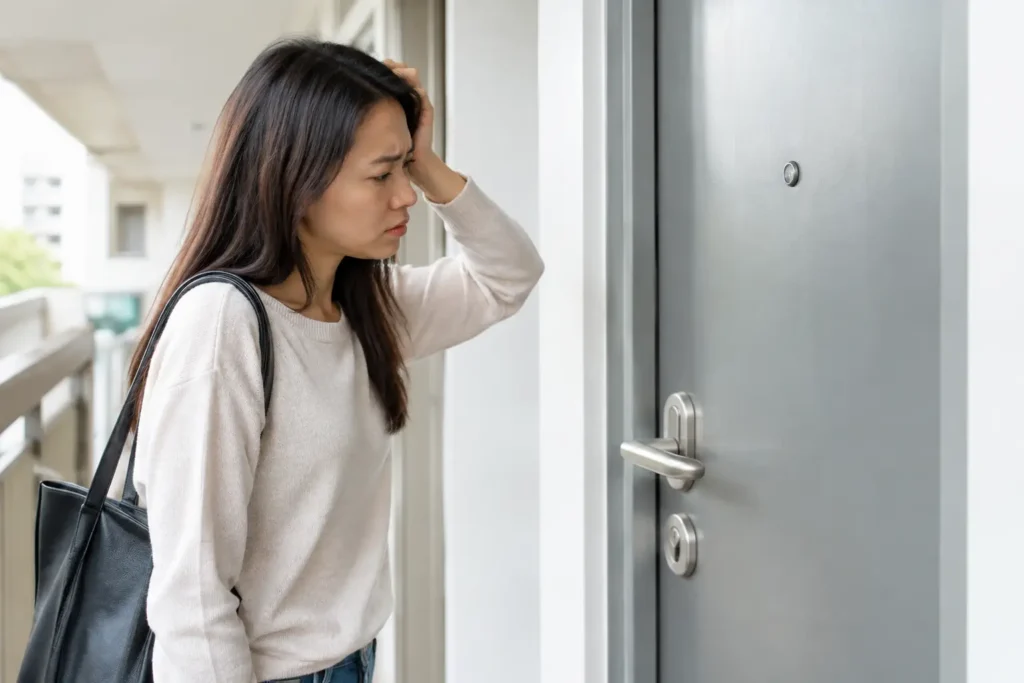
Your keys are on the dining table, the main door has shut behind you, and your phone is at 12 percent. This HDB lockout example is familiar to many residents: a short trip to throw out the trash, collect a delivery, or speak with a neighbor turns into an urgent problem outside the door.
The priority is simple: get back inside safely, without causing expensive damage to the door, lock, frame, or gate. A calm approach usually saves time and money. Trying to force the lock rarely does.
A Common HDB Lockout Example
Imagine returning home in the evening with groceries. You unlock the metal gate, enter the unit, and place your keys on the console. A few minutes later, you step outside to pick up a parcel. The main wooden door closes behind you and automatically locks. The gate key is still in your pocket, but the house key is inside.
At first, it may feel like a minor inconvenience. Then you remember that dinner is on the stove, a child may be inside, or you need medication. Even without an immediate safety concern, being locked out of your own home is stressful and disruptive.
This situation can happen with a standard cylinder lock, a mortise lock, a digital lock, or a door with several layers of security. The right solution depends on the lock type, whether the door is deadlocked, the condition of the hardware, and whether there is another safe way to confirm access. A professional locksmith assesses these details before attempting entry.
What to Do First When You Are Locked Out
Start by checking the practical options. If another family member has a spare key and can arrive quickly, that may be the easiest answer. If you rent the unit, contact the owner or authorized agent if they hold a spare. Do not ask a neighbor to climb through a window or balcony access point. A fall, a damaged window, or a security complaint can turn a lockout into a much larger problem.
If there is food cooking, a young child, an elderly person, or a pet in immediate danger inside, call emergency services first. Explain the situation clearly. A locksmith can help with access, but urgent life-safety risks need the appropriate emergency response.
For a normal lockout, call a mobile locksmith and describe what happened. Share the HDB block and unit details, whether you are outside the main door or gate, and the type of lock if you know it. A clear description helps the locksmith arrive with suitable tools and gives you a more realistic expectation of the work required.
Keep identification available. A responsible locksmith should verify that you are authorized to enter the property. Your NRIC, tenancy documents, proof of residence, or a call with the owner may help confirm this. This protects residents and prevents unauthorized entry.
Why Forced Entry Is Usually the Wrong Move
A locked door can make almost any object look useful. Credit cards, wire hangers, screwdrivers, and improvised picks are common ideas. They are also common causes of damaged locks, bent latch components, scratched doors, and broken frames.
Many HDB main doors use hardware designed to resist simple bypass attempts. If the door has a deadbolt, mortise lock, or security cylinder, pushing a card into the gap will not open it. Repeated pressure can damage the weather strip, door edge, and latch plate without moving the lock at all.
Drilling is not automatically the answer either. In some cases, a damaged or high-security lock may need to be drilled and replaced. But it should be a last-resort option, not the first method suggested. Skilled lock opening aims to regain access with the least possible damage whenever the lock condition allows it.
There is also the gate to consider. Some units have a metal gate fitted with a padlock, rim lock, or digital lock in addition to the main door. Opening one barrier does not always solve the problem. An on-site assessment avoids unnecessary work and helps identify the most practical entry point.
What a Professional Locksmith Will Check
A professional locksmith does more than try tools on the lock. They first confirm authorization and inspect the door setup. This includes the lock position, visible damage, door alignment, whether the key has been lost or left inside, and whether the lock may have failed mechanically.
Door alignment matters more than many people realize. A swollen wooden door, a misaligned strike plate, or a loose hinge can make a functioning lock feel jammed. In those cases, the issue may not be the key or cylinder alone. Opening the door without correcting the cause can lead to another lockout soon after.
The locksmith will then choose an appropriate opening method. Where possible, this may allow the existing lock to remain usable. If the lock is already faulty, badly worn, or compromised after a lost-key incident, replacement may be the safer long-term choice.
A good service call should leave you with a working door, clear information about what was done, and practical advice on whether the lock needs further attention. You should not feel pressured into replacing hardware that is still secure and serviceable. At the same time, do not ignore a lock that is sticking, spinning, or showing signs of internal failure just to avoid a replacement cost today.
When Lock Replacement Makes Sense After an HDB Lockout
Not every lockout requires a new lock. If you simply left your keys inside and the lock opens cleanly without damage, you may be able to continue using it as normal. However, replacement is worth considering in several situations.
If your keys were lost outside the home, someone may be able to identify the unit or gain access later. Replacing or rekeying the lock can restore peace of mind. If the key snapped in the cylinder, the lock was forced, or the mechanism has become unreliable, repair or replacement is usually more sensible than waiting for the next failure.
A recent move is another good time to review your locks. Previous occupants, contractors, relatives, or agents may still have copies of old keys. A new cylinder, a key-alike setup for multiple doors, or an upgraded main door lock gives you control over access from the start.
Digital locks are convenient for families who regularly forget keys, but they are not maintenance-free. Batteries can run flat, fingerprints can fail to register, and emergency override keys still need to be stored carefully. The best choice depends on your household routine, door type, budget, and preference for mechanical or electronic access.
How to Reduce the Chance of Another Lockout
A spare key helps, but where and how you keep it matters. Do not hide one under a doormat, in a shoe rack, or near the electrical riser. Those locations are predictable. A better option is to leave a spare with a trusted nearby family member or keep it in a properly secured key safe only where suitable.
For households with several occupants, agree on a simple routine: keys are checked before the door closes, and one backup key is kept with a responsible person outside the unit. Tenants should also know who to contact after hours if the landlord or agent manages access.
Pay attention to early warning signs. A key that needs jiggling, a handle that feels loose, a latch that catches, or a digital lock that drains batteries quickly is asking for attention. Small adjustments and timely maintenance are often cheaper than an emergency callout at night.
Get Help Without Making the Problem Worse
A lockout is frustrating, but it does not need to end with a broken door or an unnecessary lock replacement. Stay where it is safe, confirm your identity documents, and use a locksmith who explains the available options before work begins.
For HDB residents who need prompt, careful help, Pro-Smith and Lock provides on-site door opening and lock solutions across Singapore. The best next step is usually the simplest one: call early, describe the lockout clearly, and let a qualified professional get you back inside with care.