A locked main door should protect your property without making everyday life harder. That is the real question behind single cylinder versus double cylinder locks: do you need the convenience of an inside thumbturn, or the added key control of a lock that requires a key from both sides? The right answer depends on your door, nearby glass, household needs, and emergency exit requirements.
For most homes, apartments, and offices, a professional locksmith will look beyond the lock type alone. Door material, existing hardware, access habits, and local fire safety rules all matter. A lock that seems more secure on paper can create a serious problem if people cannot leave quickly during an emergency.
What Is a Single Cylinder Lock?
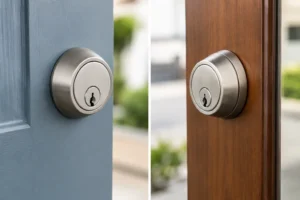
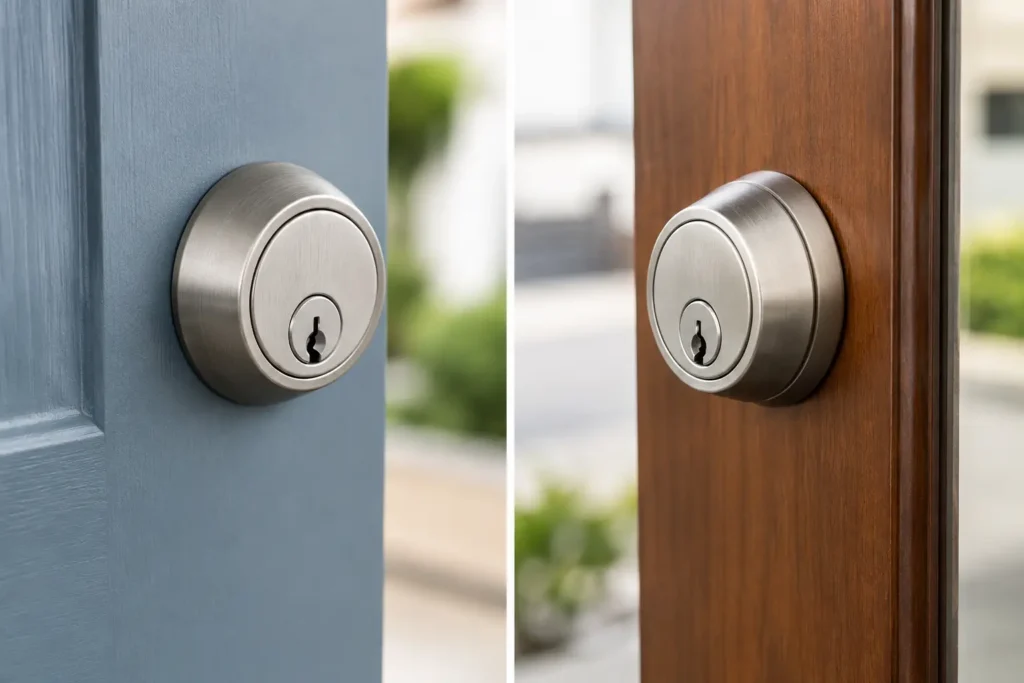
A single cylinder deadbolt uses a key on the exterior side and a thumbturn on the interior side. When you are inside, you can lock or unlock the deadbolt by turning the small lever rather than finding a key.
This is the lock style many people recognize on residential main doors. It is practical for households because family members can leave quickly, visitors can be let out easily, and the door can be unlocked from inside during an emergency without searching for keys.
A single cylinder lock is often a sensible choice when there is no glass panel, sidelight, or nearby opening within arm’s reach of the interior thumbturn. If a person cannot reach through or break nearby glass to turn the thumbturn, the convenience and safe exit access are usually strong advantages.
Why homeowners often choose it
The main benefit is simple: quick exit. If there is a fire, medical emergency, or urgent need to leave, anyone inside can operate the lock without a key. This is especially helpful in homes with children, elderly residents, tenants, or regular visitors who may not carry a key.
Single cylinder locks are also easier to use day to day. You do not need to keep a key hanging by the door or remember to bring one when stepping outside. For many standard solid wood or metal entry doors, this design provides a practical balance of security and convenience.
What Is a Double Cylinder Lock?
A double cylinder deadbolt requires a key from both the outside and the inside. There is no thumbturn on the interior side. To unlock the door, a person inside must insert and turn a key.
This design is often considered for doors with glass panels, glass sidelights, or glass sections close to the lock. The reasoning is straightforward: if someone breaks the glass, they cannot simply reach in and turn an interior thumbturn to unlock the deadbolt.
Double cylinder locks can also be considered for certain commercial doors, secured storage areas, or properties where tighter key control is needed. However, they are not automatically the best choice for every door with glass. Their safety trade-off must be assessed carefully before installation.
The major drawback: emergency exit
A double cylinder lock can slow down an escape if the interior key is missing, misplaced, or left in another room. In a stressful situation, even a nearby key can be difficult to find and use. Smoke, darkness, panic, or a blocked pathway can make a few extra seconds matter.
For that reason, double cylinder locks may be restricted or prohibited on doors that serve as required exit doors. Building requirements and fire safety regulations vary by property type and location, so do not install one based only on security concerns. A locksmith should assess the door’s purpose and advise whether the hardware is suitable.
Keeping the key permanently in the inside cylinder may appear to solve the problem, but it reduces the security benefit of the lock. It can also introduce other concerns, particularly if children can access the key or if the key becomes an obstacle near a busy doorway.
Single Cylinder Versus Double Cylinder: The Practical Difference
The choice usually comes down to three questions: Can someone reach the inside lock through nearby glass? Does this door need to provide fast emergency exit? Who uses the door every day?
A single cylinder lock favors speed and convenience. It is generally suited to solid main doors, apartment doors, bedroom doors, and other entrances where the interior thumbturn cannot be reached from outside. It also supports fast exit for people inside the property.
A double cylinder lock favors key-controlled operation on both sides. It may make sense where breakable glass is close enough for someone to reach the lock, but only if the door is not a required emergency exit and the installation complies with applicable safety requirements.
Neither option is universally “more secure.” A double cylinder prevents one specific method of entry through nearby glass. It does not compensate for a weak door frame, loose strike plate, damaged hinges, low-quality deadbolt, or poorly managed keys. Security works best when the entire door system is considered.
Look at the Door Before Choosing the Lock
A good lock decision starts with the door itself. A solid door with a reinforced frame has different needs from a glass office door, a metal gate, or an older wooden entry door. The existing hole positions and backset can also affect whether a replacement lock will fit cleanly and securely.
For a main door with a glass panel, there may be options other than a double cylinder deadbolt. Depending on the layout, a locksmith may recommend moving the lock farther from the glass, improving the glass protection, fitting a suitable security door, or upgrading other hardware. These options can reduce the risk of reach-through entry without compromising emergency exit access.
For offices, the decision may involve staff access as much as physical security. If several employees require entry, a key alike system or master key system can simplify access while maintaining control over who holds keys. A lock that is difficult to exit or manage will create daily problems for staff and visitors.
Do Not Overlook the Lock Grade and Installation
The cylinder arrangement is only one part of the job. A quality deadbolt needs a properly aligned strike plate, long enough screws anchored into the frame, and a door that closes without forcing the bolt. If the bolt does not extend fully into the strike, even an expensive lock may not perform as intended.
Older doors can develop sagging, swelling, or misalignment over time. You may notice that you have to lift the door, push hard, or jiggle the key before the lock works. These are signs that the issue may involve the door alignment or frame, not just the cylinder.
A professional installation also helps prevent common problems such as loose lock bodies, incorrect backset measurements, rough drilling, and damage to a wooden, metal, or glass door. For a planned security upgrade, it is worth checking the full condition of the door hardware rather than replacing only the visible lock.
When a Single Cylinder Lock Is Usually the Better Fit
A single cylinder deadbolt is commonly the better choice for a standard residential entry door with no reachable glass near the lock. It also makes sense where fast and simple exit is a priority, such as homes with families, rental units, and rooms used frequently by different people.
It can be especially practical after a lockout, lost-key incident, or damaged lock replacement. If the door already has the correct preparation for a single cylinder deadbolt, replacing it with a reliable matching model is often a quick, affordable way to restore security.
That said, convenience should not lead to careless key handling. If keys have been lost, stolen, or passed between former tenants or staff, rekeying or replacing the lock may be necessary. The best cylinder type cannot protect a property if unknown people still have working keys.
When to Ask a Locksmith for Advice
Call for professional advice if your door has glass near the lock, your current deadbolt is stiff or damaged, you are moving into a new property, or you are unsure whether the door is a designated exit route. These are situations where a quick visual assessment can prevent the wrong lock from being installed.
Pro-Smith and Lock can assess the door type, existing lock condition, and practical access needs before recommending a replacement. The goal is not to fit the most complicated lock. It is to provide a dependable setup that suits your property, daily routine, and safety requirements.
Your door should feel secure when you lock it and straightforward when you need to leave. Choose the cylinder style that protects against the risks your property actually faces, and never trade away a safe exit for a security feature that does not fit the door.