A door handle that droops, spins freely, sticks, or feels loose is more than an everyday annoyance. It can leave you unable to secure your home, bedroom, office, or gate properly. If you need to replace damaged door handle hardware, acting early can prevent a minor fault from becoming a lockout, a broken latch, or a security concern.
For property owners in Singapore, the right solution depends on what has failed. Sometimes the handle alone needs to be changed. In other cases, the latch, lock body, cylinder, strike plate, or even the door alignment is causing the problem. A professional assessment helps ensure you replace the correct part rather than spending money on a handle that does not solve the issue.
Signs Your Door Handle Needs Attention
Door handles wear down through constant use, especially on main doors, bedroom doors, office entrances, and metal gates. Humidity, corrosion, forceful use, poor installation, and mismatched hardware can all shorten their working life.
A loose handle is often the first warning sign. You may notice that it moves up and down without retracting the latch fully, or that the lever has started pulling away from the door. This can be caused by loose mounting screws, but it can also mean the internal spindle or handle mechanism is worn.
A handle that turns but does not open the door is more urgent. The latch may be jammed, broken, or disconnected from the spindle. Do not keep forcing it. Excess pressure can damage the lock body or leave the door stuck shut when you need to get in or out.
Other common warning signs include:
- The handle feels stiff, rough, or unusually difficult to turn.
- The latch does not retract fully when the handle is pressed.
- The handle is cracked, bent, corroded, or visibly loose.
- The door will not latch or lock properly after closing.
- A key works inconsistently because the handle and lock are misaligned.
If the main door handle is failing, treat it as a security issue rather than a cosmetic repair. A weak or damaged handle can make it easier for someone to force the door or may prevent you from locking it securely before leaving.
When to Replace a Damaged Door Handle Instead of Repairing It
Not every faulty handle needs a full replacement. If the screws have simply loosened and the handle is otherwise firm, a careful adjustment may restore normal operation. Minor alignment problems can also sometimes be corrected by adjusting the strike plate or door hinges.
Replacement is usually the better choice when the handle is cracked, the internal spring has failed, the spindle is stripped, or corrosion has weakened the metal. A handle that has already been repaired repeatedly may also be due for replacement. Continuing to tighten or patch worn hardware can cost more over time and may fail at the worst possible moment.
The type of door matters too. HDB unit doors, wooden bedroom doors, aluminum-framed glass office doors, fire-rated doors, and metal gates use different handle and lock arrangements. A replacement that looks similar may not fit the existing door thickness, backset, screw holes, latch type, or lock case.
This is why choosing hardware based only on appearance can create problems. A new handle should work smoothly with the existing lock, door material, and security needs. For a main entrance, upgrading the lock together with the handle may provide better value than fitting a new handle onto an old, unreliable lock.
Check the Problem Before You Buy New Hardware
Before purchasing a replacement, check whether the handle problem is actually coming from the door or lock. Close the door slowly and see whether the latch lines up with the strike plate. If the door has sagged, the latch may scrape against the frame and make the handle feel stiff.
Next, test the handle while the door is open. If it works smoothly when open but jams when closed, alignment is likely the issue. If it remains difficult to turn in both positions, the handle, latch, or lock mechanism may be failing.
You should also consider whether the lock is still reliable. If you have trouble turning the key, need to lift the handle to lock the door, or see movement around the cylinder, it may be safer to replace the handle and lock as a set. This is especially relevant after a break-in attempt, a forced door opening, or years of heavy use.
For tenants, avoid changing main door hardware without checking your tenancy agreement or informing the property owner. You may be responsible for the repair, but the owner may also need a matching key or approval for any lock change.
Choosing the Right Replacement Handle
The best replacement is not always the most expensive one. It should suit the door, withstand regular use, and provide the level of security the location requires.
For internal bedroom or bathroom doors, a standard lever handle with an appropriate privacy lock may be enough. For a main entrance, look for durable hardware that works with a quality deadbolt, mortise lock, or digital lock setup. Office glass doors require purpose-made fittings that will not damage the glass or interfere with access control hardware.
Finish is worth considering, but it should come after fit and durability. Stainless steel and other corrosion-resistant materials are often practical choices in Singapore’s humid conditions. A handle used on an external gate or frequently touched main door needs to tolerate far more wear than a handle on a lightly used storeroom door.
It also helps to keep the keying arrangement in mind. If your home or business uses a key alike system, replacing one lock without planning can leave you carrying extra keys. For commercial premises, a master key system may need to be preserved when door hardware is changed. A locksmith can advise on compatible options before work begins.
Can You Replace It Yourself?
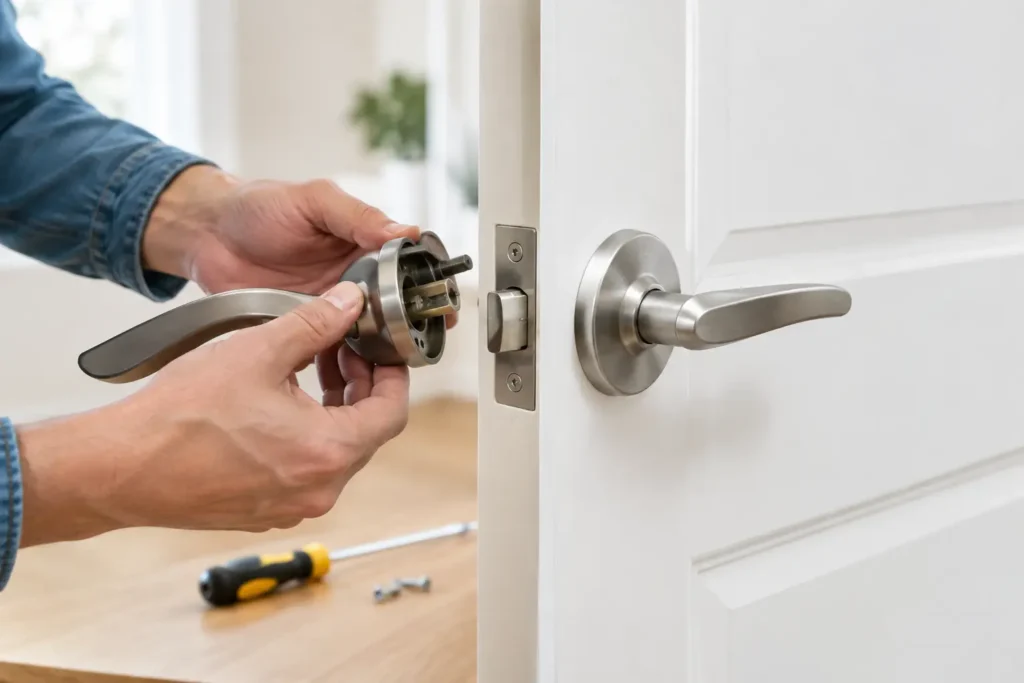
A straightforward interior handle replacement can be manageable if the existing hardware is standard, the door is in good condition, and the new set matches the old measurements. Work carefully, keep the screws organized, and avoid overtightening them into a wooden door.
However, DIY replacement has limits. Mortise locks, digital locks, main door handles, glass door fittings, and damaged door frames need more care. Incorrect drilling or fitting can weaken the door, damage the lock body, or leave a gap that affects security. It can also turn a quick repair into an emergency lock opening call.
Call a locksmith if the door is stuck, the latch is broken inside the door, the key will not turn, the handle is connected to a mortise lock, or you need a replacement that maintains your current key system. Professional help is also sensible when a main entrance cannot be locked securely, even if the door can still be opened.
What a Professional Door Handle Replacement Includes
A proper replacement begins with checking the full door setup, not just removing the old handle. The locksmith assesses the handle, latch, lock, cylinder, door alignment, strike plate, and frame condition to identify the source of the fault.
The damaged hardware is then removed without unnecessary damage to the door. The replacement is fitted to match the door thickness and lock type, followed by adjustments so the latch enters the strike plate cleanly. Finally, the handle, lock, and keys are tested repeatedly with the door open and closed.
This process matters because a handle can appear secure while the latch is only partly engaging. On a main door, that is not good enough. You should be able to close, open, lock, and unlock the door without forcing the handle or key.
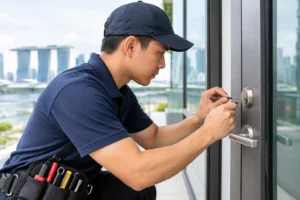
Pro-Smith and Lock provides on-site locksmith assistance for damaged door handles, lock replacements, door opening, and practical security upgrades across Singapore. With more than 14 years of experience, the focus is on identifying the actual fault and restoring reliable access and security without unnecessary work.
Do Not Wait Until the Door Fails Completely
A failing door handle often gives warning before it breaks. If it is loose, stiff, noisy, or no longer retracts the latch consistently, arrange an inspection before you are locked out or unable to secure the property. A timely replacement protects the door, avoids added emergency costs, and gives you confidence that your home or workplace can be locked properly when it matters.