A gate lock that takes two or three attempts to open is more than a daily annoyance. It can leave your home, office, or shared property exposed when the lock finally fails. Knowing the signs gate locks need replacing helps you act before you are locked out, stuck outside in the rain, or relying on a gate that no longer secures properly.
Gate locks face harder conditions than many indoor locks. Heat, rain, humidity, dust, frequent use, and gate movement can all wear down the cylinder, latch, and mounting hardware. A quick repair may be enough in some cases, but ongoing trouble often means replacement is the safer and more cost-effective choice.
8 Signs Gate Locks Need Replacing
1. Your key sticks, turns roughly, or needs force
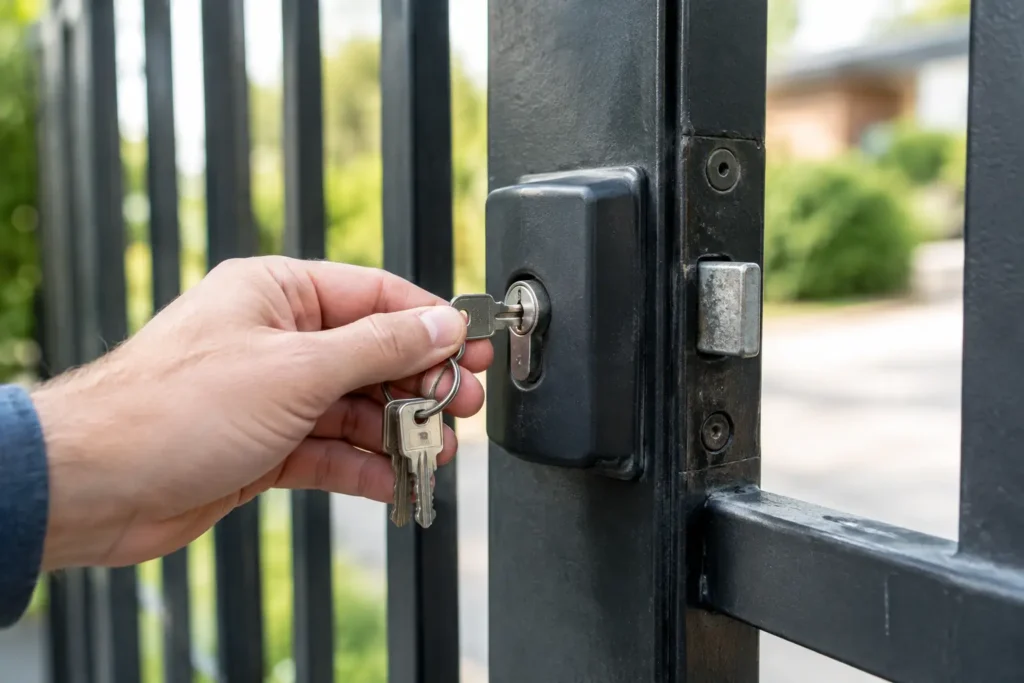
A healthy key should enter and turn with reasonable ease. If you have to jiggle the key, pull the gate toward you, or apply force to lock it, something is wearing out or misaligned. Dirt inside the keyway can cause temporary stiffness, but repeated sticking may point to a worn cylinder, damaged internal pins, or corrosion.
Do not force the key. A key can snap inside the lock, turning a planned replacement into an urgent lockout. If lubrication and basic cleaning do not solve the issue, have the lock checked before it stops working altogether.
2. The gate no longer latches securely
When you close the gate, the latch should engage fully and hold the gate in place. If it bounces open, needs to be slammed, or can be pulled open without a key, the lock is not providing proper security.
Sometimes the problem is caused by gate sagging or a strike plate that has shifted. In that situation, an adjustment may restore the lock. But if the latch itself is worn, bent, loose, or unable to catch consistently, replacing the lock is usually the right solution.
3. The lock body is loose or moving on the gate
A lock should sit firmly against the gate. Visible movement, loose screws, cracked mounting points, or a handle that wobbles when used are clear warning signs. A loose lock can become misaligned quickly, making it harder to lock and easier to damage.
This is especially common on metal gates that have been pulled, slammed, or exposed to years of vibration. Tightening the hardware may help when the lock is still in good condition. If the lock housing is damaged or its mounting holes are worn out, replacement gives you a more dependable result.
4. Rust and corrosion are affecting the mechanism
Surface discoloration is one thing. Flaking metal, deep rust around the cylinder, stiff handles, and visible corrosion near the latch are another. Outdoor gate locks are regularly exposed to moisture, and corrosion can weaken both the lock and the screws holding it in place.
A rusted lock may still work today but fail without much warning. It can also make emergency opening more difficult. Replacing a corroded gate lock early avoids the frustration of discovering that your key no longer turns when you need to leave or return home.
5. The key is worn, bent, or only works at a certain angle
Many people replace keys repeatedly when the real problem is the lock cylinder. If several copies of the same key work poorly, or the key only turns when held at a particular angle, the internal components may be worn.
A new key can help if the original key is bent or badly worn. However, if the lock has been used for many years or the gate is opened frequently, a replacement cylinder or complete lock replacement may be the better long-term fix. This is also a good time to consider a lock that uses a more secure key profile.
6. The lock has been forced, damaged, or tampered with
Scratches around the keyway, a bent latch, a damaged handle, or signs of prying should never be ignored. Even if the lock still opens and closes, forced entry attempts can weaken internal parts and compromise the gate’s ability to secure.
After a break-in attempt, replacement is generally safer than repair. You may also need to inspect the gate frame, strike plate, hinges, and nearby door or entrance points. Security works as a system, and a new lock cannot compensate for a damaged gate that no longer closes squarely.
7. You have lost keys or do not know who still has access
A gate lock can work perfectly and still need replacing for security reasons. If keys were lost, stolen, handed to former tenants, contractors, domestic helpers, or past employees, you cannot be certain who can enter the property.
Rekeying may be suitable when the existing lock is in good condition and compatible with the service. Replacing the lock makes more sense when it is old, unreliable, or not suited to your current security needs. For properties with several access points, a key alike system can reduce the number of keys you carry while keeping access organized.
8. The lock is outdated for the level of security you need
Older gate locks may offer basic access control but provide little resistance against picking, drilling, or physical force. This matters more for side gates, landed homes, ground-floor entrances, storage areas, and commercial premises where the gate is the first barrier to the property.
Replacement does not always mean choosing the most expensive lock available. The right option depends on the gate material, gate thickness, exposure to weather, daily usage, and the value of what the gate protects. A locksmith can recommend a practical lock upgrade that fits the gate properly instead of forcing a product that does not match the installation.
When a Repair Is Enough and When to Replace the Gate Lock
A small alignment issue, loose strike plate, or dry keyway can often be repaired. If the lock is relatively new, undamaged, and the issue is isolated, a repair may save money and restore normal operation.
Replacement is the better choice when problems keep returning, the lock is rusted, its security has been compromised, or parts are no longer readily available. Repeated patchwork repairs can cost more over time than fitting a quality replacement that works smoothly and protects the property properly.
It also depends on whether the issue is with the lock or the gate. A sagging gate can place pressure on even a new lock, so the alignment should be checked before installation. A professional locksmith can assess the lock, latch, strike, and gate position together, then explain the most practical option.
Do Not Wait for a Complete Lock Failure
Gate lock trouble often gets worse gradually. A key that sticks once a week can become a lock that will not turn at all. A loose latch can become a gate that does not secure overnight. Addressing the issue early gives you more choice, avoids emergency costs, and reduces the risk of being locked out.
For urgent situations, a mobile locksmith can open a faulty gate lock and replace it on-site where appropriate. For planned upgrades, the same visit can be used to review other entry points, such as your main door, mailbox, bedroom, office gate, or glass door locks. This is useful after moving into a new property or changing tenants.
Choose a Gate Lock That Fits the Gate and Your Daily Use
A replacement lock must be compatible with the gate. Metal gates, wooden gates, sliding gates, swing gates, and narrow-profile frames can require different lock types and installation methods. The lock should close cleanly without excessive pressure and be positioned so that it is protected from unnecessary weather exposure where possible.
Think about who uses the gate as well. A family home may prioritize simple, reliable access. A rental property may need easier key control between tenants. An office or shared facility may benefit from organized access arrangements that limit who can enter certain areas.
If your gate lock is showing early warning signs, arranging an inspection now is usually the easiest move. A properly fitted replacement can make daily access smoother and give you confidence that the gate will still secure when it matters most.