A rented room can feel like home, but your security may depend on a lock chosen years before you moved in. Rental room security starts with knowing who can access your space, whether the door hardware works properly, and what you are allowed to change under your lease. A simple lock check early on can prevent a stressful lockout, privacy issue, or avoidable break-in later.
Whether you rent a room in a shared house, an apartment bedroom, or a room near work or school, the goal is practical protection. You want a door that closes securely, a key that is controlled, and a clear plan for handling lost keys or damaged locks without creating problems with your landlord.
Start With the Door, Lock, and Key
Before unpacking everything, inspect the room door with the door closed and locked. The latch should enter the strike plate fully without forcing the handle or pushing hard against the door. A loose handle, sticking key, wobbly lock cylinder, or door that can be pushed open while locked should be addressed promptly.
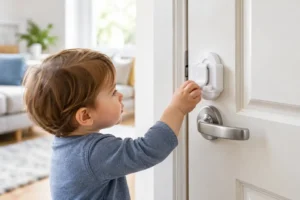
Take note of the type of lock installed. Many interior bedroom doors use privacy locks designed mainly for convenience, not strong access control. They may have a push-button or turn lock on the inside and an emergency release on the outside. This can be suitable for a family bathroom, but it may not provide the level of protection a tenant expects for a private rental room.
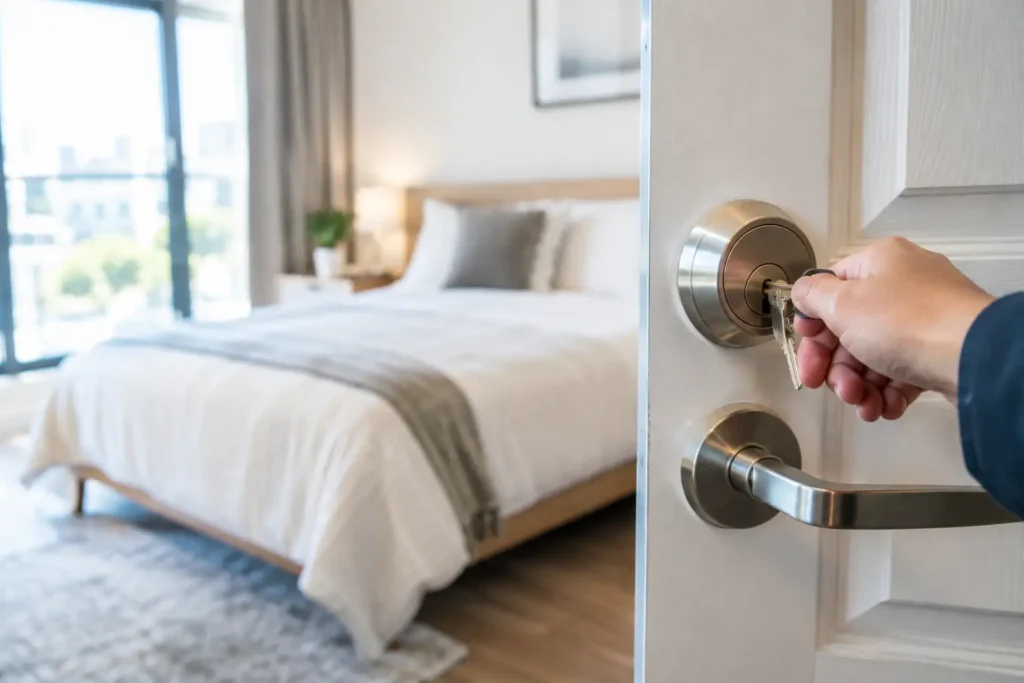
A keyed entry lock can offer better control when permitted by the property owner. However, stronger is not always better if the door itself is hollow, warped, or fitted with a weak frame. Good security depends on the entire setup: the door, hinges, strike plate, screws, lock, and key management all matter.
If the key is difficult to turn, do not keep forcing it. A failing lock can snap a key or leave you locked out at the worst time. A locksmith can assess whether the issue needs adjustment, repair, rekeying, or replacement.
Rental Room Security Requires Clear Permission
Tenants should not change locks without checking the lease and local rental rules first. Some landlords require written approval, while others may provide replacement locks themselves. There may also be requirements about emergency access, fire safety, or providing a copy of a new key.
The sensible approach is to raise the issue in writing. Explain the practical concern, such as a damaged lock, a missing former tenant key, or a bedroom door that does not lock securely. Ask whether the owner will arrange the repair or approve a specific upgrade. Keeping the request clear and reasonable helps avoid disputes later.
If you share a property, avoid making changes that affect common entrances unless the landlord has authorized them. Replacing the lock on a main entry door without permission can interfere with other residents’ access and create an emergency risk. Your private room is usually the more appropriate place to focus, subject to the lease.
Rekeying Is Often Better Than Replacing Everything
When a previous tenant, roommate, cleaner, contractor, or guest may still have a key, rekeying is often a practical answer. A locksmith changes the internal configuration of a compatible lock so old keys no longer work. You receive new keys without necessarily replacing the entire lockset.
This option can save money when the existing hardware is in good condition. It also makes sense after a roommate moves out or when a key goes missing and you cannot be certain who found it. Replacing a lock may be the better choice if it is worn, damaged, low quality, or not suitable for the room door.
For landlords managing several rooms, key control can become complicated quickly. A key alike system allows selected locks to operate with one key, while a master key system can provide different levels of access. These setups need careful planning. They are useful for managed properties, but tenants should still have clear privacy boundaries and know who holds keys to their room.
Choose Upgrades That Fit the Property
Not every rental room needs expensive hardware. The right upgrade depends on the door construction, the building rules, your budget, and the level of risk. A solid lock on a poorly fitted door will not solve every problem, while a basic lock in good working condition may be adequate in a well-managed home.
For room doors, common improvements include replacing a damaged handle lock, fitting a properly aligned strike plate, using longer screws where appropriate, or installing a suitable keyed lock with landlord approval. If the door opens outward, exposed hinges may also need attention. A professional can recommend options that improve security without damaging the door or creating a fire-safety issue.
Smart locks can be useful for some rentals, especially where temporary access codes are preferred over physical keys. But they are not automatically the best option. Battery maintenance, compatibility with the existing door, building rules, and the need for reliable manual access should all be considered. A simple mechanical lock is often easier to maintain and less likely to cause confusion in a shared home.
Avoid improvised solutions such as adding a padlock to an unsuitable door, blocking the door with furniture, or modifying a lock with tools. These measures can damage the property, obstruct emergency exit, or leave you with a bigger repair bill.
Protect Your Privacy in a Shared Home
Room security is not only about break-ins. It is also about reducing unnecessary access and preventing misunderstandings. Do not leave spare keys in obvious places, such as under a mat, inside a mailbox, or taped near the door. If you need a backup key, choose a trusted person and agree on when it can be used.
Keep personal documents, spare cards, and small valuables in a locked container rather than relying only on the bedroom door. This is especially helpful in a shared home where maintenance visits, deliveries, or guests may create more activity than expected.
If you notice signs that someone has entered your room without permission – items moved, a lock that looks tampered with, or a key that suddenly works poorly – document what you see and notify the landlord or property manager. If there is immediate danger or forced entry, contact local emergency services first. A locksmith can then secure the door and replace compromised hardware.
Know What to Do When You Are Locked Out
Lockouts happen. A key can be left inside, lost on the commute, or broken in the lock. In that moment, avoid forcing the door, drilling the lock yourself, or trying random online tricks. Those actions can turn a straightforward opening job into damage to the door, frame, and lock.
First, check whether you have an authorized spare key or whether the landlord or property manager has an approved access process. If you need urgent help, contact a professional locksmith and be prepared to show identification or proof that you live there. A reputable locksmith should take ownership and authorization seriously before opening a private room.
After the door is opened, decide whether the key or lock has been compromised. If the key was lost outside the property, rekeying or replacement is usually worth considering. If the problem was a worn mechanism, repairing the cause is more useful than simply making another copy of the same key.
When a Locksmith Can Help
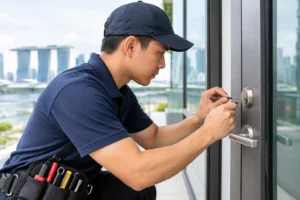
Rental security problems do not always require a full lock replacement. A professional locksmith can diagnose a jammed bedroom lock, adjust a misaligned door, extract a broken key, rekey a compatible cylinder, or install approved replacement hardware. The right service should solve the actual problem without unnecessary work.
For planned upgrades, take a few photos of the door, lock, and frame before requesting service. This helps identify likely options and confirms whether the hardware is suitable for the door material. For urgent issues, describe what happened clearly: whether the key is lost, the lock is damaged, the door is shut with keys inside, or the lock has failed while you are outside.
Your room should be a place where you can rest without wondering who has a key or whether the lock will fail. Address small lock problems early, keep the landlord informed, and choose practical upgrades that protect your privacy without creating new complications.