A key that suddenly sticks at your front door is more than an everyday inconvenience. It can be the first sign of a cylinder that is wearing out, has been forced, or is no longer sitting correctly inside the lock. Knowing how to spot damaged lock cylinders early gives you time to fix the problem before you are locked out, unable to secure your property, or dealing with a broken key.
The lock cylinder is the part where you insert and turn your key. It may look small, but it carries the daily strain of keys, weather exposure, door movement, and attempted tampering. On a main door, bedroom door, office entry, mailbox, or glass door, a damaged cylinder can quickly affect both access and security.
Why a Damaged Cylinder Should Not Be Ignored
Many people wait until the key will not turn at all. By that point, the lock may require emergency opening, a key extraction, or a full replacement. A small issue that begins as stiffness can become a late-night lockout when the internal pins, cam, or keyway finally fail.
There is also a security concern. A lock that feels loose, turns too easily, or has visible marks around the keyhole may have been damaged by force. Even if the door still locks, it may no longer provide the protection you expect. A prompt inspection helps determine whether the issue is normal wear, an installation problem, or evidence of tampering.
How to Spot Damaged Lock Cylinders at Your Door
The clearest warning sign is a key that no longer turns smoothly. You may need to wiggle it, pull it back slightly, or apply more pressure than usual before the lock responds. Do not force it. Excess pressure can snap the key inside the cylinder and make a simple repair more complicated.
A cylinder may also be damaged if the key goes in only partway, feels rough as it enters, or becomes difficult to remove after unlocking the door. Dirt can cause minor resistance, but repeated sticking often points to worn internal components, a bent key, or a cylinder that is reaching the end of its service life.
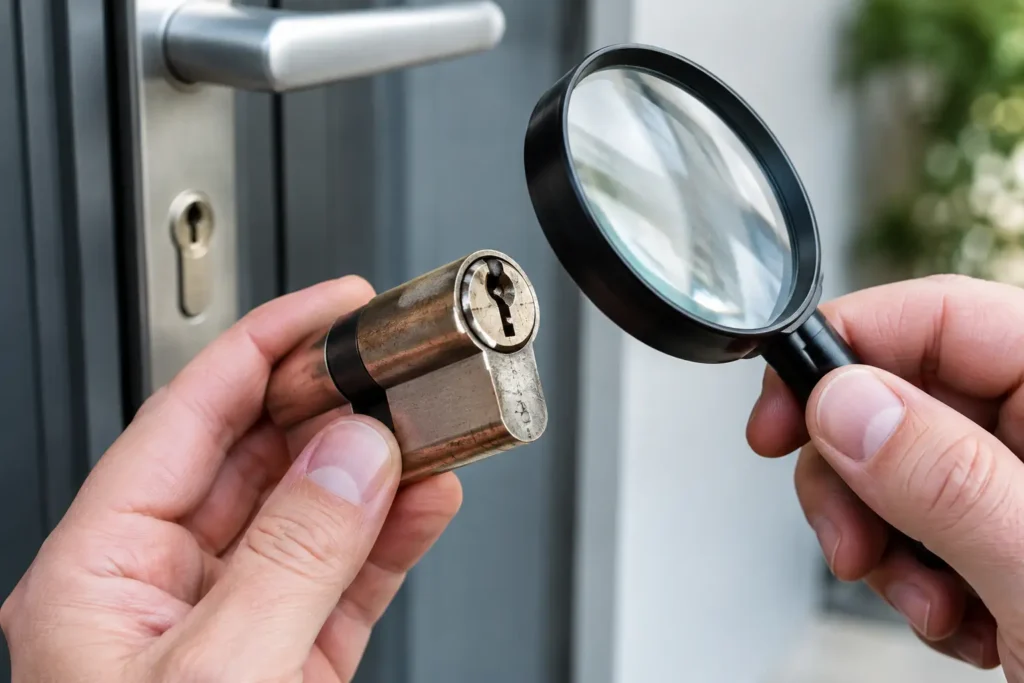
Look closely at the cylinder from outside the door. If it is visibly loose, crooked, pushed inward, or protruding farther than it used to, it needs attention. A properly fitted cylinder should sit securely within the lock hardware. Movement around the keyhole may mean a fixing screw has loosened, the escutcheon plate is damaged, or the cylinder itself has been compromised.
Scratches, dents, tool marks, or a distorted keyway deserve a serious response. These signs can occur after an attempted break-in, unauthorized entry attempt, or accidental damage from using the wrong tool or key. A cylinder may continue working after such an incident, but its internal strength and reliability can be reduced.
Common Symptoms and What They May Mean
Not every difficult lock needs immediate replacement. Doors shift over time, especially when hinges loosen or changing weather affects the frame. In those cases, the latch or deadbolt may be rubbing against the strike plate, while the cylinder itself remains sound.
The difference is often noticeable. If the key turns smoothly when the door is open but becomes hard to turn only when the door is closed, the alignment of the door or strike plate may be the issue. If the key is hard to turn whether the door is open or closed, the cylinder or key is more likely to be at fault.
A key that turns but does not lock or unlock the door can indicate a problem with the cylinder tailpiece, cam, or internal lock mechanism. If the key spins freely through a larger-than-normal range, stop using the lock if possible and arrange for professional help. The lock may fail in an unlocked position or leave you unable to get back inside.
Another warning sign is inconsistency. If one family member’s key works while another key repeatedly catches, compare the keys for bending, worn teeth, or visible damage. A worn duplicate key can damage the cylinder over time. However, if several keys show the same problem, the cylinder should be checked.
What Causes Lock Cylinder Damage?
Daily use is the most common cause. Keys carry dust and moisture into the keyway, while internal pins and springs gradually wear down. Lower-quality cylinders may deteriorate sooner, particularly on high-use entry doors or shared office doors.
Forced turning is another frequent cause. People often apply more pressure when a key sticks, but this can bend the key, damage internal pins, or break parts inside the cylinder. A damaged cylinder may then work intermittently, which creates a false sense that the problem has gone away.
Exposure also matters. Exterior gates, mailbox locks, and doors exposed to rain, heat, or humidity can corrode or collect debris. In commercial settings, a cylinder can wear faster when many staff members use it throughout the day. Misaligned doors, loose handles, and poorly installed hardware can place added strain on the lock as well.
Finally, attempted tampering can damage a lock without gaining entry. If you notice fresh marks around the cylinder, a changed lock position, or unusual resistance after returning home or opening the office, treat it as a security issue rather than a maintenance task.
Safe Steps to Take Before Calling a Locksmith
Start by checking whether the key is visibly bent, cracked, or heavily worn. Use a spare key only if it is in good condition. Do not use pliers, screwdrivers, glue, or excessive lubricant inside the keyway. These shortcuts can jam the internal mechanism or leave residue that attracts more dirt.
If the door is difficult to lock only when shut, try gently lifting or pushing the door while turning the key. This can help confirm an alignment issue, but it is not a permanent fix. Avoid slamming the door or repeatedly forcing the key.
For signs of tampering, a loose cylinder, a key broken inside the lock, or a door that cannot be secured, contact a professional locksmith promptly. A trained locksmith can assess whether the cylinder can be repaired, rekeyed, or should be replaced. The right solution depends on the lock type, door material, current condition, and the level of security you need.
Repair, Rekey, or Replace?
A simple adjustment may be enough when the cylinder is secure and the issue comes from door alignment. If the keys have been lost, a tenant has moved out, or you want to prevent old keys from working, rekeying can be a practical choice when the cylinder is still in good condition.
Replacement is usually the better option when the cylinder is worn, visibly damaged, forced, corroded, or unreliable. It is also a sensible time to upgrade a weak or outdated lock. A locksmith can match a suitable cylinder to the door and hardware, ensuring that it operates correctly without compromising the fit of the handle, deadbolt, or security plate.
For properties with several doors, consider whether key alike or master key arrangements would make daily access easier. These systems need careful planning, especially for offices and rental properties, but they can reduce the number of keys while keeping access controlled.
Prevent Future Cylinder Problems
A good lock should feel smooth, secure, and predictable every time you use it. Keep keys clean, replace bent or worn keys early, and avoid hanging heavy keychains from keys while they are in the lock. Check that doors close without needing force, as a misaligned door can wear down locking parts faster.
After a move, staff change, lost key, or attempted break-in, do not assume the existing cylinder is still the right security choice. Pro-Smith and Lock can assess the condition of the lock on-site and recommend a practical repair or replacement without unnecessary work.
If your key has started sticking or the cylinder does not feel as secure as it once did, acting early is usually faster, safer, and more affordable than waiting for the lock to fail at the worst possible moment.