You usually start thinking about rekeying right after something goes wrong. A key goes missing. A tenant moves out. An employee leaves. You move into a new place and realize you have no idea who still has copies. This complete guide to door rekeying is built for that moment – when you need a clear answer fast and want to secure the property without wasting time or money.
Rekeying is one of the most practical locksmith services because it changes who can access a lock without changing the entire hardware. In many cases, that means better security, lower cost, and less disruption. But it is not always the right solution. Sometimes a lock is too worn, too damaged, or too outdated, and replacement makes more sense.
What door rekeying actually means
When a lock is rekeyed, the internal pins are adjusted so the old key no longer works and a new key is required. The lock body often stays in place. From the outside, the door may look exactly the same, but access control has changed.
That makes rekeying a strong option when the issue is key security rather than visible lock damage. If your lock still works properly and you simply want to block old keys from opening it, rekeying is often the faster and more affordable route.
This matters for homes, apartments, offices, storerooms, bedroom doors, mailbox locks, and some gate locks. It is especially useful when multiple people may have had access over time and there is no reliable record of how many duplicate keys exist.
Complete guide to door rekeying: when it makes sense
The most common reason to rekey is lost or unreturned keys. If you cannot confirm where a missing key is, rekeying closes that security gap immediately. Waiting and hoping the key does not end up in the wrong hands is rarely a good plan.
Another common case is moving into a new property. Even if the previous owner or tenant seems trustworthy, you still do not know whether relatives, contractors, cleaners, or old roommates have spare keys. Rekeying gives you a clean start without replacing every lock on the door.
For businesses, rekeying is often part of staff turnover and access control. When an employee leaves and had access to office doors, cabinets, or back entrances, rekeying can be a simple way to restore control quickly. It can also be part of a broader master key or key-alike setup if you want better organization across multiple doors.
Landlords and property managers also use rekeying between occupants. It is a sensible reset that helps protect both the property and the next tenant.
When rekeying is not enough
Rekeying only changes the key access. It does not fix a broken lock, a loose cylinder, a bent latch, rusted internal parts, or a door that no longer aligns correctly.
If the lock is sticking, jamming, spinning, or showing signs of wear, replacement may be the better investment. The same goes for locks that are low quality, outdated, or no longer suited to the level of security you need. For example, if your front door has a very basic lock and you want stronger protection, rekeying may keep the same weak hardware in service.
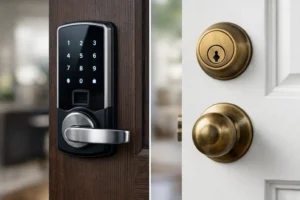
There is also the issue of compatibility. Not every lock can be rekeyed, and not every lock should be. Some very cheap locks are not worth servicing. Some digital locks and smart locks require a different type of reset or replacement. In those cases, a locksmith should inspect the hardware before promising a rekey.
Rekey vs. replace: the real trade-off
If your current lock is in good condition, rekeying usually costs less than full replacement because you are keeping most of the existing hardware. It is often quicker too. That makes it attractive for budget-conscious homeowners, tenants with landlord approval, and office managers trying to secure several doors at once.
Replacement gives you a fresh lockset and the chance to upgrade security, finish, or function. It costs more, but sometimes that extra cost solves more than one problem. If your lock is old, unattractive, unreliable, or poorly suited to the door, replacement may save you from paying for another service call later.
The right choice depends on the condition of the lock, the type of door, how urgent the situation is, and whether your goal is only to stop old keys or to improve overall security.
What happens during a locksmith rekeying job
A professional rekeying visit is usually straightforward. The locksmith checks the lock type, confirms it is rekeyable, removes the cylinder, and changes the internal pin configuration to match a new key. After that, the lock is tested to make sure it turns smoothly, latches properly, and no longer accepts the old key.
If you have several doors, the locksmith may also set them to work with one key where appropriate. That is called keying alike. It is a practical option for homeowners who want one key for the front gate and main door, or for offices that want to reduce key clutter while keeping some restricted areas separate.
A good locksmith will also tell you if rekeying is possible but not advisable. That matters. A service call should solve the problem, not temporarily patch it.
How long door rekeying takes
For a standard lock in decent condition, rekeying is often a relatively quick job. A single lock can usually be completed faster than replacing a full lockset, especially when the existing hardware is staying in place.
Timing changes if there are multiple doors, unusual lock brands, worn components, or access issues. Commercial doors, glass door locks, gate locks, and specialty cylinders may require more time. If the locksmith arrives and finds hidden damage, the job can shift from rekeying to repair or replacement.
That is why response time and on-site experience matter. In urgent situations, you want someone who can assess the lock correctly and finish the work without trial and error.
Costs and what affects the price
There is no single flat cost for every rekeying job because locks vary. The final price usually depends on how many locks need service, the lock type, the brand, the condition of the hardware, and whether the job is scheduled or urgent.
A simple residential cylinder is different from a commercial mortise lock or a mailbox lock. If you want all locks keyed alike, that may change the work involved. If the lock is damaged or has missing parts, additional repair or replacement may be needed.
The cheapest option is not always the best option. Poor workmanship can leave you with a lock that technically has a new key but still feels rough, unreliable, or vulnerable to failure. It is better to pay for proper work once than deal with a second lockout later.
Common questions homeowners and managers should ask
Before approving rekeying, ask whether the current lock is worth keeping. Ask if all doors can be keyed to one key if that is your goal. Ask whether the locksmith sees any wear, misalignment, or strike issues that could affect long-term reliability.
It also helps to ask how many new keys are included and whether additional duplicates can be cut accurately. For offices or rental units, ask whether a master key arrangement is possible or advisable. The right setup depends on how many people need access and how much separation you want between spaces.
These are not technical questions. They are practical ones, and they often make the difference between a quick fix and a better long-term setup.
A few door rekeying mistakes to avoid
One mistake is assuming every security issue can be solved by rekeying. If the lock itself is failing, changing the key pattern will not fix the root problem.
Another is delaying service after a key is lost. Many people wait because the lock still works fine. That misses the point. Rekeying is about controlling access, not repairing function.
The third is trying to match security needs with the lowest possible price. On a low-risk interior door, that may be fine. On a main entrance, office access door, or tenant turnover job, quality and reliability matter more.
Choosing the right locksmith for rekeying
You want a locksmith who handles on-site work regularly, arrives prepared, and can work across residential and commercial door types. Experience matters because not every rekeying call is simple once the lock is opened up.
Look for clear communication, realistic pricing, and a service approach that focuses on the actual problem. A dependable mobile locksmith should be able to inspect the lock, explain whether rekeying or replacement is better, and complete the job efficiently. That is the standard Pro-Smith and Lock works to deliver on every call.
If you are dealing with missing keys, a recent move, tenant turnover, or staff changes, rekeying is often one of the smartest steps you can take. Done at the right time, it restores control quickly and gives you one less security concern to carry around.