A front door that closes but does not catch properly is more than a daily annoyance. It is a security problem, and in many cases, it gets worse fast. Front door latch replacement is often the simplest way to restore proper locking, smooth closing, and peace of mind before the door leaves you locked out or unable to secure your home.
When a front door latch needs replacement
Most latch problems do not start with a total failure. They usually begin with small warning signs that people put up with for weeks or months. The door sticks, the handle feels loose, the latch does not spring back smoothly, or you have to push the door hard before it locks.
Those symptoms matter because the latch is the part doing the everyday work. Every time the door opens and closes, the latch retracts and extends. Over time, that repeated use causes wear. Dirt buildup, rust, poor alignment, and low-quality hardware can all shorten its lifespan.
In homes, condos, apartments, and rental units, a worn latch can also create a false sense of security. You may think the door is shut and locked when the latch is not fully engaging the strike plate. That is one reason front door latch issues should be fixed early instead of waiting for a full breakdown.
Repair or front door latch replacement?
Sometimes the latch is not the real problem. The door may be sagging, the strike plate may have shifted, or swollen wood may be putting pressure on the hardware. In those cases, a minor adjustment can restore proper function.
That said, there is a point where repair stops making sense. If the latch is bent, jammed, heavily worn, rusted inside, or failing to spring back consistently, replacement is usually the better option. It is also the better choice when the existing latch is low grade, outdated, or no longer matches the lockset properly.
A professional locksmith will usually check the full setup before changing parts. That includes the latch body, faceplate, strike plate, spindle, handle alignment, and door frame condition. This matters because swapping one part without addressing alignment can leave you with the same problem a week later.
Common reasons latches fail
A front door latch works in a tough environment. It deals with constant movement, changes in weather, slamming, forced pressure, and sometimes years of neglect. A few common causes show up again and again.
Misalignment is one of the biggest. If the door and frame no longer line up well, the latch hits the strike plate at the wrong angle. That repeated friction wears the latch and can eventually damage the internal spring.
Age is another factor. Older latches often become sluggish, especially if they were never lubricated or if the internal parts have corroded. On some doors, poor installation is the root cause. A latch that was not fitted correctly from the start may loosen over time and fail earlier than expected.
In rental properties and busy households, simple overuse is also common. The more often a door is opened, shut, locked, and unlocked, the faster small mechanical problems become real failures.
Signs you should not ignore
A latch rarely fails without warning. If you catch the problem early, you can often avoid an emergency callout later.
Watch for a latch that does not retract cleanly when you turn the handle. A door that bounces open unless you push it hard is another red flag. If the latch feels loose, sticks halfway, or makes grinding sounds, the mechanism may already be wearing out internally.
You should also pay attention if the key turns but the door still feels insecure, or if locking and unlocking has become inconsistent. In some cases, people assume they need a full lock replacement when the latch is actually the failing part. In other cases, the latch issue is a sign that the full lockset should be changed together.
Why professional replacement usually saves time
Replacing a latch sounds simple until the parts do not match, the door thickness is different, or the alignment issue turns out to be in the frame. That is where DIY jobs often stall.
A locksmith can identify the correct latch type, backset, finish, and fitment without trial and error. More importantly, they can tell whether the door only needs a latch, a strike adjustment, or a complete lock upgrade. That keeps you from spending money twice.
For property owners and tenants, speed also matters. If your main entrance does not close securely, waiting days to sort out hardware problems is not ideal. A mobile locksmith can handle the work on-site, test the lock immediately, and make sure the door closes and locks the way it should before leaving.
What happens during front door latch replacement
The process is usually straightforward when handled by an experienced locksmith. First, the latch issue is checked to confirm whether the problem is the latch itself, the handle set, the deadbolt, or the frame alignment.
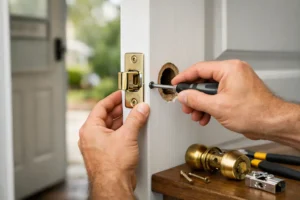
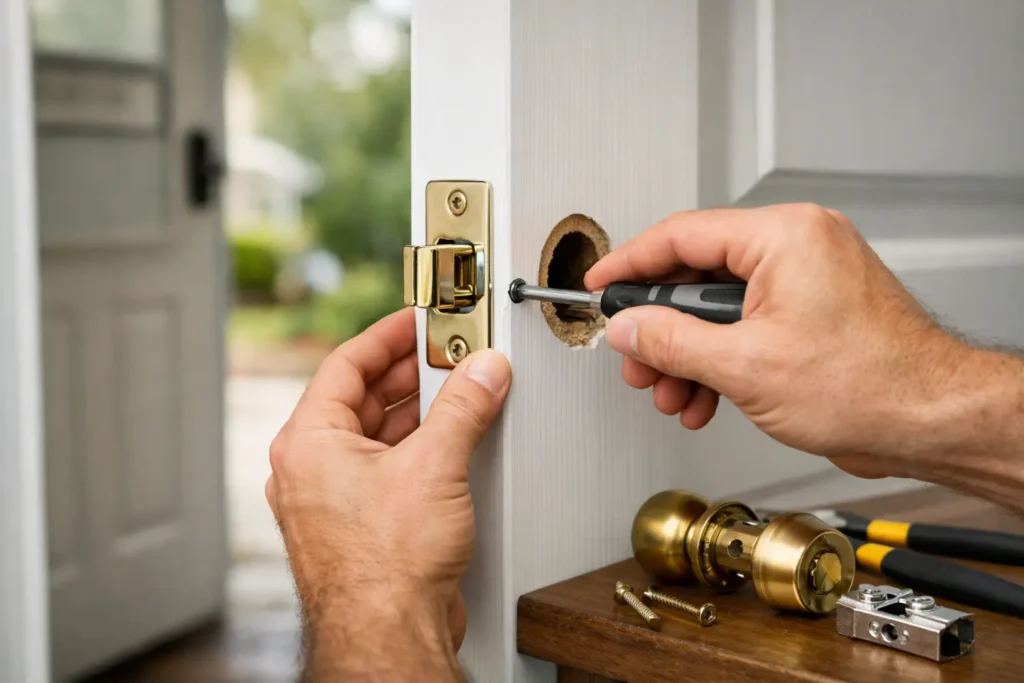
If replacement is needed, the old latch is removed and the new one is matched to the door setup. The locksmith then checks the fit, adjusts alignment if needed, and tests the opening and closing action several times. If the strike plate is worn or badly positioned, that may be corrected at the same time.
This step matters more than many people expect. A new latch installed into a poorly aligned door can still feel rough or unreliable. Good workmanship is not just about changing hardware. It is about making the full locking action work properly under normal daily use.
Choosing the right latch for your door
Not every front door uses the same hardware. Wooden doors, metal doors, fire-rated doors, and apartment entry doors may all have different fitting requirements. Handle sets and mortise locks also differ from standard cylindrical locksets.
That is why the best replacement choice depends on the door type, the existing lock body, and your security goals. Sometimes you want a like-for-like replacement to restore function quickly. Other times it makes more sense to upgrade to stronger hardware with better durability.
If you have had repeated latch trouble, it is worth asking whether the current setup is right for the door. A heavier door may need sturdier hardware. A high-traffic entry may benefit from better-grade components. Spending slightly more once can reduce repeat repairs later.
Cost, urgency, and what affects the job
Front door latch replacement costs vary based on the lock type, the parts required, and whether the problem includes alignment or damage to surrounding hardware. A straightforward latch swap is usually more affordable than a full lock replacement, but not always. If the latch is integrated into a larger lock body, the repair may involve more than one component.
Urgency also changes the situation. If the latch has failed and you cannot secure the property, quick service becomes the priority. In those cases, people are not looking for theory. They want the door fixed properly and without delay.
That is where experience counts. A locksmith who handles residential doors every day can usually spot the issue quickly and recommend a practical fix without overcomplicating it. For customers dealing with a jammed main entrance, that kind of direct help matters more than anything else.
When replacement is also a security upgrade
A failing latch is often the moment people realize their front door hardware is old, loose, or simply not giving them much confidence anymore. If the hardware has been sticking for a long time, replacement can be a good chance to improve both function and security.
That does not always mean installing the most expensive lock available. It means choosing hardware that suits the door, closes reliably, and holds up to regular use. In many cases, a dependable latch and properly aligned lockset do more for everyday security than a premium lock installed on a poorly fitted door.
For homeowners, landlords, and office users, the practical goal is simple. The door should shut cleanly, latch properly, lock without struggle, and stay secure.
Getting ahead of a lockout
One of the most common mistakes is waiting until the latch fails completely. By then, the door may stop opening from one side, refuse to close properly, or leave you stuck outside. Emergency lock problems often start as minor latch issues that were easy to fix earlier.
If your front door has started sticking, misfiring, or needing extra force, it is worth having it checked before it turns into a bigger problem. Companies like Pro-Smith and Lock handle these issues on-site, which is especially helpful when the main entrance is involved and time matters.
A front door should not be something you wrestle with every day. If the latch is telling you it is on the way out, fixing it now is usually the easiest path to a safer and less stressful home.