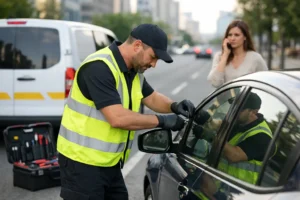
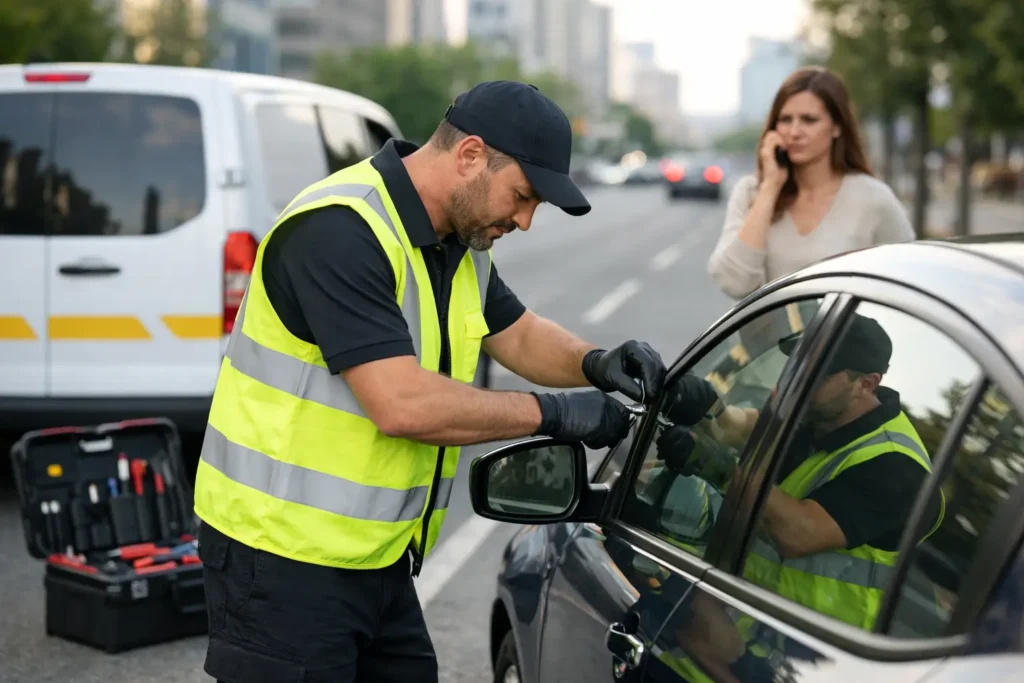
A car lockout can turn a normal errand into an immediate problem. Your keys may be visible on the seat, your remote may have stopped working, or the door may have locked when you stepped away for only a moment. This guide to car door unlocking explains what to do first, how to protect your vehicle from damage, and when professional help is the safest choice.
The priority is simple: stay calm, confirm everyone is safe, and avoid forcing the door. Modern vehicles have sensitive weather stripping, electronic components, side airbags, and locking systems that can be expensive to repair after a rushed DIY attempt.
Start With Safety, Not the Door
Before focusing on access, check whether anyone is inside the vehicle. If a child, vulnerable adult, or pet is trapped in heat, cold, or distress, call emergency services immediately. Tell them the vehicle location, condition of the person inside, and whether the engine or air conditioning is running.
If the vehicle is empty and parked safely, take a minute to assess the situation. Check your pockets, bag, and nearby area for a spare key. If you are at home, ask whether another driver has access to a spare. For keyless vehicles, make sure the key fob has not been left close enough for the vehicle to detect it, such as in a jacket or bag near the car.
Do not leave yourself exposed in an unsafe location while waiting. Move to a well-lit area nearby if possible, especially at night, and keep your phone charged.
Why DIY Car Door Opening Can Cost More
It is tempting to try a coat hanger, wedge, slim tool, or online trick when you are locked out. Those methods are risky, often ineffective on newer vehicles, and can create a much larger repair bill than a professional callout.
A forced entry attempt can bend the door frame, tear weather seals, scratch paint, damage the window mechanism, or interfere with internal locking cables. On vehicles with electronic locks, sensors, and side airbags, the risk goes beyond cosmetic damage. A small mistake can affect the door’s normal operation or trigger a warning light that requires further inspection.
There is also a security issue. A reputable locksmith will verify that you are authorized to access the vehicle before beginning work. That protects vehicle owners and helps ensure the service is handled responsibly.
Avoid Breaking a Window Unless It Is an Emergency
Breaking a window should never be the first response to a standard lockout. Glass can cause injury, exposes the vehicle to weather and theft, and creates a costly cleanup and replacement job. Emergency responders may make different decisions when a life is at risk, but for a routine lockout, wait for qualified assistance.
The Best Options for Car Door Unlocking
The right solution depends on your vehicle, key type, location, and urgency. In many cases, roadside assistance through your insurer, vehicle manufacturer, or membership plan may help. However, wait times can vary, and some providers may not have the right equipment for every make and model.
A professional automotive locksmith is often the practical choice when you need a fast response, have lost your keys, have a damaged key fob, or are dealing with a lock that is not responding. An experienced locksmith can assess the vehicle’s locking system and use suitable non-destructive methods where possible.
For a vehicle that will not recognize the key fob, the problem may be more than a locked door. The fob battery could be weak, the remote may be damaged, or the vehicle battery could be low. A locksmith can help identify whether access is the only issue or whether you may also need key programming, battery support, or a replacement key solution.
What a Professional Locksmith Will Need
A legitimate automotive locksmith should ask for proof that you own or are authorized to use the vehicle. This may include a driver’s license, registration, insurance document, rental agreement, or other relevant identification. If those documents are locked inside, explain that clearly. The locksmith can advise on the verification process once access is restored.
When you call, provide the vehicle make, model, approximate year, current location, and a clear description of the problem. Let the locksmith know whether the keys are inside, missing, broken, or not responding. Also mention if the vehicle has keyless entry, a push-button start system, aftermarket alarm, or visible damage around the lock or door.
Clear details help the technician arrive prepared. They also make it easier to give realistic timing and pricing information before work begins.
Questions Worth Asking Before You Confirm Service
You do not need a long interview during a stressful moment, but a few practical questions can help you choose wisely. Ask whether the company handles your vehicle type, whether they use non-destructive entry methods where appropriate, what identification they require, and whether there may be additional charges for late-night, holiday, or remote-location service.
It is also reasonable to ask for an estimated price range and arrival time. Be cautious of vague pricing that changes dramatically after the technician arrives. A professional service provider should communicate clearly, explain any added work before proceeding, and treat your vehicle with care.
If Your Key Is Lost or Damaged
Door access solves only part of the problem when the key is missing or broken. Depending on the vehicle, you may need a replacement mechanical key, a transponder key, or a programmed remote fob. The cost and turnaround time vary widely by make, model, and security system.
Older vehicles may have simpler key systems, while newer models can require specialized diagnostic tools and programming procedures. In some cases, the safest approach is to create a new working key and remove or disable the lost key’s access where possible. This is particularly worthwhile if you believe the key was stolen rather than misplaced.
If a key breaks in the door or ignition, do not push it farther in or use glue to pull it out. That can damage internal components and make extraction more difficult. A locksmith can assess the break and recommend whether the key, lock cylinder, or ignition component needs attention.
Prevent the Next Lockout
Most drivers only think about access after a lockout happens. A small amount of preparation can reduce the chance of a repeat problem. Keep a spare key in a secure location that is separate from the vehicle, and make sure a trusted person knows how to reach it when needed.
Replace a weak key fob battery before it fails completely. If the remote works only intermittently, its range has dropped sharply, or the buttons feel unreliable, deal with it early. It is far easier to test or replace a fob battery from a safe location than from a parking lot when the vehicle will not respond.
For families and shared vehicles, agree on a simple routine: confirm keys are in hand before closing the door, especially when loading groceries, luggage, or children. Rental car drivers should keep the rental agreement accessible on their phone or in a separate bag, since it can help verify authorization if assistance is needed.
When Fast, Careful Help Matters
A lockout is frustrating, but it does not have to become vehicle damage, a security risk, or a long day of waiting. The right provider will verify ownership, assess the vehicle carefully, explain the likely solution, and work with the appropriate tools rather than taking shortcuts.
With more than 14 years of practical lock and key experience, Pro-Smith and Lock provides mobile assistance for drivers who need calm, professional support when access to their vehicle becomes a problem. Keep a trusted locksmith’s number saved before you need it – that small step can make a stressful moment much easier to manage.