A stuck key at the end of a long day is usually when most people start looking for a real guide to HDB door locks. Not when they move in, not when the lock is still working fine, but when the main door will not turn, the gate lock feels loose, or the digital lock starts beeping at the worst possible time. If you live in an HDB flat, the right lock setup is not just about security. It is also about daily convenience, reliable access, and getting problems fixed quickly before they turn into lockouts.
HDB door locks are not one-size-fits-all. Many flats have both a main wooden door and a metal gate, and each door may need a different type of lock depending on how the home is used. A family with kids, an elderly parent at home, or a rental unit with changing occupants may all need different solutions. That is why choosing the right lock matters more than simply replacing old hardware with whatever looks similar.
Guide to HDB Door Locks for Everyday Use
For most HDB homes, the common setup includes a lock on the main door, a separate lock on the metal gate, and sometimes additional locks for bedrooms or storerooms. The best arrangement depends on three things – the door material, the condition of the existing lock area, and how much convenience you want day to day.
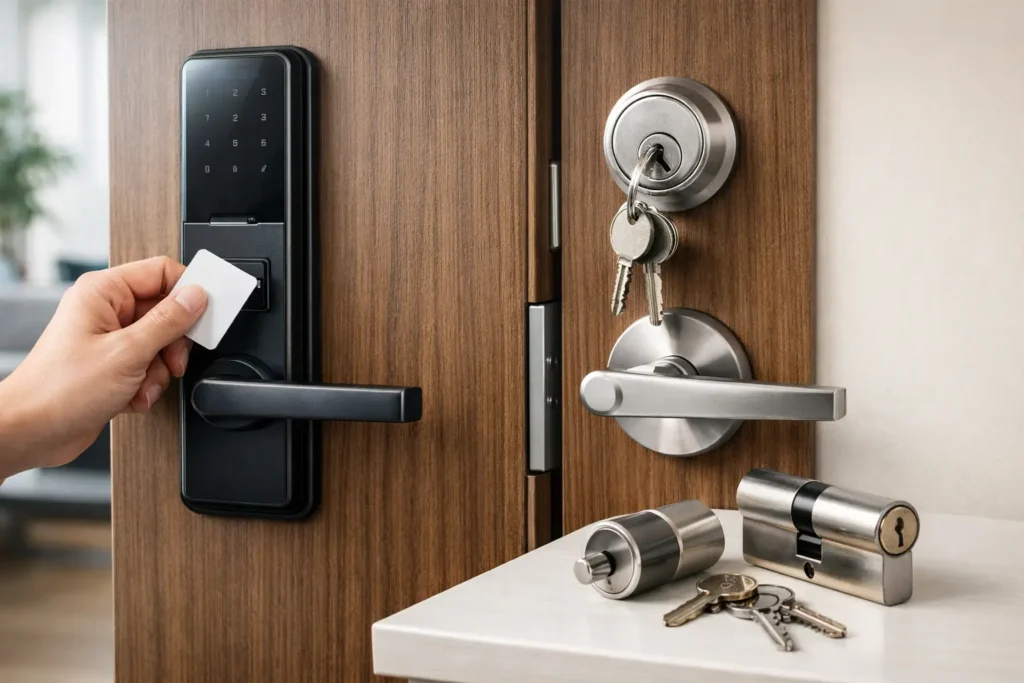
Mechanical locks remain a strong option for many households. A good deadbolt or cylindrical lock is simple, familiar, and often more affordable upfront. If properly installed, these locks can last for years with minimal issues. They also work well for homeowners who prefer not to worry about batteries, app controls, or keypad failure.
Digital locks are popular because they reduce the hassle of carrying keys. This is especially useful for families, tenants, or anyone who has dealt with lost keys more than once. Many digital locks offer PIN code access, fingerprint entry, card access, or a mix of options. Some also include auto-locking features, which help if someone in the home often forgets to lock up.
That said, digital is not automatically better. It depends on the door, the user, and the installation quality. A poorly fitted digital lock on an unsuitable door can create more trouble than convenience. Battery maintenance, sensor issues, and alignment problems can also lead to access problems if the lock is not installed and serviced correctly.
The Main Types of HDB Door Locks
When homeowners ask for a guide to HDB door locks, they are usually trying to figure out what kind of lock they already have and whether it should be repaired, replaced, or upgraded.
A mortise lock is common on main wooden doors. It is fitted into the body of the door and usually combines a handle with a locking mechanism. This type works well for homes that want a clean, secure setup, but replacement needs to match the door cutout and dimensions carefully.
A deadbolt is another common choice for main doors. It gives solid security and is often used together with a handle lock. If your current lock feels weak or the latch no longer catches properly, upgrading the deadbolt may be enough without changing the whole door setup.
For metal gates, padlocks and gate-specific locksets are still widely used. Some homeowners prefer this because replacement can be straightforward and cost-effective. Others choose gate digital locks for added convenience. This can work well, but only if the gate design supports the lock body and the alignment is precise.
Bedroom and internal door locks are usually lighter-duty, but they still matter. If a bedroom door keeps jamming, the problem may be with the latch, the handle set, or door misalignment rather than the key itself. In these cases, a quick fix early on is often cheaper than waiting until someone gets locked in or out.
When to Repair and When to Replace
Not every lock problem means you need a new lock. Sometimes a key is hard to turn because dirt has built up inside the cylinder. Sometimes the strike plate has shifted slightly, making the latch catch badly. In other cases, the lock body is worn out and no longer worth repairing.
Repair makes sense when the lock is still structurally sound and the issue is minor. Loose handles, stiff turning, latch misalignment, or early wear can often be fixed on-site. This is usually the better route if the lock is still secure and compatible parts are available.
Replacement is the smarter choice when the lock is old, unreliable, damaged by force, or no longer suitable for your needs. If you have just moved into a resale flat, replacing the main door lock is also a practical safety step. Even if the old owner returned all keys, you cannot be certain how many copies were made over time.
If keys have been lost, stolen, or not returned by former tenants, replacement is usually the safest option. Rekeying may be possible in some situations, but it depends on the lock type and condition.
Choosing the Right Lock for Your HDB Flat
The best lock is the one that fits your door properly and matches how you actually live. A family that needs quick, keyless access may benefit from a digital main door lock. A homeowner who wants dependable, low-maintenance security may prefer a mechanical deadbolt and gate lock combination.
Think about who uses the door every day. Elderly users may prefer large, easy-to-operate handles over small keypads. Young children may make auto-locking a useful feature, but only if the household has a backup access plan. If you rent out rooms, separate room locks may be worth upgrading for privacy and control.
Door condition matters too. Old doors with damaged cutouts or weak frames may not support every lock type well. In those cases, forcing an upgrade for appearance alone can create future problems. A locksmith should check the existing fittings, measurements, and alignment before recommending a replacement.
Budget matters, but so does value. The cheapest lock is not always the most affordable if it fails early, jams often, or needs repeat service. A better-quality lock installed correctly usually saves money and stress over time.
Common HDB Lock Problems Homeowners Face
Most lock issues start small. The key sticks a little. The handle sags. The latch needs an extra push before it catches. People often ignore these signs until the lock fails completely.
One common issue is misalignment between the lock and strike plate. This happens as doors settle, hinges loosen, or frames shift slightly over time. Another frequent problem is internal wear from years of daily use, especially on main doors that see heavy traffic.
For digital locks, low battery warnings should never be ignored. Many emergency lockouts happen because users assume the lock will keep working for just a little longer. Some digital lock failures are also caused by poor installation, water exposure, impact damage, or worn parts around the door rather than the electronics alone.
Gate locks can also become difficult due to rust, weather exposure, or rough handling. If a gate lock is catching badly or the key is bending under pressure, it is better to fix it early than risk snapping the key inside.
Why Professional Installation Matters
Locks are only as reliable as their installation. Even a good lock can perform badly if the measurements are off, the door surface is uneven, or the internal parts are under strain after fitting.
A professional locksmith checks more than just whether the lock can be mounted. They look at door thickness, backset, frame condition, latch alignment, clearance, and whether the chosen model is practical for the specific door type. This is especially important for HDB homes with paired main doors and gates, where space and usability can affect the final setup.
Fast service also matters when the problem is urgent. If your main door lock fails at night, if your bedroom door jams shut, or if your gate lock no longer secures properly, waiting too long can leave the home exposed or inaccessible. An experienced mobile locksmith can assess the problem on-site and recommend repair or replacement without making you remove the lock and bring it to a shop.
That is one reason many homeowners prefer a call-out service from an experienced team like Pro-Smith and Lock. You get help where the problem is, and the fix is based on the actual door condition instead of guesswork.
What to Do Before a Lock Becomes an Emergency
You do not need to wait for a lockout to take action. If your lock is getting harder to use, if the key no longer turns smoothly, or if the handle feels unstable, have it checked early. Small warning signs are usually cheaper to fix than full failures.
It also helps to review your current setup once in a while. If your flat still uses aging locks from many years ago, if you recently changed occupants, or if daily access has become inconvenient, a simple upgrade may improve both security and peace of mind.
The right lock setup should make life easier, not add another household problem to manage. If your HDB door locks are working against you instead of for you, it is probably time to have them looked at before the next bad day starts at your front door.