A spare key feels unnecessary right up until the original is locked inside the car, disappears during a busy day, or stops working without warning. Knowing how to get spare car key service before that happens can save you from an expensive, stressful roadside problem. The right option depends on your vehicle’s age, key type, and whether you still have a working key.
For many drivers, the simplest answer is to arrange a duplicate while the original key is available. It gives the locksmith a reliable reference for cutting and programming, usually makes the job faster, and reduces the risk of being left stranded. If every key has been lost, replacement is still possible in many cases, but the process may require more time, vehicle information, and proof that the car belongs to you.
Start by identifying your car key type
Car keys are no longer all simple metal blades. Before requesting a spare, look at what you currently use to start and unlock your vehicle. A basic mechanical key has no electronic functions and can often be copied quickly. However, many vehicles use a transponder key, remote key, key fob, smart key, or proximity key that must be programmed to communicate with the car.
A transponder key may look ordinary, but it contains a small chip. If the blade is cut correctly but the chip is not programmed, the key may open the door but will not start the engine. Remote and smart keys add more functions, such as lock, unlock, trunk release, push-button start, and keyless entry. These keys need the correct replacement unit as well as proper programming.
This difference matters when comparing prices. A low-cost key blank may not be compatible with your vehicle, and a key that looks the same is not always electronically identical. Share your vehicle’s make, model, year, and the type of key you have when you call a locksmith or dealer. A clear photo of the key can also help identify the correct solution.
The main ways to get a spare car key
Your best route is usually either a dealership or an automotive locksmith. Both can be suitable, but they offer different advantages depending on the situation.
A dealership can supply an original manufacturer key for many makes and models. This may be a sensible choice for very new vehicles, specialized smart keys, or cases where you specifically want an original branded fob. The trade-off is that dealer appointments can take longer, and you may need to bring or tow the vehicle to their location if no working key is available.
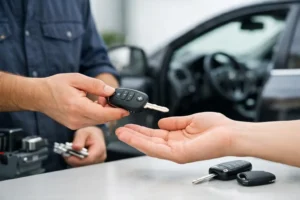
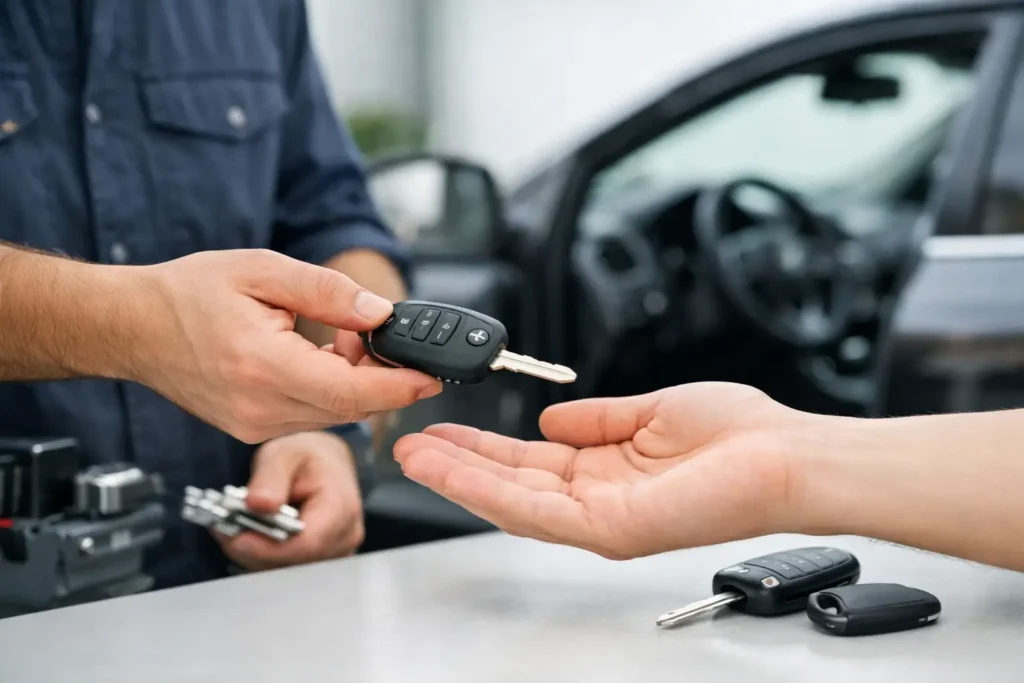
A professional mobile locksmith can often cut and program a spare key where your car is parked. This is particularly useful when your schedule is tight, when you are unable to drive the vehicle, or when you need help outside regular dealership hours. A mobile service also avoids the inconvenience of arranging a tow after an all-keys-lost situation.
For older cars with a basic metal key, some hardware or key-cutting shops may be able to make a duplicate. That is usually the lowest-cost option, but it is only appropriate when the vehicle does not require a chip or electronic programming. If there is any uncertainty, ask first. Cutting a metal blade is not the same as creating a working ignition key.
How to get a spare car key from a locksmith
When you contact an automotive locksmith, be ready to provide practical details. The vehicle make, model, year, registration information, and your location help the technician determine the likely key type and equipment required. You should also be prepared to show identification and proof of vehicle ownership. A legitimate locksmith will verify that they are making a key for the authorized owner or user.
If you have a working key, keep it with you for the appointment. The locksmith may use it as a reference to cut the new blade and confirm that the replacement works correctly. For electronic keys, the new unit is programmed to the vehicle so it can start the engine and operate the required remote functions.
Before the job is complete, test every function in front of the technician. Check that the key unlocks and locks the door, starts the vehicle, and operates the remote buttons or proximity functions as expected. If your vehicle uses push-button start, make sure the car recognizes the spare key from the driver’s seat. A spare is only useful if it has been fully tested.
What changes when you have lost every key?
Losing all car keys is more complicated, but it is not automatically a dealer-only problem. An experienced automotive locksmith may be able to create a new key by decoding the lock, accessing vehicle key data, and programming a replacement. The exact method depends on the make, model, year, and security system.
Expect more verification in this situation. The technician may request your ID, vehicle registration, insurance information, or other documentation that connects you to the vehicle. This protects vehicle owners and helps prevent unauthorized key creation.
All-keys-lost work can cost more than making a duplicate because it may involve additional labor, diagnostic equipment, and programming steps. Some vehicles also require a period of waiting for a dealer-ordered key or a specific replacement fob. Asking about availability, estimated time, and total expected charges before work begins helps prevent surprises.
If you believe your keys were stolen rather than simply misplaced, do not stop at getting a replacement. Ask whether the lost key can be removed from the vehicle’s memory. For keyless-entry and smart-key vehicles, this can reduce the chance that someone who finds the old key can access or start the car.
Do not wait for a lockout to make a backup
The best time to get a spare is when your current key still works. Worn buttons, cracked fobs, a loose blade, intermittent starting, and weak remote performance are early warnings that a key may fail. Replacing or duplicating it early is usually easier than arranging emergency assistance after you are locked out.
Where you keep the spare matters too. Avoid hiding it inside the car, in the glove box, under a floor mat, or in a magnetic box beneath the vehicle. Those places are easy for a thief to check, and they do nothing to help if the doors are locked. Keep the spare at home in a secure, memorable place, or leave it with a trusted family member when appropriate.
For households that share one vehicle, two fully working keys are practical rather than optional. They prevent simple handover problems and make it easier to continue using the car if one key is damaged, misplaced, or accidentally taken away by another driver.
Avoid common spare-key mistakes
Buying a cheap replacement online can appear to save money, but compatibility is the issue. The fob frequency, transponder chip, blade profile, and programming method must all match the vehicle. Some aftermarket keys work well when selected and programmed correctly. Others may not program at all, may have limited functions, or may fail sooner than expected.
Another common mistake is making only a metal copy of an electronic key. It may turn in the door or ignition but still fail to start the vehicle. Similarly, transferring an old key’s circuit board into a new shell can repair a damaged casing, but it does not create a genuine spare because you still have only one programmed electronic unit.
Be cautious with anyone who offers a key without asking for ownership documents. Car key replacement involves vehicle security, and proper verification is part of professional service. You should also ask whether the quoted price includes the key, cutting, programming, call-out service, and testing.
Get help where the car is parked
A mobile automotive locksmith is especially helpful when the vehicle cannot move or when you need a replacement at home, work, or a parking facility. Pro-Smith and Lock provides on-site locksmith assistance designed to address urgent lock and key problems calmly, with practical options based on the vehicle and key system involved.
When calling for help, explain whether you have one working key, a damaged key, or no key at all. That single detail affects the preparation, likely cost, and time needed to complete the job. It also helps the technician arrive with suitable key blanks and programming equipment.
A spare car key is a small preparation that can prevent a major interruption. Arrange it while your original still works, test it before putting it away, and keep it somewhere secure that you can reach when it matters most.