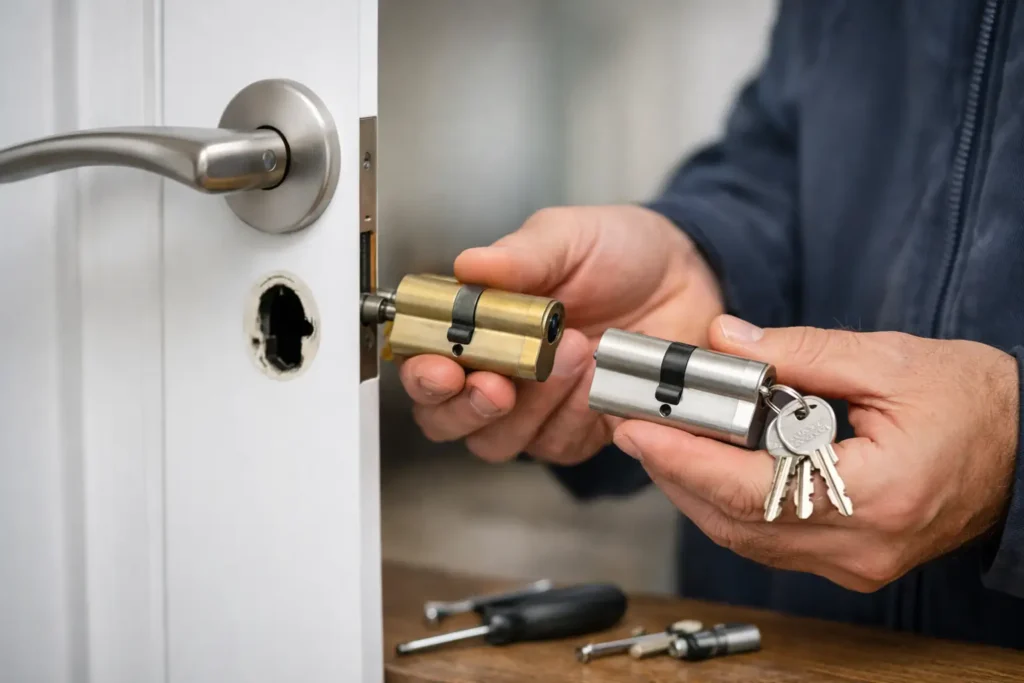
A key that suddenly sticks at your front door is more than an annoyance. It usually means the lock is wearing out, the cylinder is damaged, or someone has already forced it without you realizing it. When that happens, lock cylinder replacement is often the fastest way to restore smooth access and proper security without changing the entire lock setup.
For many homes, offices, and even some mailbox or gate locks, the cylinder is the working core of the lock. It is the part your key goes into, and it is the part that controls whether the lock turns properly. If the cylinder fails, the whole lock can become unreliable. You may still be able to open the door for a while, but the problem rarely fixes itself. In many cases, it gets worse at the worst possible time – when you are rushing out, returning late, or trying to secure the property quickly.
What a lock cylinder replacement actually solves
A lot of people assume a full lock replacement is always necessary. Sometimes it is. But often, the real issue is limited to the cylinder. Replacing that part can solve worn keys, rough turning, broken key fragments, internal jamming, and security concerns after keys are lost or unreturned.
This matters because it can be a more practical fix. If the main lock body is still in good condition, changing only the cylinder may save time and cost while still giving you a fresh set of keys and a secure locking function. For property owners and tenants in Singapore, that is usually the kind of solution they want – effective, quick, and not more complicated than it needs to be.
It also makes sense after a change in occupancy. If a previous tenant, contractor, helper, or staff member may still have a key, replacing the cylinder gives you immediate control over access again. You do not have to wait for a major upgrade project to improve security.
Signs you may need lock cylinder replacement
Some lock problems are obvious. Others build up slowly. If your key needs extra force, the lock turns only after several tries, or the key goes in but does not rotate smoothly, the cylinder may be wearing down internally. This is especially common in frequently used main doors, office entry points, bedroom doors, and gates.
Another warning sign is visible damage around the keyhole. Scratches, looseness, bending, or a key that no longer sits properly can point to forced entry attempts, poor alignment, or simple age and wear. If a key has snapped inside the lock before, there may still be internal damage even after the broken piece is removed.
Lost keys are another common trigger. Even if the lock still works perfectly, the risk changes the moment a key goes missing. The same applies when moving into a resale unit, taking over an office, or realizing that too many duplicate keys are in circulation. At that point, the problem is not mechanical. It is control.
When replacement is better than repair
There are times when a locksmith can service or adjust a lock instead of replacing the cylinder. If the issue is caused by minor misalignment, dirt buildup, or a loose fitting, a repair may be enough. But if the cylinder is worn, tampered with, cracked, or unreliable, replacement is usually the smarter option.
The main reason is dependability. A repaired cylinder that is already near the end of its service life may work for now, but it can fail again soon. That often leads to repeat callouts, more inconvenience, and more cost over time. For a main entrance or any door you rely on every day, a fresh cylinder is often the better value.
There is also a security trade-off. If the cylinder design is outdated or too easy to manipulate, keeping it just because it still turns is not always worth it. A replacement gives you a chance to improve the level of protection, especially for front doors, office doors, and shared access points.
How the process usually works
A professional locksmith will first check the lock type, door condition, and current problem. This step matters because not every cylinder is the same. Main wooden doors, metal gates, glass doors, letter boxes, and other lock types use different hardware and fitting methods.
Once the lock is assessed, the old cylinder is removed and a matching or upgraded replacement is installed. The new cylinder is then tested for smooth turning, correct alignment, and secure operation from both sides where applicable. If needed, the locksmith can also advise whether the rest of the lock should stay as it is or be changed at the same time.
For many customers, the biggest concern is speed. They want the issue fixed without taking apart more than necessary. That is exactly why cylinder replacement is a common on-site service. In many cases, it can be completed efficiently at your location with minimal disruption.
Choosing the right cylinder for your door
Not every replacement should be the cheapest available option, and not every door needs the highest-security setup either. It depends on where the lock is installed, how often it is used, and what level of access control you need.
For a main entrance, durability matters because the lock gets daily use. For a rental property, key control may matter more because occupancy changes are more frequent. For an office, you may need compatibility with a master key system or a practical reorganization of who can access which room.
This is where professional advice helps. The right cylinder should fit the existing lock properly, operate smoothly, and make sense for the real use of the space. A mismatch can lead to poor turning, faster wear, or weaker security. A proper fit gives you the opposite – reliable access and fewer future problems.
Why DIY lock cylinder replacement often goes wrong
On paper, changing a lock cylinder can look simple. In reality, many people buy the wrong size, choose a poor-quality part, or damage the lock body during installation. The result is often a lock that technically works but feels stiff, sits loose, or fails unexpectedly.
There is also the issue of diagnosis. What looks like a simple cylinder fault might actually involve alignment problems, wear in the lock case, or a door fitting issue. Replacing one part without checking the rest can waste time and leave the root problem untouched.
For urgent situations, DIY is even riskier. If the door cannot be secured properly after a failed attempt, the property is left exposed. That is why many homeowners, tenants, and office managers prefer a locksmith who can assess the issue, fit the correct part, and make sure the lock is secure before leaving.
Lock cylinder replacement for homes, offices, and more
Residential customers usually need this service after a lockout, lost key, tenant handover, or long-term wear on the main door or bedroom door. In HDB flats, condos, and landed properties, keeping door locks reliable is not just about convenience. It is about knowing the door will lock properly every day.
Commercial customers often call after staff changes, key loss, or ongoing problems with heavily used entry points. Office glass doors, internal rooms, and restricted access areas all depend on hardware that works consistently. A sticky or unreliable cylinder slows people down and creates unnecessary risk.
Smaller lock points matter too. Mailbox locks, side gates, store rooms, and internal doors are often ignored until they stop working. In many of these cases, replacing the cylinder is the quickest fix and restores access without replacing the whole unit.
What to expect from a professional locksmith
A good locksmith should keep the process straightforward. That means identifying the problem clearly, recommending the most sensible fix, and doing the work cleanly on-site. You should not be pushed into replacing more hardware than necessary, but you also should not be left with a temporary fix when a proper replacement is the safer choice.
Experience matters here. Different lock brands, door materials, and access setups need different handling. A locksmith who works across residential and commercial jobs every day can usually spot whether the issue is wear, damage, poor fitting, or a security concern that calls for an upgrade.
That is also why response time matters. When you are locked out, dealing with a broken key, or trying to secure a property after key loss, waiting too long is its own problem. A responsive mobile locksmith service, such as Pro-Smith and Lock, can often make a stressful situation feel manageable again simply by arriving prepared and fixing the issue properly.
If your lock has become unreliable, do not wait for it to fail completely. A timely cylinder replacement can save you from a lockout, restore control over who has access, and give you one less thing to worry about when you close the door behind you.