
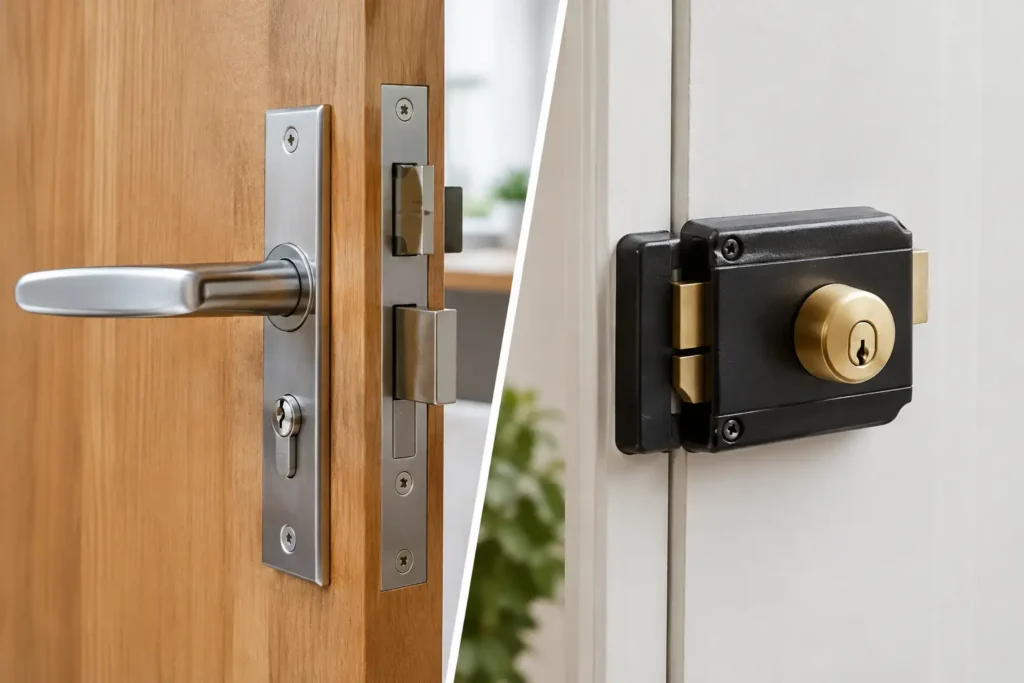
A lock replacement should solve the problem at your door, not create a new one. When comparing a mortise lock versus rim lock, the better option depends on your door material, existing cutouts, daily use, and the level of security you need. A rim lock may be the practical upgrade for one home, while a mortise lock may be the stronger long-term choice for another.
For homeowners, tenants, and office managers, the key is choosing a lock that fits correctly and works reliably. A good lock is only as effective as its installation, strike plate, door frame, and the condition of the door itself.
What Is a Mortise Lock?
A mortise lock is fitted into a deep pocket cut inside the edge of the door. The lock body sits within the door rather than being mounted mainly on its surface. From the outside, you may see a cylinder for the key, while the inside may have a lever handle, thumb turn, or both.
Because the lock case is housed within the door, mortise locks are commonly used on solid timber doors, metal doors, and many commercial entrances. They can combine a latch for everyday access with a deadbolt for security in one coordinated mechanism.
This style often feels more substantial in use. The handle action, latch, and bolt are designed to work together, which can make it a suitable option for a frequently used main door or office entrance. However, installation requires accurate cutting and alignment. It is not a simple swap if the door was not previously prepared for a mortise lock.
What Is a Rim Lock?
A rim lock is mounted on the inside surface of the door, with a cylinder or keyhole visible on the outside. Instead of placing the full lock body inside the door, the mechanism is fixed to the door face. A rim night latch is a familiar example.
Rim locks are often chosen when homeowners want a practical replacement without extensive modification to the door. They can work well on many wooden doors, especially where a deep mortise pocket would weaken the door or require unnecessary carpentry work.
Some rim locks latch automatically when the door closes, which is convenient when leaving home quickly. Depending on the model, the inside handle or snib can control whether the lock is deadlocked, held open, or set for normal entry and exit.
Mortise Lock Versus Rim Lock: The Main Differences
The biggest difference is where the lock sits. A mortise lock is built into the door, while a rim lock is mounted on its surface. That single design difference affects installation, appearance, repair options, and how each lock works with a particular door.
Installation and door compatibility
Mortise locks need a carefully sized cavity in the door edge. If the existing lock is already a mortise model, replacement can be straightforward when the new lock body closely matches the old dimensions. If it does not match, the door may need adjustment so the handle, cylinder, bolt, and strike plate align properly.
Rim locks are generally less invasive to install. They still require proper drilling for the cylinder and secure mounting screws, but they do not need a large internal pocket. This can make a rim lock a sensible choice for certain HDB doors, apartment doors, or doors where preserving the existing structure matters.
Door thickness also matters. A lock must be compatible with the thickness of the door and the distance from the door edge to the key cylinder, known as the backset. A locksmith checks these measurements before recommending a replacement.
Security and strength
Neither type is automatically the safest in every situation. A quality mortise lock installed in a solid door and reinforced frame can offer excellent protection. Its internal case and multi-part mechanism are well suited to heavy-use entrances.
A good rim lock can also provide dependable security, particularly when paired with a separate deadbolt, a strong strike plate, and long screws anchored into the door frame. The weakest point is often not the lock itself. A damaged frame, loose hinges, weak door material, or poor installation can reduce the benefit of even an expensive lock.
For a main entrance, it is worth considering the whole door setup. If you have a metal gate and a wooden main door, the gate lock, main-door lock, hinges, and door viewer should work together rather than being treated as separate issues.
Daily convenience
A rim night latch can be very convenient for households that want the door to latch when it closes. This is useful for busy families, tenants, and anyone who does not want to manually throw a bolt each time they leave.
A mortise lock with a lever handle can feel smoother for frequent entry, especially at offices or shared premises. It can also be useful where a latch and deadbolt are needed in one lockset. The right choice comes down to how people use the door each day. A lock that is secure but frustrating to operate may end up being used incorrectly.
Appearance and replacement flexibility
Mortise locks usually offer a cleaner, more integrated appearance because much of the mechanism is hidden. They can suit doors where a neat, finished look is important.
Rim locks are more visible on the inside of the door. That is not necessarily a disadvantage, but it should be considered if interior appearance matters. On the other hand, rim lock replacement can be more flexible when a door has limited space or existing holes that are difficult to cover.
Cost: Look Beyond the Lock Price
A rim lock may cost less to install if it can use the existing door layout with minimal changes. A mortise lock may involve more labor because it needs accurate cutting, fitting, and alignment. If the door has been damaged, swollen from moisture, or previously modified, the work can be more involved.
The cheapest replacement is not always the most affordable outcome. A poorly matched lock can leave exposed holes, misaligned bolts, a loose handle, or a door that does not close properly. Those issues can lead to another service call and a weaker entrance.
When requesting a quotation, provide clear photos of both sides of the door, the door edge, the existing lock, and the strike plate if possible. This helps a locksmith identify whether you have a mortise lock, rim lock, deadbolt, or a combination setup before arriving.
When a Mortise Lock Makes Sense
A mortise lock is often a strong choice when you have a solid door, an existing mortise cutout, and a need for a durable main-door lock. It is also worth considering for commercial doors that receive regular traffic or where a lever handle and deadbolt arrangement is preferred.
Choose this route when proper fitting is possible and you want an integrated lockset rather than a surface-mounted mechanism. If your current mortise lock is stiff, loose, difficult to turn, or no longer aligns with the frame, replacement may be safer than repeatedly forcing it.
When a Rim Lock Makes Sense
A rim lock can be the better fit when you need a practical solution with less door modification. It works well for many residential doors, particularly where automatic latching is helpful and the door is not suited for a deep mortise pocket.
It can also be a sensible replacement when a previous rim lock is already installed. Matching the mounting position and cylinder hole can reduce unnecessary work, provided the door and frame remain in good condition.
Do Not Ignore the Door Frame
A lock bolt can only protect the entrance if the strike plate holds firm. The strike plate is the metal fitting on the frame that receives the latch or bolt. Loose screws, cracked wood, rust, or a misaligned frame can cause the lock to jam or reduce resistance to forced entry.
This is why professional installation matters. An experienced locksmith checks the lock, cylinder, handle, door gap, hinges, and frame alignment before finalizing the work. Pro-Smith and Lock handles on-site lock replacements with this practical approach, helping customers choose a compatible solution instead of forcing a one-size-fits-all product onto the door.
Common Questions About Rim and Mortise Locks
Can I replace a mortise lock with a rim lock?
Yes, in some cases, but the old mortise cutout may need to be covered, repaired, or fitted with an appropriate plate. Whether it will look neat and remain secure depends on the door condition and the location of the existing holes.
Can I install a mortise lock on any door?
Not always. Thin, hollow, damaged, or unsuitable doors may not have enough material for a mortise lock body. The lock must fit without weakening the door.
Which lock is better for a front door?
It depends on the door and the existing hardware. A properly installed mortise lock is often well suited to a solid main door, while a quality rim lock can be an excellent option where surface mounting and automatic latching are more practical.
If your lock is failing, your key is difficult to turn, or your door no longer closes smoothly, address it before a routine inconvenience becomes a lockout. The right lock is the one that fits your door securely, matches how you use the entrance, and is installed carefully enough to work when you need it most.