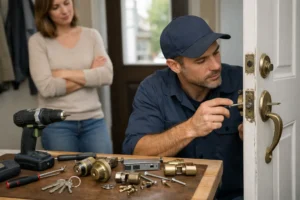
You come home, reach for your keys, and realize one set is missing. Or maybe the front door lock has started sticking, the office unit changed hands, or a former tenant still might have a copy. In these moments, the question is usually the same: rekeying vs lock replacement – which one actually makes sense?
The short answer is that both solve access and security problems, but they solve different ones. Rekeying keeps the existing lock hardware and changes the internal key setup so old keys no longer work. Lock replacement removes the old lock and installs a new one. One option is often faster and more affordable. The other may be the better call when the lock is damaged, outdated, or no longer giving you enough protection.
Rekeying vs lock replacement: what is the difference?
Rekeying changes the lock from the inside. A locksmith adjusts the internal pins or cylinder so the lock works with a new key. The lock on the door stays in place, which means the outside look and most of the hardware do not change.
Lock replacement is exactly what it sounds like. The old lock is taken off the door and a new lock is installed in its place. Depending on the door and lock type, that may mean replacing just the cylinder, the main lock body, the handle set, the deadbolt, or the entire lock assembly.
For many homeowners and tenants, rekeying is the practical choice when the lock still works well and the main concern is controlling who has access. For others, replacement is the better move when there is visible wear, failed parts, forced-entry damage, rust, alignment issues, or a need for a stronger lock.
When rekeying is the smarter option
Rekeying is often the best answer when the lock itself is still in good condition. If you lost your keys, moved into a new place, had staff turnover, or lent keys to someone you no longer want to grant access to, rekeying gives you a fresh start without changing all the hardware.
This is especially useful for rental units, HDB flats, condos, offices, and interior doors where the goal is simple: old keys should stop working, and the lock should continue doing its job. In many cases, rekeying is quicker than full replacement and can cost less because the locksmith is not installing entirely new hardware.
There is also a convenience advantage. If you want multiple doors to work on one key, rekeying may allow that if the locks are compatible. That can be useful for a main door and gate, several office rooms, or selected interior doors. A locksmith can check whether your current setup can be adjusted into a key alike arrangement.
Still, rekeying has limits. It works best when the lock is worth keeping. If the mechanism is already worn out or the hardware quality is poor, rekeying can solve the key issue without solving the bigger reliability problem.
Good situations for rekeying
Rekeying usually makes sense after moving in, after a tenant change, after losing a key, or when you want tighter control over who can enter. It is also a sensible step after a domestic helper change, contractor access period, or office staff transition.
If the lock turns smoothly, aligns properly, and has no signs of damage, rekeying is often enough.
When lock replacement is the better choice
Replacement becomes the stronger option when the hardware itself is the problem. If the lock is jammed, loose, rusted, bent, cracked, or damaged after an attempted break-in, changing the key setup alone will not fix it. The lock needs to be replaced so the door can work reliably and securely again.
Replacement also makes sense when you want to upgrade. Maybe the current deadbolt is basic and you want something stronger. Maybe the bedroom privacy lock is no longer suitable for the room. Maybe the office glass door needs a more appropriate locking solution. In these cases, replacement lets you choose hardware that better fits the door, traffic level, and security needs.
There is also the age factor. Older locks can become unreliable even before they fail completely. If you are dealing with repeated sticking, difficult turning, key breakage risk, or a door that only locks after several tries, replacement may save you from a lockout later.
For some properties, replacement is also about standards and appearance. A newly renovated home, upgraded office, or unit handed over to a new occupant may need matching hardware, newer finishes, or a cleaner look. Rekeying cannot give you that because it keeps the same visible lock.
Signs you should replace instead of rekey
If the key is hard to turn, the latch does not catch properly, the cylinder feels loose, or the lock has visible wear, replacement is usually the safer call. The same goes for locks that were forced, poorly installed, or no longer suit the door.
If security is your priority and the current lock is entry-level or outdated, replacement gives you a chance to install something stronger rather than extending the life of weak hardware.
Cost, speed, and security: what most people really care about
For most customers, the decision comes down to three things: how much it costs, how fast it can be done, and whether it fixes the security concern properly.
Rekeying is often the more budget-friendly option because the existing hardware stays in place. It can also be faster when the lock is compatible and in good shape. If your issue is mainly key control, rekeying can be the cleanest fix.
Replacement can cost more because new parts are involved, and some doors require more labor depending on the lock type and fit. But it can be better value when the old lock is near failure or not giving enough protection. Paying less today for rekeying does not help much if the lock then starts failing next month.
Security depends on the actual problem. If you are worried about missing keys or former key holders, rekeying can restore control quickly. If you are worried about lock strength, reliability, or damage, replacement addresses more than access – it addresses the condition of the hardware itself.
That is why there is no one-size-fits-all answer. The right choice depends on whether your problem is about keys, hardware, or both.
Rekeying vs lock replacement for homes, rentals, and offices
For homeowners, rekeying is often enough after moving in or after keys go missing. Replacement is more common when upgrading the main door lock, dealing with rust from weather exposure, or fixing an old deadbolt that no longer feels secure.
For tenants, the right option may depend on the lease and the condition of the lock. If the hardware is fine but access control is the concern, rekeying may be enough with the proper approval. If the lock is damaged or unreliable, replacement may be necessary.
For landlords and property managers, rekeying is often a practical turnover solution between occupants. It keeps access under control without changing every lock each time. But if the unit has cheap, worn, or mismatched locks, replacement may reduce future service calls.
For offices, the decision usually depends on traffic and control. A private room with a working lock may only need rekeying after staff changes. A glass door, storeroom, front entrance, or high-use access point may benefit more from replacement if performance and security are slipping.
Why a professional assessment matters
Two locks can look similar from the outside and need completely different solutions. One may be perfect for rekeying. The other may have internal wear, the wrong fit for the door, or previous repair work that makes replacement the wiser investment.
A professional locksmith can check the condition of the lock, the door alignment, cylinder compatibility, and the level of security you actually need. That matters because choosing the cheaper option first is not always the cheaper option overall.
An experienced mobile locksmith also helps when the issue is urgent. If you are locked out, dealing with a break-in, or trying to secure a property quickly after a move or staff change, getting the right fix on-site matters more than guessing.
For customers who want a fast, practical answer, that is usually the real goal: solve the issue once, solve it correctly, and avoid another lock problem next week.
If you are weighing rekeying vs lock replacement, start with the condition of the lock. If the hardware is sound and the concern is key access, rekeying is often the smart move. If the lock is worn, damaged, outdated, or no longer suitable, replacement is the stronger long-term fix. When in doubt, a locksmith with field experience can tell you quickly which path saves you more trouble – and gives you better peace of mind once the door closes behind you.