A sliding door can look secure when it is shut, yet still be one of the easier entry points in a home or office. Worn rollers, loose frames, thin glass, and basic factory latches can all reduce protection. The right sliding door locks help keep the panel closed, resist forced movement, and give you more confidence when you leave the property.
The best solution depends on the door itself. A patio slider, balcony door, storefront glass door, and interior office partition do not use the same hardware or face the same risks. Choosing a lock based only on price can leave you with a device that is inconvenient, poorly fitted, or easy to bypass. A practical assessment of the door, frame, and daily use will lead to a safer result.
Why Standard Sliding Door Latches Are Often Not Enough
Many sliding doors come with a small latch built into the handle. This latch may be adequate for holding the door closed, but it is not always designed to provide strong security. If the door can be lifted in its track, pushed sideways, or flexed away from the frame, the latch alone may not stop an attempted entry.
Age also matters. Sliding doors move every day, and their alignment changes over time. Dirt in the bottom track, worn rollers, a settling frame, or loose screws can stop the latch from engaging fully. A lock that appears to work may only catch by a few millimeters.
This is why a lock upgrade should begin with the door’s condition. Sometimes the answer is a stronger lock. In other cases, adjusting the rollers, realigning the panel, or repairing a damaged strike plate is just as important. Security hardware works best when the door closes squarely and cannot be easily lifted or forced out of position.
Types of Sliding Door Locks and What They Do
There is no single best lock for every sliding door. The right option should match the door material, the opening direction, the location, and who needs access.
Keyed handle locks
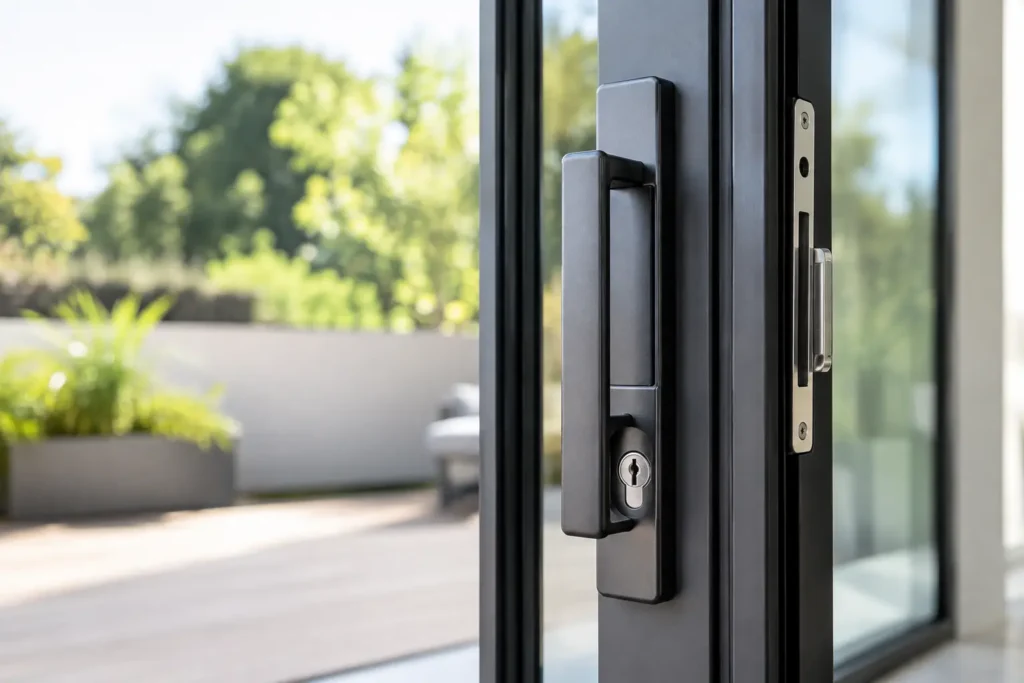
A keyed handle lock replaces or upgrades the existing handle and latch. It is a familiar option for external sliding glass doors because it allows the door to be locked from the outside and opened with a key. This can be useful for patios, balconies, and ground-level access points.
The trade-off is that handle locks depend heavily on correct installation and alignment. A high-quality handle will not perform properly if the keeper in the frame is loose or the door does not meet it cleanly. For doors used by children, elderly family members, or frequent visitors, choose a design that is simple to operate from the inside in an emergency.
Foot bolts and track bolts
A foot bolt or track bolt secures the sliding panel to the lower track or frame. It creates a physical stop that prevents the panel from moving, even if the main latch is defeated. These locks are useful as a secondary security measure and can be a good choice when you want added protection without changing the main handle.
Placement matters. The bolt must be installed where it does not damage the door, interfere with smooth operation, or create a tripping concern. A professional can determine whether the bottom track and panel have enough strength for this type of hardware.
Security bars and rods
A security bar sits in the track behind the sliding panel to block it from opening. It is one of the most straightforward ways to add resistance to a sliding door, and it can be especially helpful for rental properties where permanent changes may be limited.
However, not all bars fit securely. A loose rod can shift, fall, or be removed quickly. It should be measured carefully and positioned so it cannot slip out when pressure is applied to the door. It also needs to be removed before the door can be used as an exit, which may not suit every household or workplace.
Surface-mounted locks
Surface-mounted locks attach directly to the door frame and panel. They are commonly used where the existing lock is damaged, inadequate, or difficult to replace with a standard mortise-style mechanism. Depending on the model, they may use a key, thumbturn, or both.
These locks can provide a strong upgrade, but drilling into glass, aluminum, or uPVC frames without the correct tools can cause expensive damage. The lock also needs to be positioned carefully so the door can still slide properly and the hardware does not place stress on the glass panel.
Glass door patch locks
Office glass doors and commercial sliding glass partitions often require specialized patch locks. These are designed for tempered glass and work with specific cutouts, clamps, or floor guides. They should never be treated like a standard residential patio lock.
For business owners and office managers, the priority is usually a balance of security, controlled access, and a professional appearance. A locksmith can advise whether the existing glass door hardware can be repaired, rekeyed, or replaced without changing the entire door setup.
Signs Your Sliding Door Lock Needs Attention
Do not wait until a lockout or break-in attempt reveals a problem. A sliding door lock deserves attention when the key sticks, the handle feels loose, the latch does not catch consistently, or the door must be lifted or pushed hard to lock.
Visible gaps between the panel and frame are another warning sign. So are bent tracks, missing screws, cracked handles, and a door that rattles when closed. These issues can make the lock easier to force and may eventually prevent you from securing the property at all.
If the key has been lost, recently borrowed by a former tenant or employee, or left with unknown parties, replacing or rekeying the lock may be the sensible choice. A working lock is not necessarily a secure lock when key control has been lost.
Choosing the Right Level of Security
Start by considering location. A second-floor balcony door may need a different level of protection than a ground-floor patio slider facing a quiet side passage. A door inside a secured office may need privacy and access control, while a rear entrance to a business needs stronger resistance and reliable daily operation.
Also consider the people using the door. A complicated multi-step lock may add security, but it can create frustration if the door is opened frequently. For emergency exits, safe operation from the inside is essential. The most effective setup is one people will use correctly every day.
For higher-risk doors, combining measures is often smarter than relying on one lock. A properly fitted keyed lock paired with a secondary track stop, well-maintained rollers, and secure framing offers more protection than a single upgraded handle alone. This does not mean every door needs every accessory. It means the weak points should be addressed in a sensible order.
Why Professional Installation Makes a Difference
Sliding door hardware has little room for error. A lock installed a few millimeters out of position may bind, wear out quickly, or fail to engage when the door shifts. On glass, aluminum, and narrow-frame doors, the wrong screw length or drilling method can damage the panel, frame, or track.
A professional locksmith can inspect how the door slides, identify whether the existing hardware can be repaired, and recommend a lock that fits the actual door rather than a generic description on a package. This is especially valuable when a lock has failed suddenly, a key has broken, or access is needed without causing unnecessary damage.
Pro-Smith and Lock provides on-site support for residential and commercial lock concerns, including damaged sliding door hardware and glass door lock work. For an urgent issue, getting the door secured correctly is usually faster and more affordable than replacing parts that were never the real problem.
A Better Time to Upgrade Is Before You Need an Emergency Call
Sliding doors are easy to overlook because they often keep moving even when their locks are wearing out. But a door that does not lock cleanly is already giving you a warning. Address it while you can compare options, choose the right hardware, and schedule the work at a convenient time.
A secure sliding door should close smoothly, lock without force, and stay firmly in place when tested. If yours does not, a prompt inspection can turn a small hardware issue into a practical, lasting security improvement before it becomes a stressful after-hours problem.