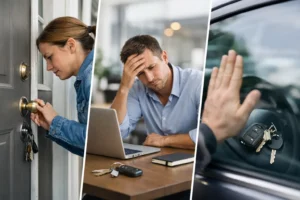
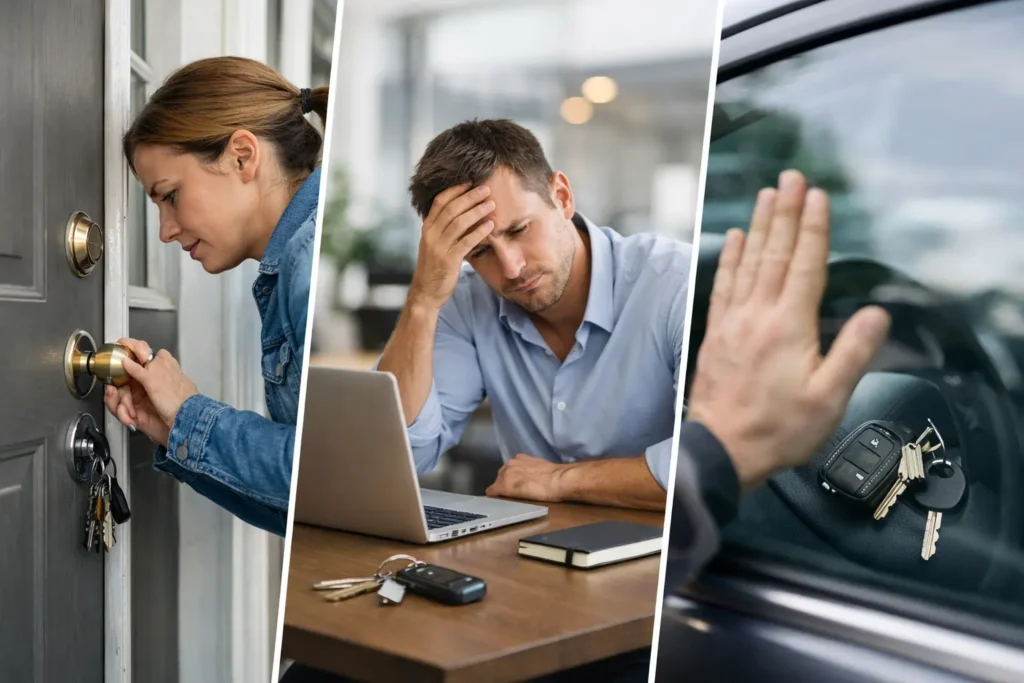
The moment a door shuts and you realize the keys are on the wrong side, your next few decisions matter more than most people think. If you are figuring out what to do after lockout, the goal is not just getting back in fast. It is staying safe, avoiding damage, and making sure the same problem does not happen again tomorrow.
A lockout can feel minor or urgent depending on where it happens. Being locked out of your apartment at noon is frustrating. Being locked out late at night, outside your office, or with a child, pet, or important belongings inside is a different level of pressure. In both cases, a calm and practical response usually saves time, money, and unnecessary damage.
What to do after lockout without making it worse
Start by pausing for a minute and checking the basics. Many lockouts happen in a rush, and people miss simple details. Check every pocket, bag, work tote, and jacket. If you are at home, see whether another entrance is safely accessible. If you are at your office, ask whether a colleague, building manager, or security desk has access. If it is a car lockout, confirm whether a trunk, rear hatch, or another door is still open before trying anything else.
The next step is to think about risk. If there is a stove on, a baby inside, an elderly family member alone, a pet in heat, or your car is running, this is no longer just an inconvenience. It is an urgent situation. In that case, contact emergency help or a professional locksmith right away instead of spending twenty minutes trying random fixes.
What you should not do is just as important. Do not force the keyway with hairpins, screwdrivers, cards, or wire unless you fully understand the lock and accept the chance of damage. Most modern residential, office, and vehicle locks are less forgiving than people expect. A quick DIY attempt can turn a simple opening job into a broken lock, damaged door frame, scratched glass, or a full replacement.
Home lockout: the right next steps
If you are locked out of your house, condo, or apartment, first check whether someone nearby has a spare key. That might be a family member, trusted neighbor, landlord, or property manager. This is often the fastest and least expensive option, but it depends on your living setup. Many renters do not have an after-hours contact, and many homeowners prefer not to leave spare keys with others.
If no spare is available, look at the type of door and lock involved. A bedroom privacy lock is very different from a main entry deadbolt. Some interior doors are designed for emergency opening with the correct tool. Main doors, gate locks, and deadbolts usually require more care. Forcing them can damage both the lock and the door, which costs more than a proper opening service.
This is where a professional locksmith makes sense. An experienced locksmith can assess whether the door can be opened cleanly, whether the lock is already failing, and whether rekeying or replacement is the smarter move after entry. Sometimes the lockout is only the symptom. The real issue is a worn cylinder, misaligned strike plate, broken key head, or a latch that no longer retracts properly.
For homeowners and tenants, the best result is not simply getting in. It is getting in without creating a bigger repair bill.
What to do after lockout at work
Office lockouts tend to be more complicated because access affects more than one person. There may be staff waiting, sensitive documents inside, or building security rules to follow. Start by contacting your office admin, facilities team, landlord, or building security. In some buildings, management can provide access or verify who is authorized to request entry.
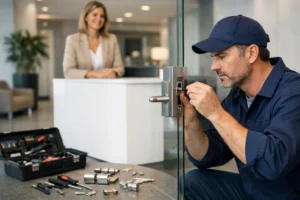
If the lockout involves a glass office door, commercial lever lock, or restricted key system, avoid improvised tools completely. Commercial hardware can be expensive, and damage to glass doors or aluminum frames can quickly turn into a larger property issue. A trained locksmith is usually the safest route, especially when the lock needs to be opened with minimal disruption.
After access is restored, review why it happened. Was it a staff key management problem, a worn lock, a misplaced master key, or a poor handover process between shifts? Businesses often treat lockouts as one-off incidents when they are really signs of a weak access system. A key alike setup, master key plan, or better spare key control may prevent repeated downtime.
Car lockout: speed matters, but so does care
A car lockout creates a different kind of urgency because people often need to get moving fast. The common mistake is calling the first person who promises cheap help, then ending up with weather strip damage, scratched paint, or a bent door frame. Vehicle entry should be done carefully, especially on newer models with tighter tolerances and electronic systems.
If your phone, wallet, or child is inside the car, tell the locksmith immediately. Those details affect response priority and method. If the car is running or someone vulnerable is inside, treat it as urgent. If not, stay with the vehicle in a safe, visible place and avoid repeated attempts that could trigger more issues.
Not every car lockout needs the same approach. Some involve keys locked inside. Others involve lost keys, a broken key shell, a faulty remote, or an immobilizer-related problem that looks like a lockout at first. That is why a proper assessment matters. The fastest solution is not always the right one if it leads to more repair work afterward.
When to call a locksmith right away
If you are wondering what to do after lockout and whether to wait, there are a few clear moments when waiting is the wrong move. Call a locksmith immediately if there is a safety concern, if the lock appears damaged, if the key broke inside the lock, if the lockout happened late at night, or if repeated DIY attempts have already failed.
You should also call right away if you need proof of professional work for a landlord, office, or insurance-related reason. In those cases, a proper service record and clean workmanship matter. A rushed attempt by an untrained person may solve nothing and leave you paying for replacement hardware later.
A dependable mobile locksmith service is especially useful because lock problems rarely happen at convenient times. You want someone who can come to the location, identify the issue, and solve it on-site instead of sending you from one shop to another.
After you get back in, decide whether the lock is still trustworthy
This is the part people skip. Once the door is open, they feel relieved and move on. But a lockout often points to another problem. Maybe the key is worn down. Maybe the latch sticks. Maybe the lock has become loose in the door, the cylinder turns badly, or the alignment is off because the door has shifted over time.
If the key was lost or stolen, entry is only the first step. You should think seriously about rekeying or replacing the lock, especially for your main door, office entry, or mailbox. The old key may still be out there, and peace of mind has real value.
If the lock was simply old and unreliable, upgrading can save you from another emergency. That does not always mean choosing the most expensive option. It means choosing a lock that fits the door, usage level, and security needs of the space. For some properties, a standard quality replacement is enough. For others, stronger hardware or better key control makes more sense.
How to reduce the chance of another lockout
The best prevention is practical, not complicated. Keep one spare key in a planned and secure place, not hidden in an obvious outdoor spot. If multiple people need access, agree on who holds the backup. For offices, track key handovers properly. For homes, replace locks that already show signs of sticking or misalignment instead of waiting for a full failure.
It also helps to pay attention to patterns. If you have been locked out twice in six months, that is not bad luck. Something in your routine or lock setup needs to change. A simple fix now is usually cheaper than another urgent call later.
For many people, the real answer to what to do after lockout is this: solve the immediate problem, then fix the reason it happened. A fast response gets you back inside. A smart follow-up helps make sure you do not end up outside that same door again next week.
If you ever need calm, professional help on-site, Pro-Smith and Lock focuses on exactly that kind of practical support. When access matters, speed matters. But doing the job cleanly matters just as much.
The best next step after any lockout is not panic or force. It is a clear decision, made quickly, with safety and long-term security in mind.