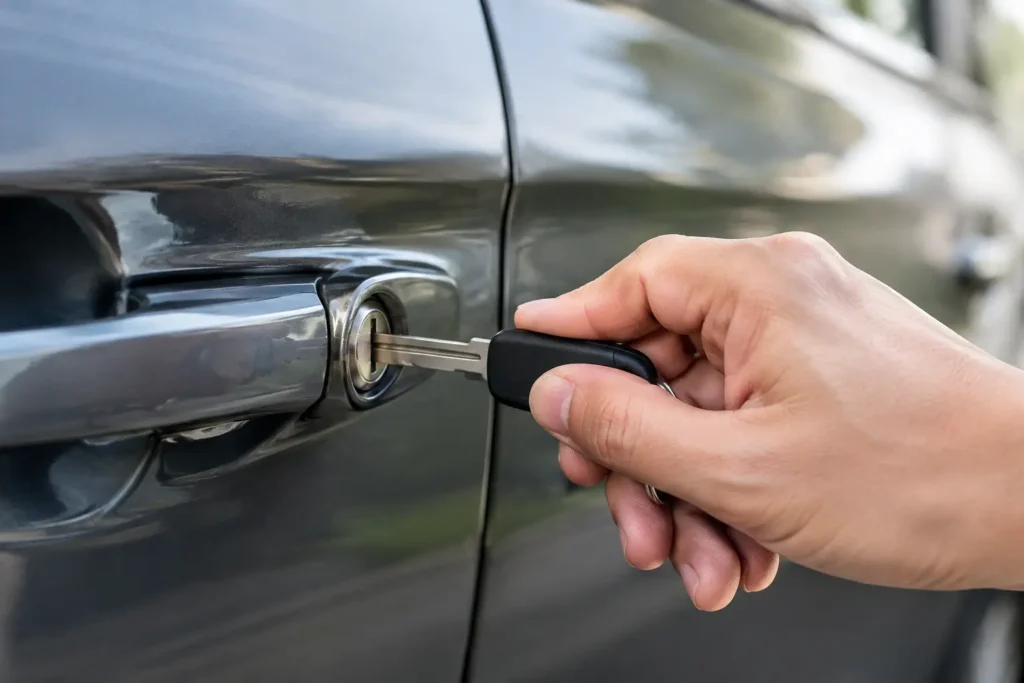
A key that suddenly needs extra force is more than a small annoyance at the door. It can be an early warning that the lock is dirty, worn, misaligned, or close to failing. If you are wondering, “why does a key turn slowly,” the safest answer is this: do not force it. A key that still turns can often be fixed before it snaps in the cylinder or leaves you unable to secure your home, office, mailbox, or vehicle.
Why Does a Key Turn Slowly in a Lock?
A lock works when the cuts on the key lift small internal pins to the correct height. Once those pins line up, the cylinder can rotate. If dirt, corrosion, worn parts, a bent key, or pressure from a misaligned door gets in the way, the cylinder may turn slowly, feel rough, or stop halfway.
The problem is not always inside the lock itself. A key may turn smoothly with the door open but become stiff when the door is closed. In that situation, the latch or bolt may be rubbing against the strike plate because the door has shifted. This is common with heavy doors, wooden doors affected by humidity, and doors that receive frequent use.
A slow-turning key should be checked early. Waiting until the key no longer turns at all can turn a simple adjustment or lock service into an urgent lockout.
Common Causes of a Slow-Turning Key
Dirt and debris inside the keyway
Dust, lint, metal particles, and grime can build up inside a lock over time. This is especially likely for exterior gates, mailboxes, shutters, and doors exposed to rain, construction dust, or frequent handling. The key may insert normally but feel sticky as it turns.
Do not spray household oil, cooking oil, or thick grease into the keyhole. These products can make the lock feel better briefly, but they attract more dirt and may cause a worse blockage later. A locksmith-approved dry lock lubricant is a better choice when light cleaning is appropriate.
A worn, bent, or copied key
Keys wear down gradually. The edges of the cuts become rounded, and the key may no longer lift the pins as precisely as it should. A poorly cut duplicate can cause the same issue from the beginning, particularly if it was copied from an already worn key.
Look at the key under good light. If it appears bent, twisted, cracked, deeply scratched, or noticeably thinner than a spare key, stop using it. Try a known-good original or spare key once. If the spare turns smoothly, the lock may be fine and the key should be replaced.
A dry or corroded lock cylinder
Locks contain moving components that need to move freely. Age, moisture, and lack of maintenance can leave the pins and springs dry or corroded. The key may turn slowly in both directions, even when the door is open and there is no pressure on the latch.
Corrosion is more common in outdoor locks and in areas with high humidity. It may also develop after a lock has been exposed to water. If the cylinder feels gritty, catches repeatedly, or requires jiggling, professional servicing is usually safer than applying more force.
Door or strike plate misalignment
When a door is out of alignment, the latch or deadbolt can bind against the strike plate. You may notice that the key turns better if you pull the door toward you, push it inward, or lift the handle slightly. This points to a door alignment issue rather than a key issue.
Door movement can happen as hinges loosen, screws wear, weather changes affect the frame, or a building settles. A locksmith can assess whether the strike plate needs adjustment, the hinges need attention, or the lock has been damaged by ongoing pressure.
Worn internal lock parts
A lock that has served a busy main entrance, office door, rental unit, or gate for years may have worn pins, springs, or a damaged cam. Internal wear often causes inconsistent behavior. The key may work normally one day, then turn slowly or stick the next.
This is not a problem to ignore. A worn cylinder can fail in the locked position, and forcing it can break the key or damage the lock body. Replacement is often the more dependable long-term option when internal parts are worn.
The wrong key or a key inserted incorrectly
This sounds obvious, but similar-looking keys are easy to mix up in a large key ring. A nearly correct key may enter the keyway but refuse to turn smoothly. Check that you are using the correct key and that it is fully inserted before trying again.
For double-sided keys, make sure the correct side is facing up. Avoid twisting a key before it reaches the full depth of the keyway.
Safe Checks You Can Try Before Calling a Locksmith
Start by removing the key and checking it for damage. If you have a spare key, test it gently. Do not continue if either key feels likely to bend or break.
Next, test the lock with the door open, if it is safe to do so. If the key turns easily while the door is open but slowly when closed, do not force the cylinder. Press or pull the door gently while turning the key to see whether pressure on the door changes the result. That is a useful sign of misalignment.
If the key is hard to turn with the door open as well, the issue is more likely the key or cylinder. A small amount of proper dry lock lubricant may help if the lock is lightly dirty or dry. Follow the lubricant directions, use only a minimal amount, and work the key gently. If it remains stiff, stop.
Never use pliers to turn the key. Never hit the key, force the door, or pour oil into the keyway. These shortcuts can turn a minor issue into a broken key extraction, a damaged cylinder, or a door that will not lock securely.
When a Slow Key Needs Professional Help
Call a locksmith promptly if the key is bending, the lock is grinding, the cylinder spins without operating the latch, or the key will not come out. You should also get help if the lock becomes stiff after a break-in attempt, if a key has snapped, or if the door will not lock reliably.
For homes and apartments, this matters most at the main door, bedroom doors that need privacy, gates, and mailbox locks. For offices, a slow-turning key can affect staff access, glass door security, file storage, and the ability to lock up at the end of the day. A locksmith can identify whether a targeted repair, cylinder replacement, lock replacement, or door alignment adjustment makes the most sense.
There is a trade-off to consider. Servicing a lock can be cost-effective when the cylinder is in otherwise good condition. Replacing it may be the smarter choice when the lock is old, damaged, heavily corroded, or no longer provides the level of security you need. A professional assessment helps avoid paying for a temporary fix when the lock is near the end of its life.
How to Prevent the Problem From Returning
Use clean, undamaged keys and replace worn copies early. Keep a spare key in a secure place instead of relying on a single heavily used key. For exterior locks, occasional cleaning with the correct dry lubricant can help prevent dirt and moisture from affecting the mechanism.
Pay attention to changes in how the door closes. If you need to slam the door, lift it, or push hard to lock it, arrange an adjustment before the lock begins to bind. Door alignment protects both the lock and the key.
For rental properties, offices, and homes with multiple users, consider a planned lock review after tenant changes, lost keys, renovations, or signs of wear. Key alike and master key arrangements can simplify access, but they should be set up and maintained correctly to avoid worn keys and unreliable cylinders.
A slow-turning key is the lock giving you time to act before access becomes an emergency. Treat it gently, avoid force, and have it checked while the door can still be opened and secured normally.