A glass door can make an office, storefront, or interior space feel open and professional. It can also become a security concern when the lock is loose, outdated, poorly fitted, or simply not designed for the door. The best locks for glass doors are not chosen by appearance alone. They must match the glass type, door movement, frame, traffic level, and the level of security your property needs.
Glass is less forgiving than wood or metal. A wrong hole size, over-tightened fitting, or unsuitable lock body can crack the panel or leave the door vulnerable. That is why a practical lock choice starts with the door itself, not just the key or handle you prefer.
What Makes a Glass Door Lock a Good Choice?
A good glass door lock should secure the door without placing unnecessary pressure on the glass. Most commercial glass doors use tempered glass, which is strong but cannot be drilled or altered casually after installation. Many lock systems are therefore clamp-on or patch-fitting designs made specifically for glass panels.
The right option also depends on whether the door is frameless, has aluminum framing, slides on a track, swings inward or outward, or forms part of a double-door entrance. A lock that works well on a framed office door may not fit a frameless meeting-room door.
Security should also suit the location. A private office may need simple key control, while a street-facing storefront may require a stronger lock, a floor bolt, and access control. For doors used by staff and visitors throughout the day, convenience and emergency exit requirements matter just as much as resistance to forced entry.
1. Patch Fitting Deadbolt Locks for Frameless Glass Doors
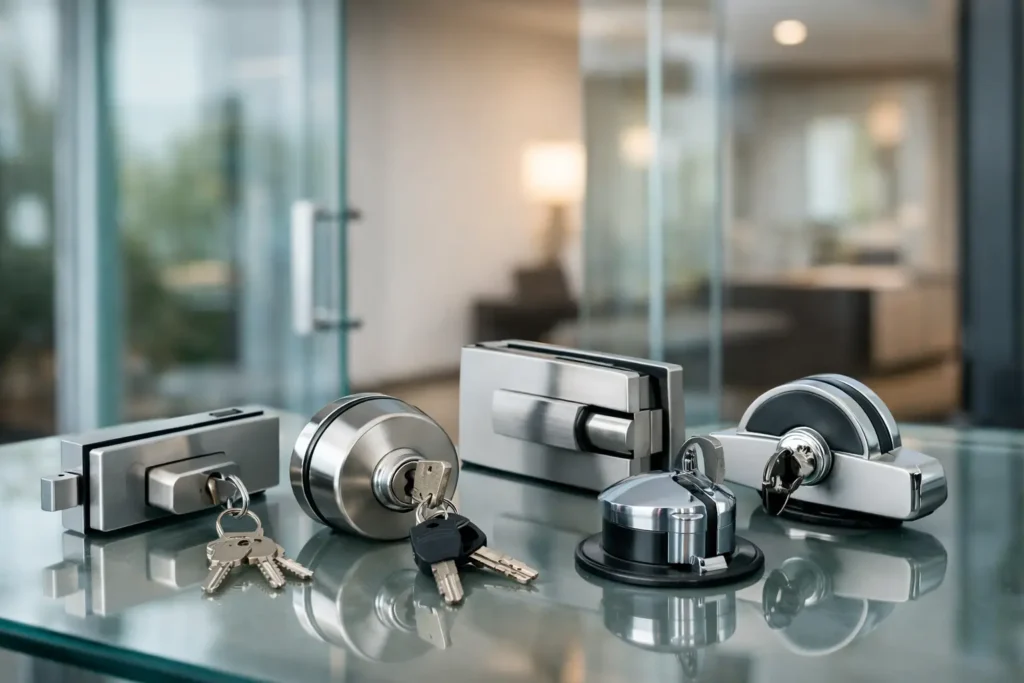
Patch fitting deadbolts are among the best locks for glass doors in offices, clinics, salons, and retail spaces with frameless swing doors. The lock body fits into a metal patch or housing at the edge of the glass, usually without requiring a large cutout through the panel.
When locked, the bolt engages with a strike plate on the wall, floor, or adjacent glass panel. These locks provide a neat, professional finish and are available in single-door and double-door configurations.
Choose a quality cylinder with restricted or controlled keys if several people have access to the premises. This gives you better control when keys are lost, staff leave, or a tenant changes. The trade-off is that a patch lock must be measured accurately. Glass thickness, door gap, swing direction, and strike position all affect whether it will operate correctly.
2. Surface-Mounted Rim Locks for Simple Retrofits
A surface-mounted rim lock is often a sensible option when you need to secure an existing glass door without making major changes to the door setup. The lock is mounted on the surface or edge area with a compatible glass-door bracket, while the strike is fixed to a frame or wall.
This type of lock can be useful for interior offices, glass partition doors, and lower-risk commercial spaces. It is generally easier to replace than a fully integrated patch lock, especially when the existing door hardware is worn or discontinued.
However, not every rim lock is suitable for glass. Standard locks made for wooden doors should not be forced onto a glass panel with improvised screws or brackets. Use a model designed for the door thickness and mounting style, then have it fitted correctly to avoid movement, poor alignment, or damage to the glass.
3. Narrow-Stile Mortise Locks for Framed Storefront Doors
For aluminum-framed glass storefront doors, a narrow-stile mortise lock is often the strongest and most practical choice. The lock is installed inside the narrow metal frame rather than directly onto the glass. This creates a cleaner appearance while allowing for a stronger latch or deadbolt mechanism.
These locks are well suited to doors facing public walkways, building corridors, and high-traffic entrances. They can also work with lever handles, paddle hardware, and commercial door closers.
The main consideration is compatibility. The frame width, backset, handle preparation, and door closer setup must all be checked. Replacing only the cylinder may be enough if the lock body is still working well. If the latch is sticking, the bolt does not throw fully, or the door has shifted, replacing the complete lock may be the safer long-term solution.
4. Double Glass Door Locks With Center Strikes
Double glass doors need a lock arrangement that keeps both panels secure. One common setup uses a lock on the active door and a center strike or keeper fixed to the inactive panel. Another uses a lock body designed to clamp between two glass panels.
This is common for glass office entrances, showrooms, meeting rooms, and retail doors. The lock should hold the active panel firmly without allowing the second panel to rattle or separate under pressure.
For better security after business hours, pair the center lock with a top or bottom bolt on the inactive panel. A locksmith can assess whether the existing hardware has enough support for this setup. Installing a stronger lock on one side will not help much if the other door leaf can still be pushed open.
5. Floor Bolts and Drop Bolts for Added Stability
A floor bolt is not usually the only lock on a glass door, but it can be an effective second layer of security. It is commonly used on the inactive panel of double doors. The bolt drops into a receiver in the floor, helping to keep that panel fixed in place while the main door is locked separately.
This option is particularly useful for commercial entrances where two glass doors are opened during business hours but only one needs to be used after closing. It reduces movement at the center gap and supports the primary lock.
Floor bolts require careful installation. The floor material, nearby tiles, door clearance, and door alignment must be considered before drilling. If the receiver is misaligned even slightly, staff may struggle to lock the door every day, which often leads to premature wear or people leaving the bolt unsecured.
6. Sliding Glass Door Locks for Offices and Interior Rooms
Sliding glass doors need a different approach because there is no swinging edge to secure against a frame. Depending on the system, the best option may be a hook lock, a plunger lock, or a sliding-door patch lock. These locks engage with a keeper or slot when the panel reaches the fully closed position.
For a meeting room or private office, a keyed sliding-door lock can provide privacy and basic access control. For a more exposed commercial area, choose hardware with a solid metal keeper and a lock cylinder that can be rekeyed or replaced when needed.
Do not rely on a basic latch if the door protects stock, equipment, records, or sensitive areas. Sliding doors can be vulnerable when the track is worn, the keeper is loose, or the panel has excessive play. Correct adjustment is just as important as the lock model itself.
7. Electronic and Magnetic Locks for Controlled Access
Electronic locks and electromagnetic locks are suitable for offices that need controlled entry for staff, tenants, or authorized visitors. Depending on the door and building requirements, access may be managed with a keypad, card, fob, mobile credential, or intercom release.
These systems are convenient when keys are frequently lost or when access needs to be removed quickly. They also reduce the need to issue multiple physical keys. For a glass door, the mounting method must be suitable for the frame and glass configuration, and the release system must comply with local fire and emergency exit requirements.
Magnetic locks are not automatically the best answer for every door. They need a reliable power supply, appropriate exit hardware, and professional installation. For a small private office used by only a few people, a high-quality mechanical glass door lock may be simpler, more affordable, and easier to maintain.
Before Replacing a Glass Door Lock
Check whether the issue is truly the lock. A glass door that drags, sags, scrapes the floor, or does not meet the strike properly may need hinge, closer, pivot, or alignment work. Replacing the lock without correcting the alignment can cause the new hardware to fail early.
Also consider your key plan before selecting a new cylinder. If you manage several rooms, offices, gates, or cabinets, keyed-alike locks can let one authorized key operate multiple locks. A master key system can provide different access levels for managers, staff, and tenants without carrying a large ring of keys.
Keep the existing lock, handles, and measurements available when requesting service. Clear photos of the door edge, lock body, glass thickness marking, and strike area help a locksmith identify suitable replacement options before arriving.
A glass door should look inviting when it is open for business and stay properly protected when it is not. If the lock is difficult to turn, the door no longer closes cleanly, or you are unsure whether the hardware suits your security needs, arrange a professional assessment before a minor problem becomes a damaged door or an avoidable break-in.