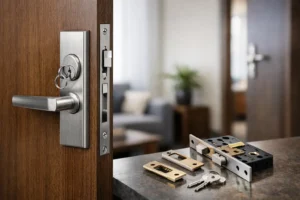
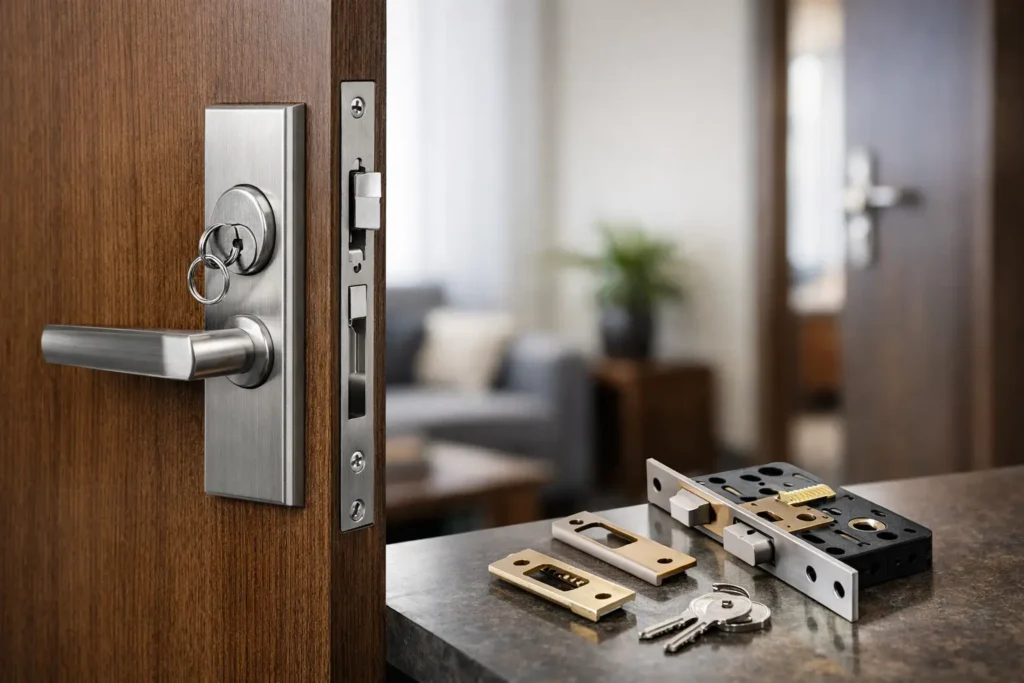
A mortise lock can look solid on the door and still be the wrong choice for the way you use the space. The lock body may be too large for a narrow door stile, the cylinder may not offer the key control you need, or the latch may already be wearing down. This mortise lock review guide focuses on the checks that matter before you replace, repair, or upgrade a lock on a home or office door.
Unlike a basic cylindrical lock, a mortise lock sits inside a pocket cut into the door edge. It is commonly used on main doors, timber doors, metal doors, and certain commercial entrances because it can combine a latch, deadbolt, handles, and key cylinder in one lock case. That design can provide strong, dependable security, but only when the lock is correctly selected and properly fitted.
Start Your Mortise Lock Review With Door Fit
The first question is not which lock brand looks best. It is whether the door can safely accept the lock body.
A mortise lock requires a cavity inside the door. If the door is too thin, damaged around the edge, hollow in the wrong area, or already heavily cut from an older lock, forcing in a larger case can weaken the door. This is especially relevant when replacing an old lock with a different model. Even a few millimeters of difference in case size, backset, spindle position, or cylinder height can leave visible gaps or prevent the handles from operating correctly.
Check the door thickness, the width of the door edge, and the distance from the door edge to the handle center. Also inspect the frame and strike plate. A good lock will not perform well if the bolt lands only partly in the strike or if the frame is loose. On a main entrance, the door, hinges, frame, and lock should work as one security system.
For glass office doors, the usual mortise lock setup may not apply at all. Glass doors often need purpose-built patch fittings or glass-door locks. Trying to adapt a timber-door mortise lock to the wrong door material can create damage and unreliable locking.
Look Beyond the Lock’s Exterior Finish
A polished handle and a heavy-looking faceplate do not tell the full story. The useful parts to assess are inside the lock case: the deadbolt, latch, springs, followers, levers or internal mechanism, and cylinder connection.
A quality deadbolt should extend fully and retract without sticking. Test it with the door open and closed. If it turns smoothly when the door is open but becomes hard to lock when closed, the issue may be alignment rather than the lock itself. Slamming, door movement, or a shifted frame can cause the bolt to strike the edge of the keep instead of entering it cleanly.
The latch should return fully after you release the handle. A weak or slow latch can leave the door not fully secured, even when it appears closed. This is a common concern in busy offices, rental units, and household doors that are opened many times a day.
Finish still matters, but mainly for durability and maintenance. Satin stainless steel and quality plated finishes generally handle daily use better than thin decorative coatings. In humid conditions, choose hardware that resists corrosion and make sure the screws and strike plate are equally suitable. A good lock case paired with low-grade external hardware can still become a maintenance problem.
Decide What Security You Actually Need
Not every door needs the same mortise lock. A bedroom door may need privacy and reliable access if someone is accidentally locked inside. A main door needs stronger resistance to forced entry and better key control. An office may need restricted access for staff, cleaner key management, and a practical plan when keys are lost.
For a main entrance, prioritize a properly installed deadbolt, a solid strike plate, long enough fixing screws where appropriate, and a cylinder that resists common forms of manipulation. The door frame must be sound. Security upgrades are most effective when weak points around the lock are addressed at the same time.
For shared homes, rental properties, and workplaces, consider whether keys should be alike, different, or part of a master key system. Keyed alike locks allow one key to operate selected doors. That is convenient for a homeowner with a gate and main door, or a manager responsible for several rooms. A master key system gives authorized users different levels of access, but it should be planned carefully so convenience does not create unnecessary access risks.
There is a trade-off. Higher security cylinders and restricted key systems can cost more and may require controlled duplication. That can be worthwhile for a main door or office, but it may be excessive for an internal storage room with low-value contents. The right choice depends on the door’s purpose, who has access, and how quickly a lost key could become a security issue.
Check Whether Repair Is Still Worth It
A mortise lock does not always need full replacement. If the case is in good condition and the problem is caused by a worn cylinder, loose handle, bent strike plate, or poor alignment, a targeted repair may be faster and more affordable.
Replacement is often the better option when the lock case has broken internal parts, the latch repeatedly fails to return, the deadbolt jams, or replacement parts are no longer available. An old lock can also be worth changing after a tenant moves out, keys are lost, or there is uncertainty about how many copies exist.
Do not ignore early warning signs. A key that needs repeated jiggling, a handle that droops, scraping sounds when locking, or a bolt that only works after lifting the door are all signs that the lock or door alignment needs attention. Waiting until the door will not open can turn a planned repair into an urgent lockout.
A Practical Mortise Lock Review Checklist
Before approving a new lock or repair, make sure the locksmith has checked these points:
- Door thickness, door material, and the condition of the existing mortise pocket.
- Lock case size, backset, cylinder type, handle spacing, and strike plate alignment.
- Whether the latch and deadbolt operate smoothly with the door both open and closed.
- The level of security and key control needed for the room, home, or business.
- Whether repairing the current lock provides better value than replacement.
This check prevents a common mistake: selecting a lock based only on appearance or price, then discovering it requires extensive door modification or does not suit the intended use.
When Professional Lock Work Makes Sense
Mortise lock installation is not a simple swap in many cases. Cutting too deeply into a wooden door can weaken it. Poorly positioned holes can leave the handle loose, prevent the cylinder from sitting flush, or make the lock difficult to operate. On metal doors, incorrect drilling can be even harder to correct.
A professional locksmith can measure the existing preparation, identify compatible lock options, adjust the strike accurately, and test the final operation under normal use. This matters most for main doors, office doors, and properties where a faulty lock could interrupt access or create a security concern.
If you are locked out, avoid forcing the handle or pushing tools into the keyway. That can damage the cylinder and increase the repair required. A locksmith can assess whether non-destructive opening is possible, then repair or replace the lock based on its condition.
For mobile assistance with mortise lock repairs, replacements, key systems, and urgent door-opening issues, Pro-Smith and Lock can assess the door on site and recommend a practical solution rather than a one-size-fits-all replacement.
A mortise lock should feel uneventful when it is working properly: the key turns cleanly, the handle returns, the bolt engages, and the door closes without force. If yours needs effort every day, arranging an inspection now is usually easier, safer, and less stressful than dealing with a lock failure later.