A car lockout can turn an ordinary stop into a stressful delay in minutes. In this car lockout response case study, a driver was locked out after leaving the key inside a parked vehicle during an evening errand. The driver needed more than someone who could open a door. They needed a locksmith who could arrive promptly, confirm ownership, avoid damage, and get them safely back on the road.
The situation below is based on a typical automotive lockout call handled by a mobile locksmith in Singapore. Names and minor details have been changed, but the response process reflects the practical decisions that matter when a car key is inaccessible.
The Call: A Key Left Inside the Vehicle
The driver had parked outside a residential property and stepped away briefly. When they returned, the car doors were locked and the key was visible on the front seat. Their phone, wallet, and house access card were with them, but the spare car key was at home.
At first, the driver considered asking a passerby to help force the door or trying an online trick with a wire hanger. That approach can easily bend a door frame, scratch the paint, tear weather stripping, or damage the lock and window mechanism. A lockout that starts as a simple access problem can quickly become an expensive repair.
Instead, the driver called for mobile car lockout assistance. During the call, the dispatcher gathered the essential information: vehicle make and model, general location, whether the key was visible, whether a child or pet was inside, and whether the vehicle was parked safely. There was no person trapped in the car, so the job was treated as urgent but not life-threatening.
This early assessment matters. A vehicle on a busy roadside, in an exposed parking area, or with a vulnerable passenger inside may require a different response and additional emergency support. Clear information helps the locksmith arrive prepared rather than losing time after reaching the site.
Car Lockout Response Case Study: The On-Site Assessment
The locksmith arrived within the expected service window and first confirmed the vehicle details and the driver’s authorization to access it. This protects both the vehicle owner and the locksmith. Professional car opening should never begin without reasonable proof that the customer has the right to enter the vehicle.
The next step was to inspect the door design, lock position, window seals, and visible condition of the car. Modern vehicles vary widely. Some models have sensitive electronic locking systems, concealed lock mechanisms, laminated glass, or door frames that should not be subjected to force. The correct opening method depends on the specific vehicle, not on a one-size-fits-all shortcut.
The customer was informed of the expected approach before work began. The goal was simple: regain entry without breaking glass, drilling the lock, or causing cosmetic damage. In many standard lockout situations, non-destructive entry is possible when performed by an experienced locksmith with appropriate tools and a careful hand.
There are exceptions. A damaged lock, a failed electronic actuator, or a vehicle with unusual security features can make a straightforward opening more difficult. In those cases, a reliable locksmith should explain the issue clearly, discuss the available options, and avoid promising a result that the vehicle’s condition does not allow.
The Entry Process: Careful, Not Forceful
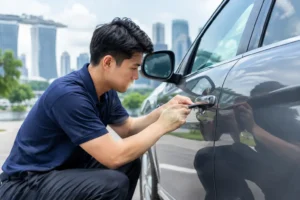
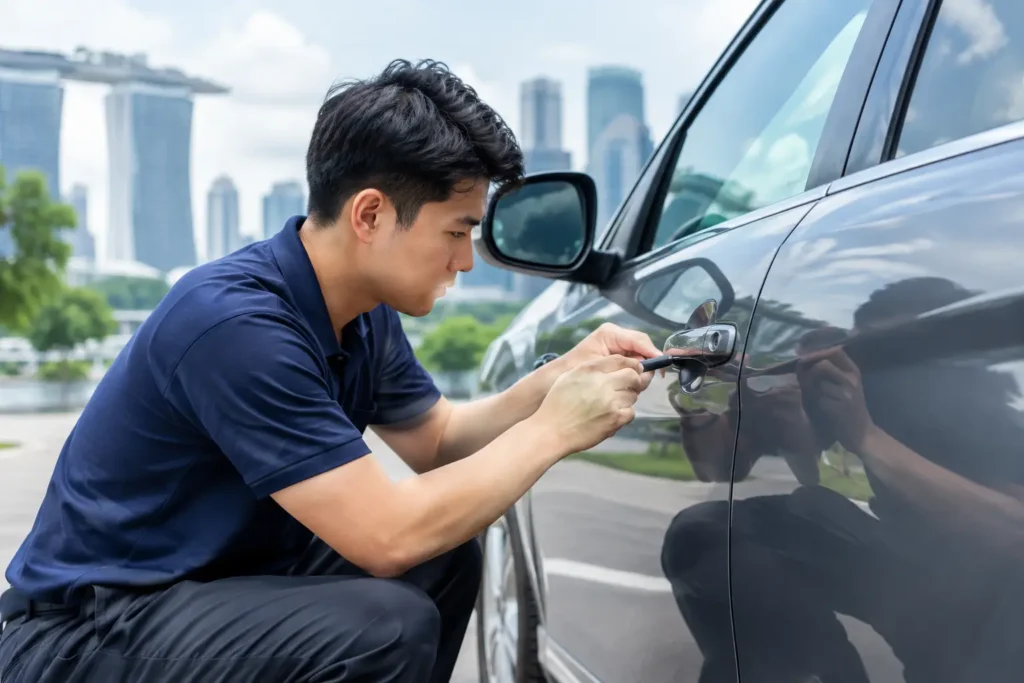
For this vehicle, the locksmith used a controlled, non-destructive access method suited to the door and locking system. Protective materials were used around the work area to reduce the risk of marking the finish or damaging the weather seal. The locksmith then created only the minimal access needed to operate the interior locking mechanism safely.
The door was opened without broken glass, bent metal, or a damaged lock cylinder. Once access was restored, the driver retrieved the key and tested the central locking function before the locksmith left. This final check is easily overlooked, but it gives the customer confidence that the vehicle is operating normally after the service.
The physical opening took less time than the full service visit. That is common. The value of professional help is not just the moment the door opens. It is the preparation, vehicle assessment, authorization check, correct tool selection, and care taken to prevent a second problem.
What Made the Response Effective
A good automotive lockout response is measured by more than speed. Fast arrival is important, especially when a driver is stranded after work, outside their home, or in unfamiliar surroundings. But rushing the entry process can create unnecessary damage.
In this case, several details helped produce a good outcome:
- The driver gave accurate vehicle and location information during the initial call.
- The locksmith verified access authorization before beginning work.
- The vehicle was assessed before any tool was used.
- A suitable non-destructive method was chosen instead of forcing the door.
- The locking system was tested after entry was restored.
Clear pricing also plays a major role. A driver dealing with a lockout should know what service they are requesting and receive a straightforward explanation of any additional work before it is carried out. If a key has been lost, rather than simply locked inside, the solution may involve key replacement or programming. That is a different job from basic vehicle entry and should be priced accordingly.
What Drivers Should Do While Waiting
The minutes after a lockout can feel longer than they are. A few sensible actions can make the service safer and faster. Stay near the vehicle if the area is safe, keep your phone available, and have identification or proof of vehicle access ready if possible. If the car is in a loading zone, on a narrow road, or somewhere that creates a traffic risk, move to a safe position and explain the situation when calling.
Avoid prying the door open, inserting improvised tools into the window gap, or repeatedly pressing the remote if the key is locked inside. These attempts may damage the car or trigger an alarm without solving the problem. They can also complicate the locksmith’s work after arrival.
If a child, elderly passenger, pet, or anyone in distress is locked inside, contact emergency services immediately. Do not wait for a routine locksmith response in a health or safety emergency.
Preventing the Next Lockout
The driver in this case chose to keep a spare key in a secure location after the incident. For some drivers, a spare key at home with a trusted family member is enough. Others may benefit from checking their key battery, reviewing how their vehicle’s auto-lock feature works, or arranging a replacement key before the remaining key becomes worn or unreliable.
There is no single prevention method that suits every car owner. Keeping a key hidden on the vehicle can create a security risk, while storing one at home may not help when you are far away. The best choice depends on how you use the car, who has access to it, and whether your vehicle uses a traditional key, remote fob, or smart key system.
For drivers in Singapore, a dependable mobile locksmith provides reassurance when a key is left inside, misplaced, or no longer working. Pro-Smith and Lock approaches lockout calls with the practical goal that matters most: restore access carefully, explain the work plainly, and help you continue your day without avoidable damage. If a lockout happens, staying calm and calling a qualified professional is usually the quickest path back into the driver’s seat.