You do not always need a brand-new lock to feel secure again. In many cases, a door rekeying service is the faster and more affordable way to stop old keys from working and regain control of who can enter your home, office, or rental unit.
That matters after a tenant moves out, a helper no longer needs access, a key goes missing, or you simply cannot account for how many copies are out there. When the lock hardware is still in good condition, rekeying lets you keep the lock body and change the internal key pattern so only a new key will work.
What a door rekeying service actually does
Rekeying changes the inside configuration of a lock cylinder so it matches a different key. From the outside, your lock may look exactly the same. The difference is that the old key will no longer turn it.
For most property owners, that is the real goal. You are not trying to make the door look different. You want to control access again without paying for a full replacement unless it is necessary.
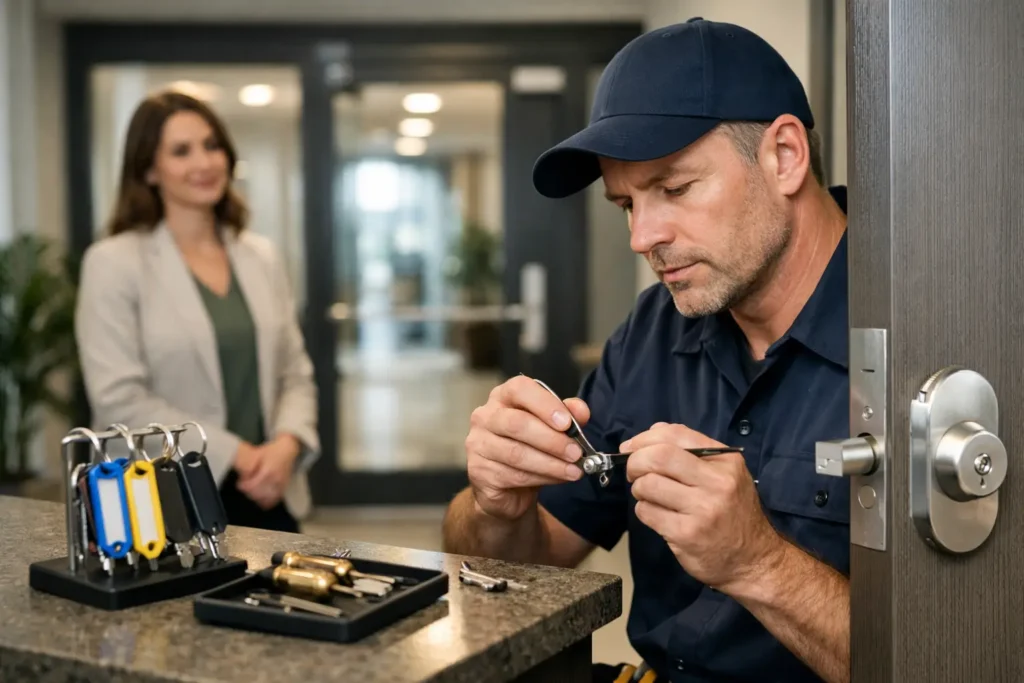
A locksmith removes the cylinder, adjusts or replaces the pins inside, tests the new key, and makes sure the lock works smoothly before leaving. If done properly, the lock should operate cleanly and securely with its new key set.
When rekeying makes sense
Rekeying is a practical solution in a lot of everyday situations. If you moved into a resale home, took over a rental, had staff turnover, lost a keyring, or lent keys to contractors, rekeying is often the smartest first step.
It also helps when too many different keys are in circulation. Some homeowners and office managers ask for several locks to be rekeyed alike so one key works across selected doors. That can make daily use easier without changing every lock on site.
For landlords and tenants, timing matters. A fast rekey can secure the unit between occupants without the cost of replacing every lock. For offices, it can restore control after employee changes or missing access keys. For homeowners, it removes the uncertainty of not knowing who may still have a copy.
When rekeying is not enough
A door rekeying service is not the answer for every lock problem. If the lock is damaged, badly worn, loose, rusted, or poor quality to begin with, replacement may be the better choice.
The same applies if you want to upgrade your security level. Rekeying changes key access, but it does not automatically improve the strength of the lock body, the cylinder grade, or the door hardware around it. If your current setup is weak, replacing it with a better lock may be worth the extra cost.
There are also compatibility limits. Some locks are easier to rekey than others, and certain low-cost or highly specialized models may not be practical to service. A professional locksmith should inspect the lock first and tell you honestly whether rekeying is sensible or whether replacement will save you trouble later.
Rekeying vs replacing the lock
This is the question most customers ask first, and the answer depends on your lock condition, budget, and security goals.
Rekeying is usually the better value when the lock is working well and you only need to stop old keys from working. It is quicker, causes less disruption, and often costs less than installing all-new hardware. You keep the existing style and finish, which also helps if you want the door to maintain a consistent look.
Replacement makes more sense when the lock is failing, the key turns roughly, the latch alignment is poor, or the hardware no longer offers enough protection. It is also the right move if you want a different type of lock entirely, such as moving from a basic knob lock to a stronger deadbolt setup.
In short, rekey for access control. Replace for hardware problems or security upgrades. Sometimes the best result is a mix of both, especially in larger homes or offices where some locks are still serviceable and others are not.
What to expect during a locksmith visit
A professional mobile locksmith will usually start by checking the lock type, door condition, and your reason for requesting service. That first assessment matters because it determines whether rekeying is possible and whether any hidden issues need attention.
If rekeying is suitable, the work is often completed on site in one visit. The locksmith will disassemble the lock, reset the cylinder to a new key combination, test for smooth operation, and confirm that the old keys no longer function. If you have multiple doors, they may also discuss whether you want each lock keyed differently or keyed alike.
Good service is not just about changing pins. It also means making sure the lock engages properly, the key inserts cleanly, and the door closes and secures as it should. A lock that has been rekeyed but still binds or sticks is not a finished job.
How long it takes and what affects cost
For a straightforward job, rekeying is usually faster than full lock replacement. The exact time depends on how many locks you have, what type they are, and whether there are any wear issues that slow the process down.
Cost can vary for the same reasons. A single standard door lock is one thing. A property with multiple gates, main doors, bedroom doors, mailbox locks, office cylinders, or restricted key systems is another. Emergency timing can also affect the final price, especially if you need urgent help after hours.
The better way to think about cost is value. If rekeying restores security quickly and avoids replacing good hardware, it often saves money. But if a worn lock will soon fail, paying a little more for replacement may be the wiser investment.
Why professional rekeying is worth it
It is tempting to treat rekeying as a minor job, but lock work is less forgiving than it looks. A poorly rekeyed lock can jam, wear out faster, or leave you with a false sense of security if the old key still partially works or the door does not latch correctly.
A trained locksmith can also spot related problems that customers often miss, such as a misaligned strike plate, loose cylinder, weak deadbolt throw, or door frame issue. Those details affect security just as much as the key itself.
For customers under stress, speed matters too. If you have lost your keys, changed occupancy, or need immediate access control, waiting around or experimenting with the wrong fix only adds risk. An experienced locksmith can get the job done properly and advise whether your current hardware is still worth keeping.
Door rekeying service for homes, rentals, and offices
Residential customers often request rekeying after moving in, after a domestic helper or contractor no longer needs access, or when keys are unreturned. The goal is simple – peace of mind without changing every visible lock on the door.
Rental properties are another common case. Between tenants, a door rekeying service can reset access quickly so the next occupant starts with a clean key set. That is a practical security step and often a more budget-friendly option for property owners managing turnover.
For offices, rekeying helps maintain control when staff changes happen, keys go missing, or access needs to be reorganized. In some cases, it also makes sense to combine rekeying with a master key or key alike setup for better day-to-day management. Pro-Smith and Lock handles these kinds of on-site lock changes with the same focus customers want in urgent situations – fast response, clear advice, and work that holds up.
Choosing the right locksmith
Not every locksmith service is equally prepared for rekeying work across different door types and lock brands. You want someone who can assess the job on site, explain whether rekeying or replacement is the better choice, and complete the work without guesswork.
Look for practical signs of reliability: experience, mobile service capability, straightforward pricing, and a clear focus on solving the problem instead of overselling hardware you do not need. If you are calling during a stressful situation, calm communication matters as much as technical skill.
The right locksmith should leave you with more than a new key. You should also leave the appointment knowing your lock works properly, your old key access has been removed, and your property is secure again.
If you are dealing with missing keys, a recent move, staff turnover, or uncertainty about who still has access, waiting rarely improves the situation. A timely rekey is one of the simplest ways to take control back and move on with confidence.