A gate that only closes when you push, lift, or slam it is not giving your home the protection it should. This gate lock installation guide helps you plan a secure fit, choose a lock that suits your gate, and recognize when a locksmith is the safer choice. A properly installed gate lock should close smoothly, resist forced movement, and allow authorized occupants to enter and exit without a daily struggle.
Start With the Gate, Not the Lock
The right lock depends on the gate material, frame condition, swing direction, and how the gate is used. A lock that works well on a solid metal swing gate may be a poor fit for a thin aluminum gate, a sliding gate, or a gate with wide bars. Before buying hardware, inspect the gate in the closed position.
Look at the gap between the gate and its frame. If the gap is too wide, a standard latch may not reach the strike plate securely. If the gate has dropped on its hinges, the bolt may scrape against the strike or fail to enter it fully. Installing a new lock before correcting these alignment problems often creates more work and can shorten the life of the lock.
Also check whether the gate is exposed to rain, humidity, dust, or direct sunlight. Outdoor locks need weather-resistant components. A low-cost indoor lock may corrode, jam, or lose its finish quickly when used on an exterior gate. Stainless steel and quality coated hardware are generally better choices for exposed locations, though the best option still depends on the gate material and environment.
Choose a Gate Lock That Matches Your Security Needs
A simple keyed latch can be suitable for a low-risk side gate or a secondary internal gate. For a main entrance security gate, many homeowners prefer a deadbolt-style gate lock, a rim lock, or a mortise lock fitted to the gate design. The goal is not to buy the largest lock available. The goal is to use a lock that can be mounted firmly and that engages a strong strike point.
A keyed deadbolt provides a solid locking point when the gate and frame are in good condition. A rim lock is mounted on the surface and can be practical when there is not enough depth for a mortise body. Mortise locks sit inside a prepared pocket in the gate and offer a cleaner appearance, but they require accurate cutting and are less forgiving of measurement errors. Sliding gates may need a hook bolt or sliding-gate-specific lock so the bolt catches correctly as the gate closes.
Think about daily access before making a decision. If several family members, tenants, or staff need entry, a key alike arrangement can reduce the number of keys they carry. For a property with multiple gates or doors, a planned key system may be more useful than fitting separate locks with unrelated keys. If keys have been lost, do not assume a new lock alone solves the problem. Rekeying or replacing the cylinder may be needed to prevent old keys from working.
Prepare the Gate for a Clean Installation
Measure twice before drilling once. Mark the lock position with the gate fully closed, then confirm that the handle, key cylinder, and bolt will not hit bars, decorative panels, hinges, or the adjacent door. The lock should be comfortable to operate from both sides and high enough to discourage easy reaching through the gate.
Use the manufacturer template if one is supplied, but do not rely on it without checking the actual gate. Templates assume a level, square surface. Older gates can be slightly twisted or uneven, and a few millimeters of error can leave the bolt misaligned. Use a level where appropriate and mark the centerline clearly on both the gate and frame.
You will normally need a tape measure, marker, drill, suitable metal or wood drill bits, screwdrivers, and a file for cleaning drilled edges. For a metal gate, sharp edges and metal filings can cause injury or interfere with the lock body. Wear eye protection, keep the work area clear, and remove debris before assembling the hardware.
Gate Lock Installation Guide: Fit the Lock in the Right Order
Position the lock body
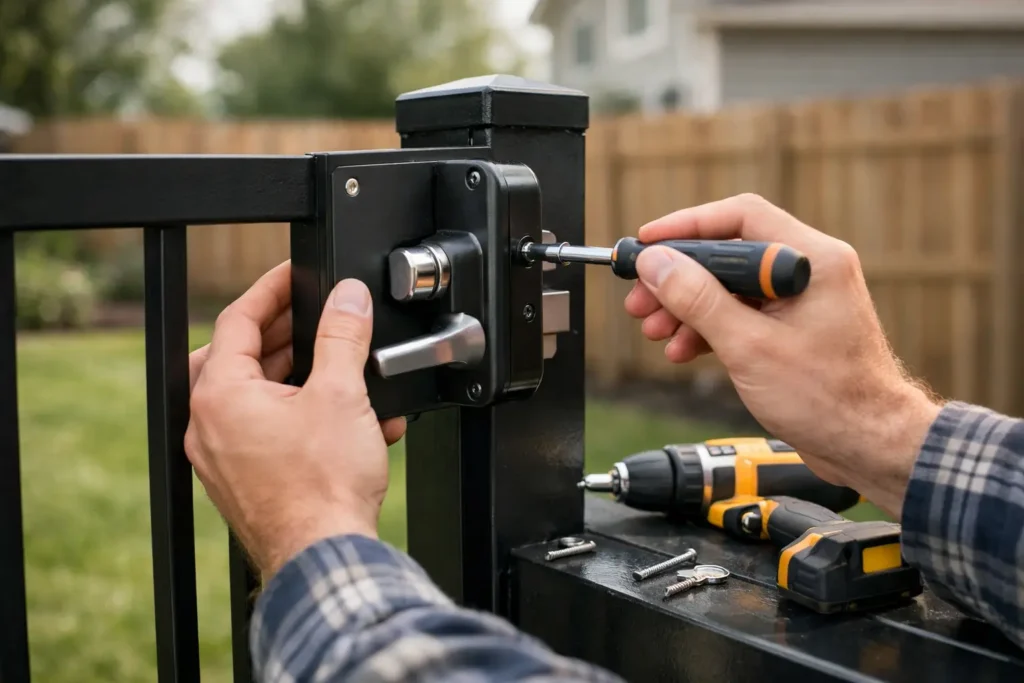
Hold the lock body against the gate and mark each fixing point. Drill pilot holes first, especially when working with metal. Pilot holes help prevent the drill bit from wandering and make it easier to keep the lock square. If the gate is hollow, use fixings designed for that construction. Standard screws may loosen over time if they do not grip a solid section of the gate.
Install the lock body loosely at first. This gives you room to make small adjustments before tightening everything down. If you are fitting a mortise lock, the pocket must be cut accurately enough for the body to sit straight without being forced. A lock that is squeezed into an uneven opening can bind internally and become difficult to operate.
Install the cylinder and handles
Fit the cylinder, spindle, handle, or thumb turn according to the lock design. Before tightening the screws, turn the key and operate the handle several times with the gate open. The latch or bolt should move freely and return fully. If the key feels stiff at this stage, stop and check the cylinder orientation, spindle length, and screw alignment.
Do not overtighten cylinder screws or handle bolts. Excess pressure can distort some lock components and make the key hard to turn. Tighten fasteners securely, then test again. A lock should feel firm on the gate without being under strain.
Align and install the strike plate
The strike plate is where many gate lock installations fail. Close the gate slowly and use a marker, tape, or a small amount of washable chalk on the bolt to identify the exact contact point. The strike opening must allow the bolt to enter fully without hitting its top, bottom, or side.
Install the strike plate on a strong part of the frame. A strike fixed only to a thin, weak section offers little resistance, even if the lock itself is high quality. Where possible, use longer or stronger fasteners that secure into a reinforced frame section. If the gate frame is damaged, bent, or heavily corroded, repair may be necessary before fitting the strike.
Test the Lock Before You Rely on It
Test the lock with the gate open first, then closed. Lock and unlock it from both sides using every key provided. Pull the gate gently after locking it to confirm the bolt is fully engaged. The key should turn without excessive force, and the gate should not need to be lifted, pushed, or pulled into position.
Repeat the test several times. A lock can appear fine once but bind after the gate moves slightly on its hinges. Check it at different times of day if the gate is exposed to heat, as metal gates can expand and shift enough to affect close tolerances.
Make sure everyone who needs regular access understands how the lock works. For gates that form part of an emergency exit route, the inside operation must allow occupants to leave quickly and safely in line with local building and fire requirements. Security should never trap people inside.
Common Problems That Call for a Locksmith
DIY installation can work for a straightforward replacement on a well-aligned gate. It becomes less practical when the gate is sagging, the frame is bent, the lock requires welding, or the hardware needs custom fabrication. Drilling into a steel security gate without the right tools can damage the finish, weaken the mounting area, or leave expensive hardware poorly secured.
Call a professional if the bolt will not align after careful adjustment, the key turns but the gate does not release, the lock has been forced, or the existing lock is badly rusted. A locksmith can assess whether the issue is the lock, cylinder, hinges, frame, or strike position. That prevents spending money on a replacement that will still fail because the gate itself is out of line.
For homeowners and property managers who want the work completed quickly, Pro-Smith and Lock provides on-site gate lock replacement, lock repairs, and practical security upgrades. Professional fitting is especially useful when you need a durable solution for a main gate, rental property, office entrance, or a gate affected by lost keys or attempted break-ins.
A well-fitted gate lock should become the part of your day you never think about: it closes cleanly, turns easily, and gives you confidence every time you leave home.