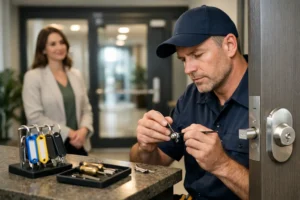
A glass door that will not lock properly is more than an inconvenience. In an office, shop, or interior commercial space, it can disrupt daily operations, raise security concerns, and leave staff dealing with a door that feels unreliable every time it opens or closes. That is usually the point when glass door lock replacement stops being a future task and becomes something that needs attention now.
Glass doors are common in offices, storefronts, meeting rooms, and building entry points because they look clean and professional. But the lock fitted to a glass panel is not the same as the lock on a standard wooden door. The wrong part, poor alignment, or rough handling during installation can crack hardware, damage the door fitting, or leave the lock weak from day one. That is why this type of job needs a practical approach, not guesswork.
When glass door lock replacement is the better fix
Some lock problems can be adjusted. Others should not be stretched any further.
If the key is sticking, the cylinder is turning loosely, the latch is not catching properly, or the lock has become difficult to operate after years of use, replacement is often the smarter move. A repair may buy a little time, but if the internal mechanism is already worn out, the problem usually comes back. That means more downtime, more frustration, and another service call later.
Replacement also makes sense after lost keys, staff turnover, attempted break-ins, or visible damage to the lock body. In commercial settings, security is not just about whether the door closes. It is about controlling access with confidence. If too many unknown keys may still be in circulation, changing the lock is often the safer option.
For some property managers and business owners, the issue is not failure but age. Older glass door locks can become unreliable simply because the parts have worn down over time. If the door is used heavily throughout the day, the lock takes constant stress. Replacing it before a full failure happens can prevent an emergency later.
Not every glass door lock is interchangeable
This is where many people run into trouble. Glass doors vary in thickness, lock cutout design, mounting style, and frame type. Some are fully frameless. Others use aluminum frames or patch fittings. The lock must match the existing setup or the door may not close, latch, or secure correctly.
A proper locksmith will first identify what type of lock is currently installed and whether a direct replacement is possible. In some cases, the same style can be fitted quickly. In other cases, a different lock body or cylinder is the better choice because the old model is outdated, damaged beyond repair, or no longer practical for the way the door is used.
That is also why buying a lock online and hoping it fits often leads to delays. On paper, two locks may look similar. In practice, a few millimeters can make the difference between a clean fit and a wasted purchase.
Common reasons glass door locks fail
Most glass door lock issues come down to wear, misalignment, impact, or poor installation.
Heavy use is one of the biggest factors. In office and retail settings, a glass door may be opened dozens or even hundreds of times a day. Over time, the cylinder, latch, and internal parts lose precision. The first signs are usually stiffness, jamming, or a key that no longer turns smoothly.
Alignment is another common issue. If the door has shifted slightly or the strike point no longer lines up, users may force the key or handle just to get the door secured. That extra pressure wears the lock faster. What starts as a small alignment issue can end with a lock that fails completely.
There is also accidental damage. Glass doors are durable, but the lock hardware attached to them can still take a hit. A forced turn, a dropped item, or rough closing can weaken the mechanism. Once the lock starts feeling loose or inconsistent, it should be checked before it leaves the door unsecured.
What a professional replacement should include
A proper glass door lock replacement is not only about swapping one lock for another. The lock has to suit the door, fit securely, and operate smoothly without stressing the glass panel or frame.
The first step is assessment. A locksmith should check the existing lock type, the condition of the door fittings, and whether the issue is limited to the cylinder or affects the full lock assembly. That matters because replacing only one part may be enough in some cases, while other situations call for a full hardware change.
Next comes fitment. The lock should sit correctly, align with the receiving point, and allow the door to close without resistance. If the door needs minor adjustment for proper operation, that should be handled during the job. A new lock fitted onto a misaligned door is not a lasting fix.
The final step is testing. The key should turn cleanly, the latch should engage properly, and the lock should feel stable under normal use. For business premises, that smooth operation matters because staff and customers use the door throughout the day. If the lock feels rough from the start, the installation is not really finished.
Choosing between repair and replacement
Sometimes repair is the sensible choice. If the problem is limited to a minor alignment issue or a cylinder that can be changed without replacing the entire lock body, that can save time and money.
But there is a trade-off. Repair is usually best when the lock is still structurally sound. If the housing is loose, the mechanism is badly worn, or the lock has already failed more than once, replacement is often the more cost-effective option. Paying less today only to deal with the same fault again next month is rarely a good value.
For offices and storefronts, reliability usually matters more than squeezing extra life from an aging lock. If a door protects stock, equipment, documents, or restricted areas, a dependable replacement is often the better call.
Why speed matters with commercial glass doors
When a glass door lock fails, the problem tends to affect more than one person. Staff may be unable to secure the space, customers may be redirected, and managers may need to supervise the area until the issue is fixed. Even if the door still opens, an unreliable lock creates uncertainty.
That is why fast response matters. A mobile locksmith service is especially useful here because the issue can be handled on-site without the need to remove the door or leave the property exposed while parts are sourced elsewhere. An experienced locksmith will usually carry common lock options and can recommend the most practical replacement based on the door setup and security needs.
For businesses that cannot afford long delays, this kind of direct, on-site service keeps disruption to a minimum. It is a straightforward fix when handled by someone who works with glass door systems regularly.
What to expect from a locksmith visit
Most customers want the same thing – show up, identify the issue, and solve it without turning a simple lock problem into a major project.
A professional locksmith should explain whether the lock can be repaired or should be replaced, what type of replacement fits the door, and what the expected result will be. The process should be clear, practical, and focused on getting the door secured properly again.
For planned upgrades, this is also a good time to ask about key control, matching locks across multiple doors, or replacing outdated hardware before it fails. For urgent calls, the goal is simple: restore security quickly and make sure the door is safe to use.
Companies like Pro-Smith and Lock are often called for exactly this reason. When a glass office door lock starts failing, people do not want a drawn-out process. They want an experienced locksmith who can arrive, assess the setup, and carry out the replacement efficiently.
A better result starts with the right diagnosis
The biggest mistake with glass door lock problems is assuming every issue has the same fix. Some locks need a cylinder change. Some need full replacement. Some are not really lock problems at all but door alignment issues that are putting strain on the hardware.
A careful diagnosis saves time, prevents repeat problems, and helps you avoid paying for the wrong solution. That is especially important with glass doors, where the hardware needs to be handled correctly from the start.
If your glass door lock is sticking, turning poorly, or no longer giving you confidence, do not wait for a full failure during business hours. The sooner it is checked, the easier it usually is to restore security and get the door working the way it should.