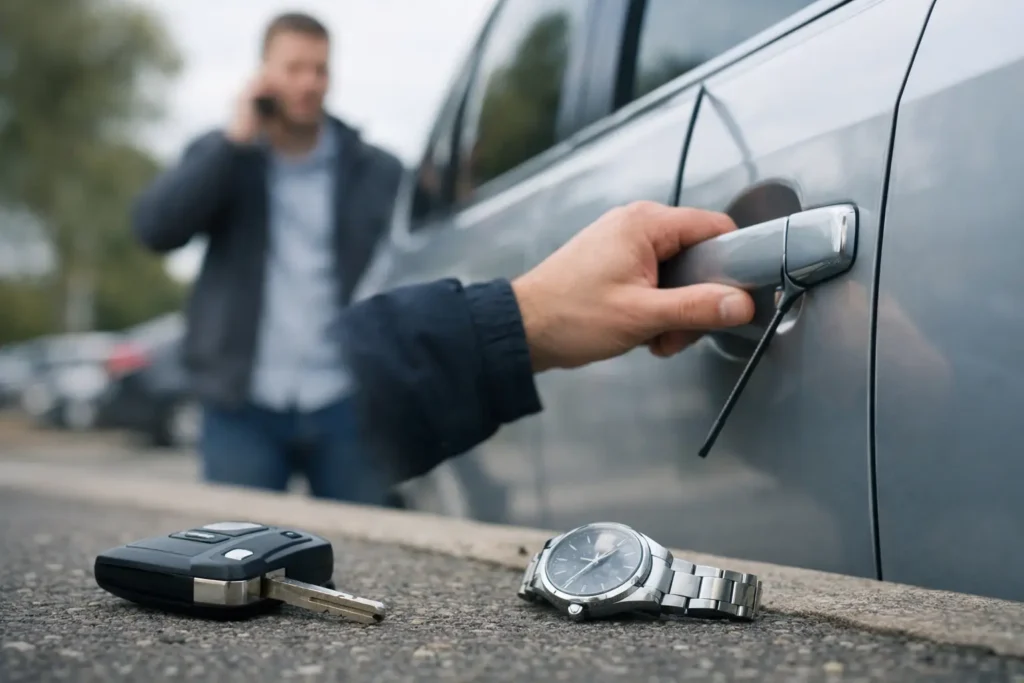
You shut the door, hear the click, and immediately see your keys sitting on the driver’s seat. That moment is exactly why a clear guide to car key lockouts matters. When you are stressed, in a hurry, or stranded in a parking lot, the wrong move can turn a simple lockout into a damaged door, broken weather strip, or expensive repair.
Car lockouts are common, but they are not all the same. Some happen because the key is locked inside. Others involve a dead key fob battery, a damaged key blade, a faulty latch, or a car that has auto-locked itself while the engine is off. The best response depends on the vehicle, the key type, your location, and whether there is any immediate safety risk.
A practical guide to car key lockouts
The first thing to do is pause for thirty seconds and check the situation carefully. That sounds simple, but it prevents rushed decisions. Confirm whether the keys are actually inside the car, whether a passenger door is unlocked, whether the trunk can be opened separately, and whether you have a spare key available nearby.
If a child, elderly passenger, or pet is inside the vehicle and conditions are unsafe, treat it as urgent. Heat rises quickly in a closed car, even when the stop feels short. In that case, call emergency services first, then arrange locksmith support if needed.
If no one is in danger, keep your next steps practical. Check all doors once, including the trunk and hatch. Some drivers try the same locked front door repeatedly and miss that another entry point is open. If your car uses a smart key, try the door handle sensor and the trunk release, because a weak fob battery can cause inconsistent behavior rather than complete failure.
After that, think about your spare key options. If someone at home or work can bring a spare within a reasonable time, that may be the fastest and lowest-cost fix. But if the spare is far away, you are in a basement parking area, or you are blocking traffic, waiting may cost you more time than calling a locksmith.
What not to do during a car lockout
A lot of vehicle damage starts with good intentions. Coat hangers, screwdrivers, metal rods, and improvised wedges may look like quick solutions online, but modern cars are less forgiving than older models. Door frames bend. Rubber seals tear. Paint gets scratched. Internal linkages can be damaged, and side airbags or electrical components may be closer than you expect.
The trade-off is simple. A forced DIY attempt might save a service fee if it works perfectly, but if it goes wrong, you could end up paying for lock repairs, window issues, or door alignment. For most drivers, that risk is not worth it.
You should also avoid repeated remote pressing if the key fob seems unresponsive. Sometimes the issue is just battery-related, but sometimes the car battery is weak, the fob is damaged, or the system is not recognizing the signal. Pressing buttons over and over usually does not solve the root problem.
Another mistake is assuming every lockout needs towing or dealership help. That is true in some cases, especially with advanced key programming issues or certain security faults, but many standard lockouts can be handled on-site by an experienced automotive locksmith without damage and without the long wait.
Why car key lockouts happen
Most lockouts come down to routine habits, not carelessness. Drivers place keys on the seat while loading bags, leave them in the cup holder during a fuel stop, or set them in the trunk while rearranging cargo. Auto-lock features also catch people off guard, especially when the key is left inside and the vehicle self-secures after a short delay.
Electronic keys create their own problems. A weak fob battery can make access unpredictable. You may be able to start the car one moment and fail to open it the next. Mechanical wear matters too. If the key blade is bent, chipped, or heavily worn, it may not turn smoothly even if the lock itself is fine.
Then there are vehicle-side issues. A jammed lock cylinder, faulty actuator, or latch problem can feel like a lockout even when you have the right key. That is why diagnosis matters. The right service is not always just opening the door. Sometimes the real solution is repairing the lock problem so it does not happen again next week.
When to call a locksmith
If your keys are inside the car, you have no quick spare, and the vehicle needs to be accessed without damage, a locksmith is usually the right call. The same applies if the key fob has stopped responding, the key has broken, or the lock feels stuck rather than simply locked.
A professional locksmith can usually determine whether the issue is a standard lockout, a failed fob battery, a worn key, or a lock mechanism fault. That saves time because the response is matched to the actual problem. For drivers, the main benefit is simple: faster entry with less risk to the car.
This matters even more with newer vehicles. Modern automotive locks and anti-theft systems are more complex than many people expect. Trying to force entry can trigger additional problems or leave visible damage that affects resale value.
For local drivers who want a direct, on-site solution, Pro-Smith and Lock focuses on fast-response locksmith support and practical vehicle access help without unnecessary delay.
What a locksmith will usually check
A locksmith does not just arrive and start prying at the door. A proper approach begins with confirming ownership or authorized access, checking the make and model, and choosing the least invasive method for that vehicle. The goal is entry first, but damage prevention is part of the job.
If the key is visible inside, the service may be straightforward. If the key is missing, the fob is dead, or the lock is malfunctioning, the job may involve testing whether the issue is mechanical or electronic. Some cases can be solved on the spot. Others may require key replacement, fob battery service, or additional programming depending on the vehicle.
It depends on the car and the failure point. Older vehicles may allow simpler entry methods. Newer cars often require more care and better tools. That is one reason pricing and timing can vary from one lockout to another.
How to choose help when you are stuck
When you are stressed, speed matters, but so does judgment. Ask whether the locksmith handles automotive lockouts specifically, whether they provide on-site service, and how quickly they can arrive. A clear response time and a straightforward explanation of the process are good signs.
It is also worth asking whether they aim for damage-free entry and what happens if the issue turns out to be more than a basic lockout. That tells you whether you are dealing with someone who understands the difference between opening a car and diagnosing a lock or key problem.
Low pricing can be attractive, but the cheapest option is not always the best option when your car door, lock, and electronics are involved. The better question is whether the service is efficient, careful, and clear about what you are paying for.
How to reduce the chances of another lockout
The best prevention is simple and repeatable. Keep a spare key in a secure, separate location. Replace weak key fob batteries before they fail completely. Avoid placing your keys on the seat, trunk floor, or dashboard even for a moment. Small habits matter because most lockouts happen during ordinary routines.
If your car has a history of random locking behavior, sticky door action, or inconsistent key recognition, do not wait for a full lockout before getting it checked. A sticking latch or failing fob often gives warning signs first. Acting early is usually cheaper and less stressful than dealing with an emergency in a parking lot at night.
Drivers with shared vehicles should also set a basic routine. Decide who keeps the spare, where it is stored, and what to do if the primary key stops working. That sounds minor, but a plan saves time when everyone is already frustrated.
A car key lockout feels urgent because it disrupts your whole day in seconds. The good news is that most situations can be handled calmly if you avoid forced DIY methods, check the basics first, and call the right help when needed. A careful response protects your vehicle, your time, and your wallet – and that is usually the smartest way forward.