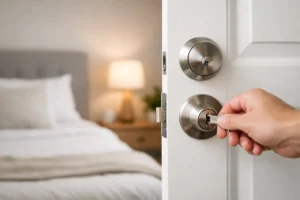
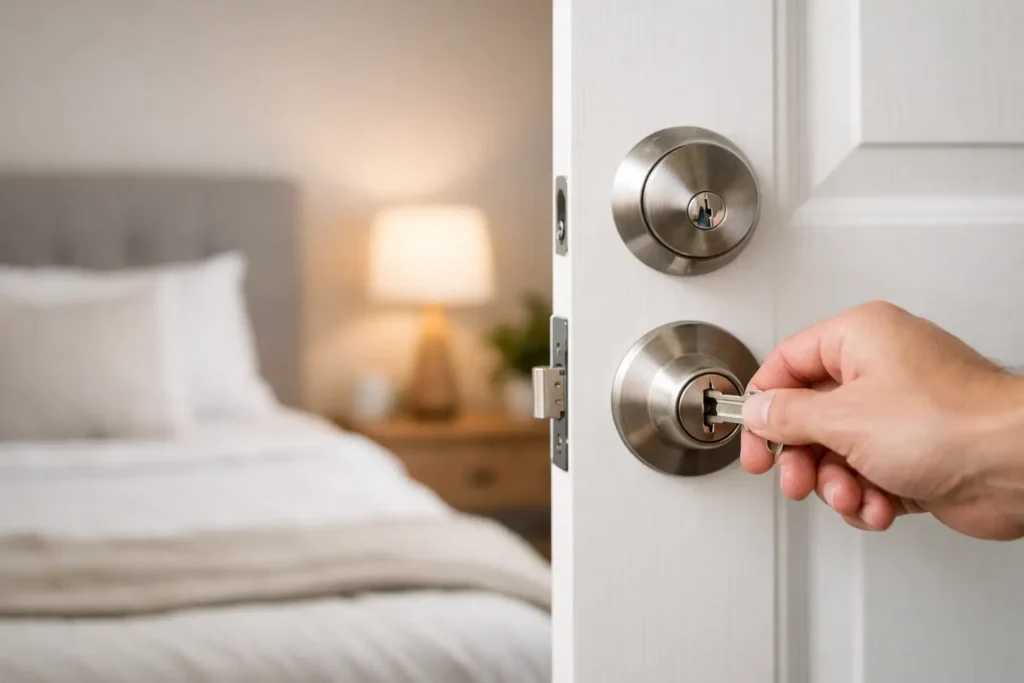
A bedroom door should give you privacy and peace of mind, not become a weak point in your home. If you are wondering how to secure bedroom door effectively, start by identifying what you need it to do: keep out young children, create privacy in a shared home, protect personal belongings, or improve security for a rented room. The right solution depends on the door, the people using the space, and how quickly someone must be able to exit in an emergency.
A stronger lock helps, but it is only one part of the job. The door frame, hinges, strike plate, and installation quality all affect how secure the door actually feels and performs.
Start With the Reason You Need Bedroom Door Security
For many households, a standard privacy lock is enough. These locks are designed for bedrooms and bathrooms, allowing the occupant to lock the door from inside while still permitting emergency access from outside. They are practical for families, but they are not intended to protect valuables or stop determined entry.
If you live with roommates, rent out a room, or store documents, electronics, medication, or other personal items in the bedroom, a privacy lock may be too light-duty. A keyed entry knob or lever can provide more control, particularly when only specific people should have access. However, it also creates the possibility of a lost key, accidental lockout, or delayed access during a medical emergency.
A bedroom used by a child, elderly family member, or anyone who may need assistance should not have a lock that traps them inside. Whatever lock you choose, make sure people in the household understand how it works and that there is a safe plan for emergencies.
How to Secure Bedroom Door With the Right Lock
The best upgrade is usually one that matches the door construction and daily use. Replacing a loose lock with a quality lockset can make an immediate difference, especially if the existing latch does not catch properly or the handle feels worn.
Choose a Lock That Fits the Door’s Purpose
A privacy lever or knob works well for ordinary bedroom use. It is easy to operate and gives occupants a clear boundary without turning the room into a high-security space. For a shared apartment or rental arrangement, a keyed lock may be more appropriate, provided the property owner permits the change and there is a responsible key-management plan.
A deadbolt adds more resistance than a typical bedroom latch, but it is not necessary for every interior door. It can also be unsuitable where fire safety rules, lease terms, or household needs require easy emergency access. If you are considering a deadbolt on a bedroom door, have a locksmith assess the door, frame, and exit requirements first rather than choosing hardware based on appearance alone.
Electronic locks can be useful when several authorized people need access or keys are frequently lost. A keypad or smart lock may reduce key-sharing, but it needs reliable batteries and a backup way to enter if the code is forgotten or the lock malfunctions. Technology adds convenience, not a substitute for a solid door and frame.
Make Sure the Latch Reaches the Strike Plate
A surprisingly common problem is a door that locks but does not latch securely. When the door is closed, the latch bolt should enter the strike plate cleanly and fully. If you need to lift, push, or pull the door to make it lock, the door may be misaligned.
Misalignment can happen as a building settles, hinges loosen, or humidity affects the door. Ignoring it can wear out the lock and leave the door easier to force open. A locksmith can adjust the strike plate, hinges, or lock position so the latch engages correctly without damaging the door.
Strengthen the Door Frame, Not Just the Handle
A lock can be high quality while the surrounding frame remains weak. The strike plate is the metal plate on the frame where the latch or bolt enters. Small screws that only grip the thin door trim may pull out under pressure.
For a door that needs stronger protection, use a reinforced strike plate installed with longer screws that reach the solid framing behind the jamb. This spreads force over a larger area and helps secure the point where most pressure is applied. It is a straightforward improvement, but it must be installed carefully so the door still closes smoothly.
Check the hinges as well. Loose hinge screws allow the door to sag and affect lock alignment. Tightening or replacing stripped screws may solve the issue. If the bedroom door opens outward, hinge security deserves extra attention because the hinges are on the hallway side. A professional can recommend suitable hinge protection without making the door difficult to use.
Do Not Overlook the Door Itself
A hollow-core interior door is common in apartments and homes because it is affordable and lightweight. It provides privacy, but it does not offer the same resistance as a solid-core or solid-wood door. Adding a heavier lock to a weak hollow door has limits.
If protecting the room is a priority, consider upgrading to a solid-core door. It is heavier, reduces sound transfer, and generally holds lock hardware more securely. The trade-off is cost, weight, and possible frame or hinge upgrades. In a rental property, always get approval before replacing the door or altering the frame.
Door viewers, door alarms, and simple contact sensors can add awareness without changing the lock. These are useful if you want to know when the door has been opened, but they should be viewed as an added layer rather than the primary security measure.
Protect Access Without Creating Key Problems
A good bedroom lock is only useful when access is managed sensibly. Avoid leaving spare keys in obvious places such as under a doormat, inside a nearby drawer, or taped behind furniture. If a roommate, cleaner, contractor, or former tenant has had access to the key, consider rekeying or replacing the lock.
For shared properties, decide early who is authorized to hold a key and what happens if one is lost. Key control prevents small problems from becoming expensive lock replacements later. If several interior doors use separate keys, a locksmith may be able to recommend a practical system that reduces the number of keys without weakening access control.
Do not force a key that sticks or continue turning a loose handle. Those warning signs often mean the lock cylinder, latch, or door alignment needs attention. Addressing them early is usually faster and more affordable than dealing with a broken key or a bedroom lockout.
When a Professional Locksmith Is the Better Choice
A simple handle replacement can be a manageable home project, but professional help is worthwhile when the door is damaged, the lock is misaligned, keys are missing, or the room requires more than basic privacy. A locksmith can confirm whether the door can support the hardware you want, install it neatly, and test that it latches and locks correctly.
This is particularly useful for HDB residents, landlords, and tenants in Singapore, where door modifications may need to work with existing frames, fire safety needs, and property rules. Pro-Smith and Lock can assess the bedroom door on-site and recommend a practical repair or lock upgrade without pushing unnecessary hardware.
The goal is not to turn a bedroom into a vault. It is to create a door that closes properly, gives the right level of privacy, and lets you feel secure every time you turn the handle.