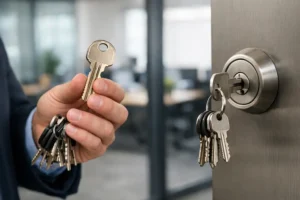
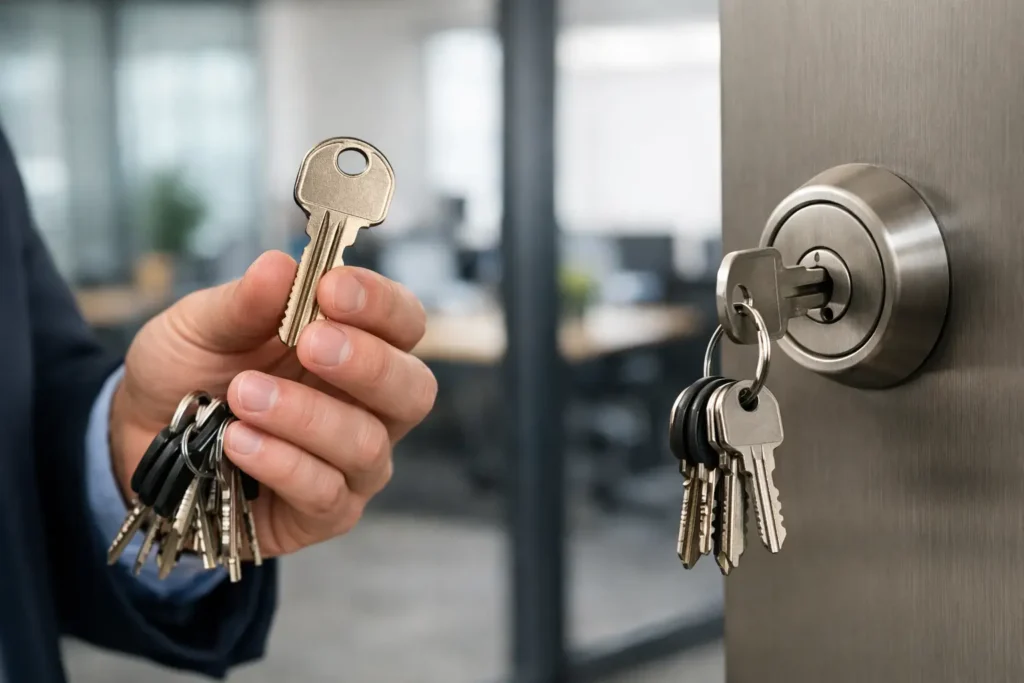
The office manager has one keyring, the finance team has another, the cleaners have a third, and nobody is fully sure who still has keys from two years ago. A master key system for office use solves this common problem by giving each person access only to the doors they need while allowing authorized managers to enter multiple areas with one key.
For Singapore offices, this can mean fewer lost-key concerns, faster access during an urgent situation, and clearer control over restricted rooms. It is not simply about making one key open every door. A properly planned system balances daily convenience with the security of your staff, equipment, files, and stock.
What Is a Master Key System for Office Access?
A master key system uses locks that are arranged in levels of access. Individual keys open specific doors, while a master key can open a selected group of locks. Depending on the office layout, a higher-level key may be assigned to an office manager, facilities manager, or business owner.
For example, an employee may have a key for the main office entrance and their assigned storage room. The office manager may carry a master key that opens the entrance, meeting room, pantry, storage areas, and staff offices. A director may have access to an additional lock level for sensitive areas such as a server room, records room, or safe cabinet.
The right arrangement depends on your workplace. A small office with two rooms may only need a basic key alike setup, where one key opens every approved door. A larger office, clinic, tuition center, warehouse, or retail operation often benefits from a structured master key system with clear access levels.
Why Offices Choose a Master Key System
The most obvious benefit is convenience. Instead of carrying a bulky ring of keys or testing several keys at a door, authorized personnel can move through the workplace efficiently. This is particularly useful when opening up in the morning, checking rooms after closing, or responding to a maintenance issue.
Security is the other major reason. Not every employee should have access to every space. Financial documents, client files, IT equipment, controlled inventory, and confidential records need more protection than a shared pantry or general work area. A master key arrangement allows you to separate these areas without making normal work difficult.
It also makes staff changes easier to manage. When an employee leaves, a manager can identify which key they held and decide whether a lock needs to be rekeyed. If there is a concern that a key was copied or not returned, a locksmith can often rekey the affected cylinders instead of replacing every lock and issuing an entirely new set of hardware.
Plan Access Before Choosing Locks
The strongest systems start with a simple access plan, not a quick order for extra keys. Walk through the office and list each door, cabinet, gate, or room that needs controlled access. Then decide who genuinely needs entry and when.
Common office zones include the main entrance, glass office doors, director rooms, meeting rooms, storerooms, server rooms, document rooms, staff-only areas, stockrooms, and back exits. Some doors may need different treatment. A fire exit, for instance, must allow safe exit at all times and should be assessed carefully to ensure the locking arrangement meets safety requirements.
Keep access practical. Giving too many people a master key removes the purpose of the system. On the other hand, making access too restrictive can slow work down and encourage staff to leave doors unsecured. The goal is controlled access that fits how your team actually operates.
A Simple Example of Key Levels
A typical office may use three levels. Staff keys open only the rooms required for their role. A department key opens several related rooms, such as a supervisor’s office and departmental storage. The master key opens all doors within the planned system.
Some businesses need further separation. A clinic may keep patient records and medicine storage on different access levels. A company with high-value equipment may want the IT manager to access the server room without giving that same access to all administrators. These details should be decided before locks are pinned and keys are cut.
Do Not Treat Every Door the Same
A master key system works best when the door hardware is suitable for the door and the level of risk. Office glass doors, wooden internal doors, aluminum-framed entrances, metal gates, and storeroom doors may need different lock types. Forcing a one-size-fits-all solution can create weak points or make future service more difficult.
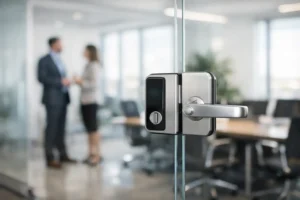
For instance, a glass office door may use a specialized lock, while a solid storeroom door may require a more secure cylinder and handle set. An external entrance exposed to heavier use may need durable commercial-grade hardware. Internal rooms with low-risk access needs may only require a simpler lock cylinder.
A professional locksmith should inspect the existing condition of the locks, door alignment, frames, handles, and closers before recommending a system. A worn or misaligned door can damage a new lock over time, even if the key system itself is well designed.
Key Control Is What Makes the System Work
Installing a master key system is only the first step. The daily control of keys determines whether it remains secure. Every master key should be assigned to a named person, and the business should keep a basic record of key numbers, holders, issue dates, and return dates.
Avoid labeling keys with the company name, office address, or room name. If a key is lost outside the building, clear labels can make it easier for someone to identify where it belongs. Use a coded tag or key number that is meaningful only to the authorized manager.
It is also wise to decide who can approve duplicate keys. Uncontrolled duplication is one of the most common reasons an office loses track of access. Limit duplicate requests to a manager or designated facilities contact, and keep spare master keys in a secure location rather than an unlocked desk drawer.
When a master key goes missing, act quickly. The right response depends on what the key could open, whether it was labeled, and whether the loss happened near the workplace. In many cases, rekeying selected locks is a more cost-effective response than replacing all hardware. The sooner you call a locksmith, the sooner the access risk can be assessed.
When Rekeying Makes More Sense Than Replacement
Businesses often assume every lost key requires new locks. That is not always necessary. If the lock hardware is in good condition and compatible with the planned system, rekeying may allow the internal key combination to be changed while keeping the existing lock body.
Replacement may be the better choice when locks are damaged, outdated, difficult to operate, or not suitable for a master key arrangement. It can also be worthwhile if the office is upgrading security after a break-in, relocation, or major renovation.
The practical answer depends on the condition of your doors and locks. A locksmith can explain whether rekeying, lock replacement, or a mix of both gives better value for the office.
Choose a Locksmith Who Can Service the System Later
A master key system is not a one-time purchase. Offices change. Teams grow, departments move, tenants change, and rooms are repurposed. Your locksmith should be able to add locks, revise access levels, cut approved duplicate keys, and respond when a key is lost or a lock fails.
Before work begins, ask for a clear explanation of the proposed key hierarchy and which doors will be included. Confirm how future key requests will be handled and whether the lock cylinders can be serviced or rekeyed later. This avoids confusion when the office needs changes months down the road.
Pro-Smith and Lock provides on-site commercial locksmith support for offices in Singapore, including office glass door lock work, lock replacement, rekeying, key alike arrangements, and master key planning. With more than 14 years of experience, the focus is on practical solutions that fit your door type, daily operations, and security needs.
A well-planned key system should make the workday easier without giving up control. Start by identifying the doors that matter most, decide who truly needs access, and keep a reliable record from the first key issued. That small amount of planning can prevent a major access problem later.