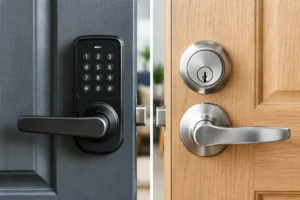
A front-door lock should make daily life easier without creating a new problem when batteries run low, keys go missing, or several people need access. When comparing a keypad lock versus mechanical lock, the right choice depends less on what looks modern and more on your door, your routine, and how you want to manage access.
For an HDB flat, landed home, rental unit, bedroom, office, or glass-door workspace, both options can provide reliable security when correctly fitted. The difference is in how they behave during busy mornings, emergencies, tenant changes, power issues, and years of regular use.
Keypad lock versus mechanical lock at a glance
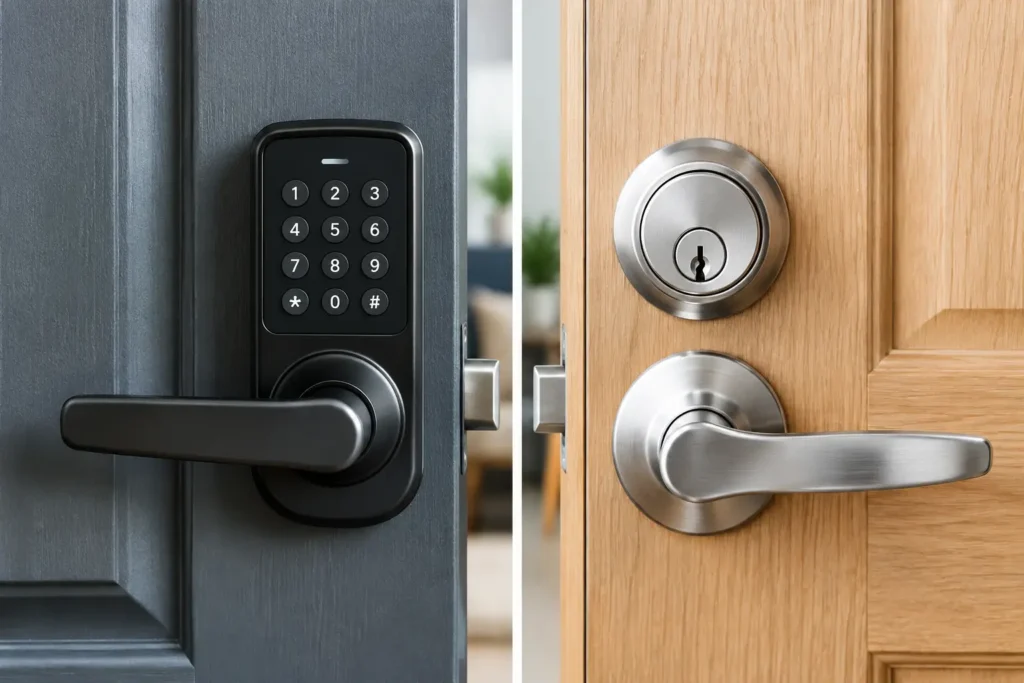
A mechanical lock uses a physical key. This may be a rim cylinder, mortise lock, deadbolt, lever handle, or another key-operated setup. Its operation is simple: the correct key turns the cylinder and operates the latch or bolt.
A keypad lock uses a PIN code, fingerprint, card, tag, app, or a combination of these methods. Many models run on batteries and include a mechanical override key or emergency power contact in case the batteries are depleted. Some are installed as complete digital locksets, while others work with an existing deadbolt.
Neither type is automatically better. A quality mechanical lock with a properly installed strike plate can be more dependable than a poorly chosen digital lock. Likewise, a reputable keypad lock with strong door alignment and sensible code management can be far more practical for a busy household or office.
Choose a keypad lock when access changes often
Keypad locks are especially useful when several people need entry but handing out keys is inconvenient. A family can use individual PIN codes instead of carrying spare keys. An office manager can change a staff code after an employee leaves. A landlord can update access between tenants without collecting and cutting multiple keys.
For homes, this can remove the worry of children losing keys after school or relatives arriving while you are away. For offices, it can reduce the confusion of shared keys passed between staff members. Some models also record entry activity, which may help property occupiers understand who entered and when.
The main advantage is control. You can change a code in minutes, while changing a mechanical lock may require rekeying or replacing the cylinder. That said, not every keypad lock offers the same level of management. A basic PIN lock may be enough for a bedroom or small office, while a larger business may need a system designed for multiple users and audit records.
The trade-offs of digital access
A keypad lock needs attention in ways a standard key lock does not. Batteries must be replaced before they are fully depleted. Users need to remember their PINs, and codes should not be shared carelessly. If a lock has an app or wireless functions, the owner should use strong account credentials and keep the device settings current.
Heat, rain exposure, heavy daily traffic, and a misaligned door can also affect performance. A lock installed on a gate or external door needs to be suitable for that environment. The cheapest keypad lock is rarely the best value if it struggles with the door, has limited local support, or lacks a practical backup entry method.
A professional installation matters because digital locks have precise fitting requirements. If the latch, bolt, or door frame is not aligned, the motor works harder each time the door closes. That can shorten battery life and create avoidable faults.
Choose a mechanical lock when simplicity matters most
Mechanical locks remain a strong choice for many homes and businesses. They do not depend on batteries, software, or a remembered code. When the key and cylinder are in good condition, the operation is familiar and direct.
This makes them well suited to main doors, metal gates, storerooms, mailboxes, and areas where the same small group of people needs access for a long time. They are also a practical option for property owners who prefer a straightforward system that any household member can use without instructions.
A good mechanical lock can be upgraded with higher-security cylinders, restricted key profiles, reinforced strike plates, and compatible deadbolts. For offices and multi-room properties, key alike systems let one key operate several designated locks, while master key systems allow different users to access only the areas they need.
The trade-offs of physical keys
The weak point is often key control. Keys can be lost, copied, or not returned after a tenancy or staff change. If you do not know who still has a copy, replacing or rekeying the lock is the safer choice.
Mechanical locks also offer less flexibility for temporary access. Giving a cleaner, contractor, or visiting family member entry generally means providing a physical key and getting it back afterward. That can be perfectly manageable for some households, but it becomes less convenient as the number of users grows.
Wear is another consideration. Keys can bend, cylinders can become stiff, and locks can suffer damage after forced entry attempts or years of use. These issues are usually repairable, but they should not be ignored until the key becomes stuck or the door will not secure properly.
Security depends on the full door setup
The lock is only one part of your door security. A high-quality keypad lock or mechanical lock cannot compensate for a weak door frame, loose hinges, damaged strike plate, or poor installation. Before replacing a lock, check the condition of the door, gate, frame, and existing hardware.
For a main entrance, look at the bolt throw, the strike plate fixing, and whether the door closes squarely. For glass office doors, make sure the lock type is designed for the glass thickness and door configuration. For bedroom doors, privacy and emergency opening needs may matter more than high-security features.
It also helps to avoid relying on a single access method where the risk is higher. A mechanical deadbolt paired with a keypad lock may suit some properties, while others benefit more from a secure mechanical cylinder and controlled key system. The best arrangement depends on who uses the door and what is behind it.
Consider lockouts before you decide
Every lock type can lead to a lockout, but the causes differ. With a keypad lock, common issues include flat batteries, forgotten PINs, damaged keypads, or a door that has shifted out of alignment. With a mechanical lock, lost keys, snapped keys, worn cylinders, and jammed latches are more common.
Before choosing a keypad model, ask how emergency access works. Does it have an override key? Can it accept temporary emergency power? Is the backup method practical for your door and location? Keep the override key somewhere secure but separate from the door itself.
For mechanical locks, decide what you will do when keys are lost. If your keys carry an address tag or were lost with personal documents, changing the lock or cylinder is generally wiser than simply cutting another key. For renters, check with the property owner before changing main-door hardware.
Cost is more than the purchase price
Mechanical locks usually cost less upfront, particularly for standard replacement work. They also have fewer electronic components to maintain. However, repeated rekeying, replacing lost keys, or managing copies across many users can add cost over time.
Keypad locks generally cost more to buy and install, especially models with fingerprint readers, app control, or access history. They may save time and reduce key-management problems for households with many users, short-term rentals, or offices with changing staff. Batteries and occasional servicing should be part of the budget.
The most affordable option is not always the lowest-priced lock. A lock that fits your door correctly, has dependable backup access, and can be serviced locally is usually the better long-term choice.
A practical way to make the decision
Start with the people who use the door. If only two or three permanent occupants need access and you value simplicity, a quality mechanical lock may be the better fit. If children, caregivers, tenants, employees, or contractors regularly need entry, a keypad lock can make access easier to manage.
Then consider the location. A sheltered apartment main door has different requirements from an exposed gate, a glass office door, or a mailbox. Finally, consider what happens when something goes wrong. Choose a setup with a clear backup plan, not one that leaves you guessing outside your own property.
Pro-Smith and Lock can assess the existing hardware, door material, and access needs before recommending a practical replacement or upgrade. A short on-site review can prevent buying a lock that looks suitable online but does not fit the door or daily routine.
The best lock is the one your household or team can use confidently, maintain easily, and rely on when it matters. Choose for the real habits at your door, and keep a clear plan for lost keys, low batteries, and changing access needs.