A lock usually gets attention only after it sticks, jams, or leaves you standing outside your own door. If you are asking what are the best locks for doors, the real answer depends on where the door is, how often it is used, and what kind of protection you actually need.
For a front door, the best lock is not always the most expensive one. For a bedroom, office glass door, gate, or mailbox, the right choice changes again. Good security comes from matching the lock to the door and the way the space is used, not from picking the fanciest option on the shelf.
What are the best locks for doors in real-life use?
The best locks are the ones that do three things well. They fit the door material properly, they hold up under daily use, and they give the right level of security without creating new problems for the people using them.
That matters because many lock issues start with the wrong lock choice, not just wear and tear. A lock that works well on a solid wood main door may be a poor fit for a narrow aluminum frame or a glass office door. In the same way, a lock that offers strong security for an entry door may be unnecessary and inconvenient on an interior room.
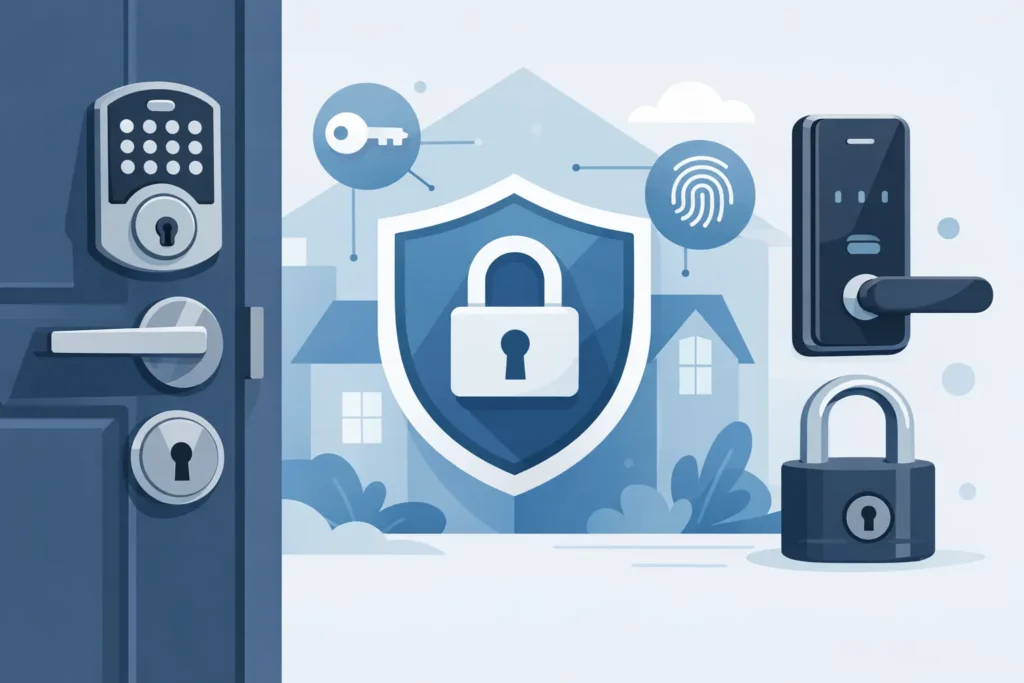
For most homes and small businesses, the strongest practical options usually come down to deadbolts, mortise locks, knob or lever locks for light interior use, and selected digital locks when convenience matters. Padlocks and specialized cam locks also have their place, especially for gates, storage areas, and mailboxes.
Best lock types by door purpose
Main entry doors
For a main entry door, a deadbolt is still one of the most dependable choices. A proper deadbolt gives stronger resistance than a standard spring latch lock, which is why it is commonly recommended for front doors. If the door and frame are solid and the installation is done correctly, a deadbolt provides very good everyday protection.
For some properties, a mortise lock is an even better fit. Mortise locks are commonly used on heavier doors and can be a solid option when you want durability and a more integrated locking system. They tend to be sturdy, but they also require the right door preparation. If your existing door is not cut for a mortise body, changing to one may involve more work than a straightforward cylinder or deadbolt replacement.
Digital locks are also popular on main doors, especially for homeowners who want keyless access. They are convenient for families, tenants, and anyone tired of carrying keys or getting locked out. That said, convenience is not the same as suitability. Some digital locks are excellent for daily use, while others are overly complex, drain batteries quickly, or do not pair well with older doors.
Bedroom and interior doors
For bedrooms and interior spaces, privacy is usually more important than high-security protection. A simple knob lock or lever lock is often enough. These are practical, affordable, and easy to use.
Still, there are cases where an interior lock needs more than basic privacy. If the room stores personal items, business documents, or equipment, upgrading to a stronger cylinder lock or a better quality lever set may make sense. The key is not to overbuild unnecessarily. A heavy-duty commercial lock on a low-risk interior door can create extra cost without adding much real value.
Office and glass doors
Glass doors need more careful lock selection. Not every lock works well with glass panels, slim frames, or commercial entry setups. For office glass doors, the best option is often a lock designed specifically for that door type, such as patch locks, narrow-profile locks, or compatible deadlatch systems.
This is one of the clearest examples of why lock choice should be practical. A strong lock that does not suit the frame, swing, or closing alignment will turn into a recurring problem. Office managers usually need two things at once: controlled access and smooth daily use. The best lock is the one that secures the office without causing constant opening and closing issues for staff.
Gates, mailboxes, and utility doors
For gates, storage points, and mailboxes, the best locks are usually simpler but still need to be durable. Weather exposure matters. So does how often the lock is opened.
A good padlock can work well on gates, but only if the hasp and surrounding hardware are equally secure. For mailboxes, cam locks are common and effective when properly sized. These are smaller jobs, but they still benefit from using the correct lock type rather than the nearest available replacement.
The best lock is only as good as the door
People often focus only on the lock body, but the door itself matters just as much. A strong deadbolt installed on a weak frame or damaged door will not perform the way it should. If the door is misaligned, swollen, cracked, or loosely fitted, even a good lock can become unreliable.
That is why experienced locksmiths look at the full setup before recommending a replacement. Door thickness, frame condition, strike plate position, material type, and usage pattern all affect the result. The goal is not just to fit a new lock. The goal is to make sure the locking system works properly after repeated daily use.
How to choose the right lock without overpaying
The best approach is to think in terms of use, risk, and convenience.
If the door is your main point of entry, prioritize strength and reliability. If it is an interior room, focus on function and privacy. If multiple people need access, such as in an office or rental unit, key management may matter more than choosing the heaviest lock available. In those cases, keyed alike systems or controlled access options can make daily life easier.
It also helps to be realistic about budget. A more expensive lock is not automatically a better choice. Some premium products are worth it because they last longer and perform better. Others cost more because of extra features you may never use. A practical lock that fits the door well and is installed correctly often gives better long-term value than a high-end lock chosen for appearance alone.
When repair is enough and when replacement is smarter
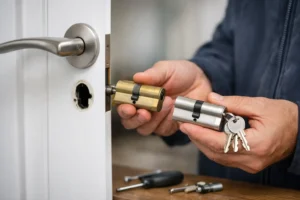
Not every faulty lock needs full replacement. If the issue is minor, such as a loose handle, worn screws, slight misalignment, or a sticking mechanism, repair may be enough. Replacing everything too early can be unnecessary.
But there are times when replacement is clearly the better call. If the key keeps catching, the cylinder is worn, the latch no longer retracts properly, or the lock has already failed more than once, replacement is usually more cost-effective. The same goes for locks damaged after a break-in attempt, forced entry, or years of heavy use.
Lost keys are another common reason to replace or rekey. If access control has changed, especially in homes with turnover, tenants, or staff movement, it makes sense to treat security as an active issue rather than waiting for a problem.
What homeowners and businesses usually need most
For most residential properties, a quality deadbolt on the main door and a reliable privacy lock on interior rooms covers the basics well. If convenience is a priority, a well-chosen digital lock can be a smart upgrade, especially for frequent lockout situations.
For businesses, the answer is usually more specific. Office entrances may need commercial-grade locks, glass door solutions, or master key systems depending on who needs access and how the space operates. The best setup balances security with ease of use, because a lock that frustrates staff all day is not a good long-term solution.
This is where experience matters. A locksmith who handles residential, office, gate, mailbox, and emergency lock issues daily can usually spot the right option faster than someone guessing from packaging alone. Companies like Pro-Smith and Lock see the same pattern again and again – people do not just need a lock, they need the right lock installed properly, without delays or unnecessary upselling.
What are the best locks for doors if you want peace of mind?
If peace of mind is the goal, choose a lock that suits the specific door, resists daily wear, and does not create extra hassle. For front doors, that often means a dependable deadbolt or mortise lock. For bedrooms, it means a simple and reliable privacy lock. For offices and glass doors, it means using hardware built for that exact setup. For gates and mailboxes, it means choosing weather-appropriate locks that fit correctly.
The smartest lock choice is usually not the most complicated one. It is the one that works when you need it, holds up over time, and fits your property without guesswork. If you are unsure, start by looking at the door itself, not just the catalog. That is usually where the right answer becomes clear.